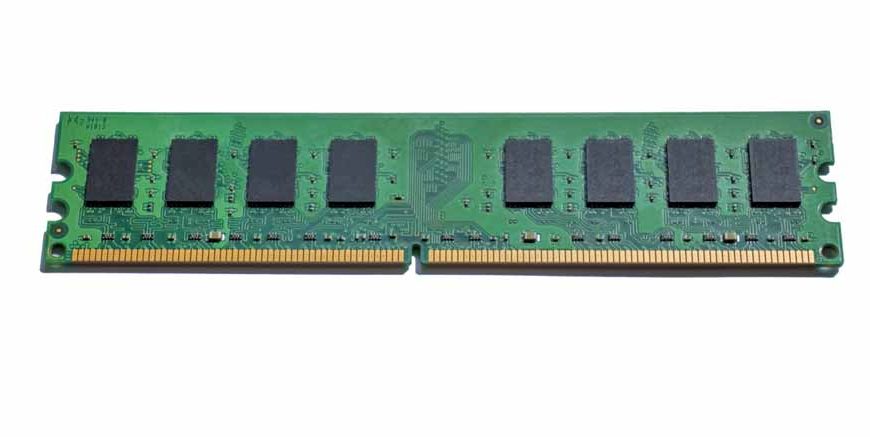
Have you ever noticed how quickly your tablet or laptop switches from a fun racing game to your favourite cartoon? It feels like magic, but there is a brilliant piece of hardware working tirelessly behind the glass screen. When children start learning about technology, they often hear adults throwing around complex acronyms that sound like a secret code. Today, we are taking a closer look at one of the most important pieces of a computer’s brain. Let us strip away the complicated technical jargon and discover exactly how our beloved digital devices think, remember, and play.
The Acronym: RAM Full Form in Computer
If you ask a tech expert for the RAM full name, they will simply tell you it stands for Random Access Memory. But what does that actually mean for a young learner?
To truly understand the RAM meaning, think of your computer as a massive, bustling restaurant kitchen. The RAM full form in computer language essentially describes the kitchen counter. When a chef (the computer’s processor) needs to chop vegetables or mix cake batter right now, they put all their fresh ingredients on the counter so they can reach them instantly. Random Access Memory is the exact same thing; it is the temporary, lightning-fast workspace where your device puts all the information it needs to use right this very second to run your games and apps smoothly.
Read More – CPU Full Form
RAM Definition Computer
If a science teacher asks you for a clear RAM definition, you can confidently tell them that it is the computer’s short-term memory. Let us look at a highly practical RAM definition computer example to make sense of this.
Imagine you are sitting at your school desk. The textbook you have open right in front of you, along with the pencil in your hand, represents your Random Access Memory. It holds the active task you are working on. However, the moment you close the book and pack it back inside your school bag, it is gone from your active workspace. Because this specific type of memory is temporary, it is volatile. This means it completely forgets everything it was holding the moment you turn the computer’s power off!
What is RAM and ROM?
You cannot talk about the computer’s busy workspace without mentioning its quieter, more permanent sibling. So, what is RAM and ROM? While they sound quite similar, they do entirely different jobs inside the machine. We already know the RAM ROM full form begins with Random Access Memory, but ROM stands for Read-Only Memory.
If Random Access Memory is your messy school desk holding your current homework, ROM is the heavy, locked filing cabinet in the corner of the classroom. ROM holds the permanent, absolutely essential instructions that teach the computer how to turn on in the first place.
You can read the files stored inside, but you cannot easily change, delete, or erase them. While one handles the quick, messy work of playing colourful video games, the other silently and safely keeps the entire operating system running properly in the background.
Read More – USB Full Form
Conclusion
When we take a quiet moment to peek inside the plastic casing of our daily gadgets, we find a beautifully organised miniature universe. A computer is not just a glowing screen; it is a highly efficient team of separate parts working together to bring our imaginations to life.
Understanding the difference between a temporary, fast workspace and a permanent filing cabinet teaches children a highly valuable lesson about organisation and processing information, skills that are just as vital for human brains as they are for complex motherboards. The next time your computer effortlessly loads a massive video game level, you will know exactly which hard-working piece of hardware to thank!
To uncover more educational facts and properly support your child’s brilliant learning adventure, explore the EuroKids Blog and find out all the wonderful details you need regarding EuroKids Preschool Admission.
FAQs
What happens to Random Access Memory when the power goes out?
Because it is a temporary workspace, it gets completely wiped clean! This is exactly why you must always save your digital painting or school essay to the hard drive before turning your laptop off.
Can a computer run without this short-term memory?
No, it cannot. Without this vital workspace, the computer’s processor would not have anywhere to place the active files it desperately needs to turn on the screen or load the operating system.
Why do modern video games need so much of this memory?
Complex video games have massive, highly detailed worlds. The computer needs a much larger “kitchen counter” to temporarily store all those bright colours, fast movements, and loud sound effects all at the exact same time.