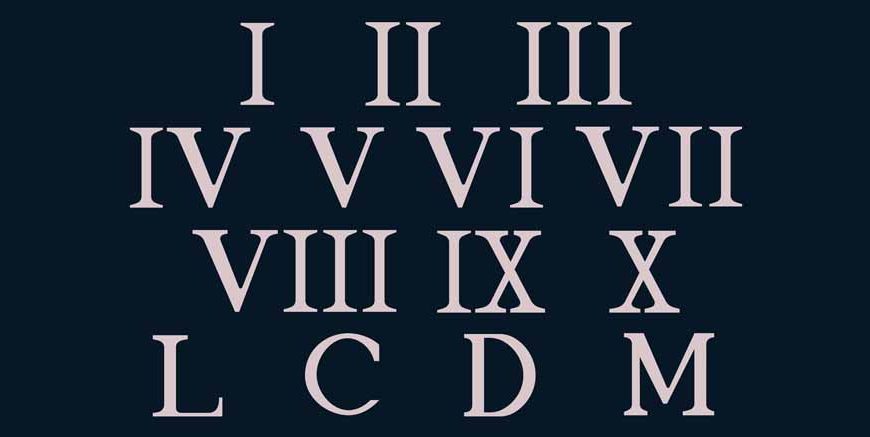
Look closely at those three letters. CXC. It honestly looks like a strange internet typo. Maybe a weird text message smiley face. Or some secret abbreviation locked inside a modern video game.
Today, trying to decode CXC roman numerals feels exactly like cracking a rusty, forgotten vault. When a young student stares at these letters on a chalkboard, they usually freeze. Their brain glitches. Letters belong strictly in reading class. Digits belong in math. Blending the alphabet into a math equation feels completely backward.
Let’s fix that glitch right now. We are going to rip this ancient code apart, figure out exactly how the pieces fit together, and discover why the Romans deliberately made things so incredibly complicated.
The Power of C
To understand a roman number CXC, you have to meet the boss. The letter C.
Think about words we use every single day. A ‘century’ means exactly one hundred years. A ‘centipede’ is a creepy bug supposedly boasting a hundred legs. A ‘cent’ is one-hundredth of a dollar. Notice a pattern?
The Romans spoke Latin. Their vocabulary word for one hundred was ‘Centum’. Since they didn’t have curvy numbers, they just grabbed the very first letter of that word. C equals 100. Simple. Logical. Very easy for a kid to memorize.
Read More – Teaching Kids About Roman Numerals
The Rule of Three
Now, look at the back half of the code. The X and the C.
This is exactly where ancient mathematics turns slightly vicious. If you just add things up lazily from left to right, you get a giant mess. But the Romans operated under a very strict, unbreakable law. Historians call it the Rule of Three.
You can never, ever carve four identical letters in a row. It creates massive visual clutter. If a tired stone worker wanted to carve the number 90 into a marble pillar, he couldn’t just write LXXXX (which is 50 + 10 + 10 + 10 + 10). That was banned. Completely illegal in ancient Rome. Your eyes would cross trying to read it quickly.
They desperately needed a visual shortcut.
Stepping Backward: The Subtraction Trick
How do you build the number 90 without stacking four Xs? You use subtraction.
The Romans invented a clever trick. If you put a smaller value directly in front of a larger value, you aren’t adding anymore. You are subtracting. It is like taking a quick step backward before jumping forward.
Let’s apply this to the tricky XC part.
X is 10.
C is 100.
The smaller number (10) sits on the left. It acts like a negative weight. You subtract 10 from 100.
Boom. You get 90.
Read More – How to Write 90 in Roman Numerals?
Putting the Pieces Together
Now, let’s assemble the entire puzzle. Read the massive block from left to right, splitting it into its natural chunks.
- First chunk: You hit the first C. Grab 100 points.
- Second chunk: You hit the XC combination. Grab 90 points.
Add those two separate blocks together. 100 + 90 = 190.
That is it. You just successfully decoded a two-thousand-year-old architectural puzzle. The number is exactly one hundred and ninety.
Understanding it better
Why force a kid to learn this today?
Because history is incredibly stubborn. These numbers refuse to disappear. Once a child actually understands the rules, they turn into a little historical detective. They start spotting these letters hiding in plain sight.
You will find CXC printed at the bottom of old, dusty movie posters tracking the copyright year. You will find it buried in the preface pages of massive, thick college textbooks. You might even spot it carved into the concrete cornerstones of ancient libraries and government buildings downtown. Knowing the code unlocks tiny, hidden messages scattered across our modern world.
Summary
Let’s gather up the scattered pieces. C gives us a hundred. XC uses clever subtraction to give us ninety. Push them together, and you have exactly 190.
But look past the basic arithmetic for a second. Pulling apart ancient symbols actually changes how we view human logic. It isn’t just dusty, boring memorization. We write 190 today using strict place values. The zero holds the empty spot. But the Romans? They didn’t even have a concept for zero! They built numbers exactly like heavy Lego bricks. Adding a chunk here. Slicing a piece off there.
Learning this proves to growing minds that there is rarely just one single way to solve a giant problem. Sometimes, looking at things completely backward, like subtracting X from C, is the exact brilliant trick you need to move forward. To read more fun and educational articles, check out the EuroKids Blog, and visit our website for details on EuroKids Preschool Admission.
FAQs
What exactly does the letter C represent?
It stands for 100. It comes directly from the ancient Latin word “Centum,” which literally translates to one hundred.
How do I figure out the XC part?
It relies entirely on subtraction. Because the smaller X (10) is placed before the larger C (100), you subtract ten from a hundred to get 90.
Can I just write C L X X X X for 190?
Absolutely not! The ancient Roman system strictly forbids placing four of the exact same letters right next to each other to avoid visual confusion.
What is the final translated number?
When you add the 100 (C) and the 90 (XC) together, you get 190.