History is completely packed with dramatic tales of secret potions, hidden dangers, and ancient royal mysteries. If you have ever read a classic detective story or a thrilling mystery novel, one particular poison almost always seems to make an appearance to cause chaos. But if we push past all the spooky legends and old stories, this substance is actually a completely normal, natural part of our planet.
It sits quietly in underground rocks, mixes into the soil, and even floats in the deep ocean. Instead of just focusing on the scary tales, let us pull back the curtain and look directly at the real, physical science behind this famous earth material. Teaching kids about the darker, more mysterious elements hiding on the science chart is a brilliant way to keep them hooked on biology and chemistry.
Understanding the arsenic meaning
To get to the absolute bottom of this topic, we first need to look at the arsenic meaning. The word itself has a very long, travelling history. It traces all the way back through ancient Syrian and Greek languages, where it originally described a bright, vivid yellow pigment that early painters used to colour their artwork.
Today, laboratory scientists know it simply as a naturally occurring chemical element that exists everywhere in the earth’s rocky crust. It is a heavy, greyish material that looks quite solid, but it hides a very famous, toxic secret. In its raw, natural form, it can be extremely dangerous to human beings and wild animals if accidentally swallowed or inhaled. This high toxicity is exactly why it became so famous in those classic mystery novels and ancient historical plots.
Read More – Discovering the Periodic Table Elements for Kids
Looking at the arsenic atomic number
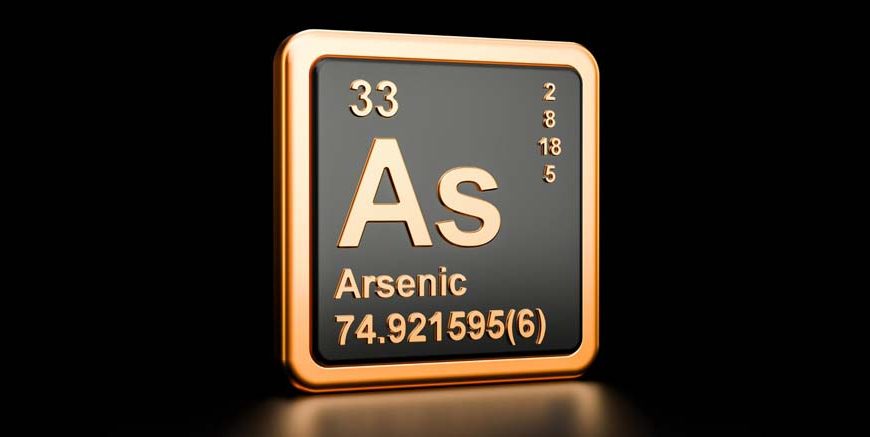
Every single building block in the known universe has a specific, permanent home on the scientific periodic table. The arsenic atomic number is exactly 33. What does that specific number actually mean for a young science student trying to understand the building blocks of nature? It simply tells us that right inside the busy, microscopic centre of this atom, there are exactly 33 heavy positive particles, known as protons, packed tightly together. Its official chemical symbol is a quick two-letter code: ‘As’. Whenever you spot that specific code printed on a laboratory bottle, a dusty rock collection in a museum, or a colourful science chart in a classroom, you know exactly what kind of heavy material is hiding inside.
Solving the Puzzle: arsenic metal or nonmetal?
When sorting through the raw building blocks of nature, scientists usually prefer to put them into two massive, distinct boxes: shiny, hard metals on one side, and dull, brittle nonmetals on the other. So, if a curious child asks if it is an arsenic metal or nonmetal, they are actually asking a fantastic trick question.
The biological answer is that it absolutely refuses to sit neatly in just one box. It acts exactly like a spy living a double life, shifting its physical behaviour depending entirely on how you treat it in the laboratory. It is a brilliant rule-breaker that completely blurs the strict scientific lines.
Read More – What Is Metal for Kids?
Answering the question: is arsenic a metal?
If you look closely at a chunky piece of it resting in a museum display case, you might immediately think you know the answer to the question is arsenic a metal. To the naked eye, it looks incredibly shiny, solid grey, and completely metallic.
However, if you put on some safety goggles and hit that chunk with a heavy steel hammer, it does not bend, stretch, or squash flat like a normal piece of copper or iron would. Instead, it instantly shatters into a million powdery, brittle pieces exactly like a delicate glass cup dropping on a kitchen floor. Furthermore, it does a genuinely terrible job of carrying heat or raw electricity compared to proper, traditional metals. Because of this brittle nature and poor conductivity, it completely fails the main physical tests required to be grouped with true metals.
The Final Verdict: is arsenic a metalloid?
Because it constantly breaks the traditional rules, scientists were forced to create a special, middle-ground category just for elements like this. So, is arsenic a metalloid? Yes, absolutely.
A metalloid is basically a chemical bridge. It is a unique element that shares a few visual traits with metals (like looking shiny and heavy) and a few physical traits with nonmetals (like breaking easily and poorly conducting heat). On a classroom periodic table, you will see a strange, jagged staircase line separating the two main groups. This element sits right on that dividing zigzag line, acting as a strange, fascinating hybrid of two completely different chemical families.
Read More – Fascinating Science Facts for Kids
Surprising Everyday arsenic uses
Because it is so highly toxic, you might easily assume that human beings just leave it buried deep underground where it belongs. Surprisingly, modern factories and brilliant engineers have found highly clever ways to harness its power completely safely. While we definitely do not put it in our household paint or medicine anymore, the industrial arsenic uses are actually quite important for keeping modern technology running smoothly.
Here is a clear, descriptive list of how we carefully use this dangerous element today:
- Car Batteries: Car manufacturers carefully mix tiny, microscopic amounts of it with heavy lead to create a super-strong, durable alloy. This clever mixture helps standard car batteries hold their electrical charge for much longer during freezing winter months.
- Mobile Phones and Computers: In the high-tech electronics world, scientists combine it with another element called gallium. This pairing creates a brilliant semiconductor material that helps light up the bright LED screens on your smart television and processes complex information incredibly fast inside your mobile phone.
- Wood Preservation: Historically, builders used it heavily to treat outdoor telephone poles and wooden garden fences, completely stopping hungry insects and damp rot from destroying the wood, though this specific practice is becoming much less common today for environmental safety reasons.
- Specialised Glass: Glassmakers sometimes add tiny pinches of it into their liquid glass mixtures to quickly remove cloudy green tints, leaving behind perfectly clear, transparent glass for expensive optical lenses.
Conclusion
It is genuinely thought-provoking to realise that a substance made famous by old poison stories and spooky legends actually plays a massive, hidden part in keeping our modern smartphones running brightly. Nature does not simply make things ‘good’ or ‘bad’. The earth provides a massive, diverse toolkit of raw chemical elements, and it is entirely up to clever human engineering to figure out how to use them safely and effectively.
Learning about these strange, rule-breaking metalloids shows growing children that the rigid rules of science are actually full of brilliant exceptions and hidden surprises. Teaching kids to respect dangerous materials while still understanding their vital industrial value builds a highly mature, balanced view of the physical world. To uncover more fascinating scientific secrets and explore how our brilliant Heureka Curriculum actively supports your child’s learning journey, read the latest articles on the EuroKids Blog and secure their vibrant academic future today through EuroKids Preschool Admission.
FAQs
Is it safe to touch a mobile phone if it has this element inside?
Yes, it is completely safe. The tiny amounts used in modern electronics are permanently locked deep inside the sealed microchips and cannot escape or harm you while you use your device.
Can you accidentally drink it in regular water?
In some specific parts of the world, it does naturally leak from underground rocks into the well water, which is why local governments constantly test and treat public drinking water to keep everyone perfectly safe.
Does it have a smell or a taste?
In its pure, raw state, it has absolutely no smell or taste, which is exactly why it was historically so dangerous before modern science developed clever ways to instantly detect it.