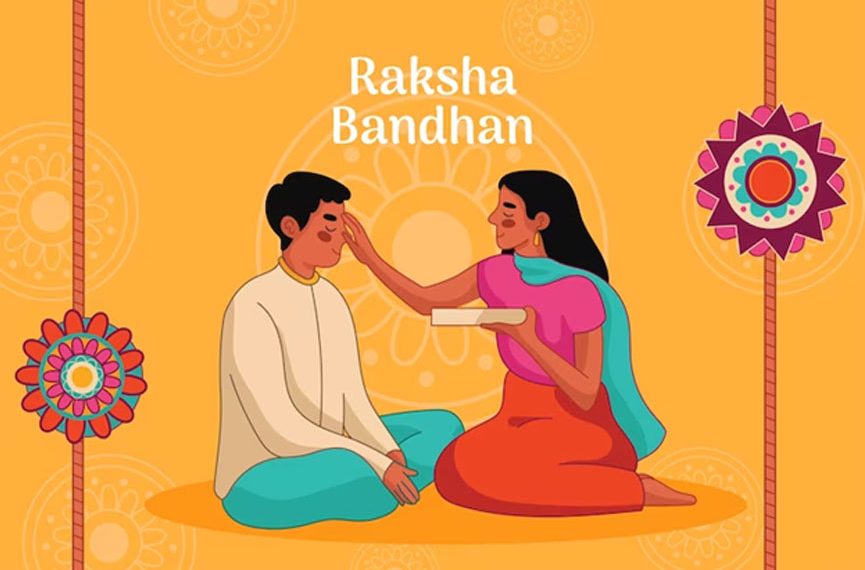
Siblings enjoy a unique relationship, but there’s nothing more special than the strong bond of brother and sister. Indian culture celebrates this relationship through Raksha Bandhan, which means ‘protective knot’ and is commonly called the ‘Festival of Threads.’ Traditionally, this festival is celebrated on the last day of the ‘Shraavana’ month of the Hindu calendar and is a poignant reflection of the love and affection shared by brother and sister since childhood, as well as the unbreakable bond between brothers and sisters. The sister ties a Rakhi, or sacred thread, on her brother’s wrist, and he, in return, gives her something as a token of that strong bond.
As time passes, professions, marriage, and other commitments create distance between siblings, but despite that, sisters rarely forget to send a rakhi by mail or through online portals. Such is the strength of the bond between brothers and sisters! So let’s look at what Raksha Bandhan is and how it celebrates the bond of brother and sister. As a parent, especially, you need to inculcate in your children the spirit of supporting, protecting, encouraging and standing by each other and thus understanding the importance of Rakhi.
Why is Raksha Bandhan Celebrated?
Raksha Bandhan symbolises the strong emotional connection between siblings. The Rakhi thread represents love, blessings, and the promise to always stand by each other through every stage of life.
Although the festival has traditionally focused on brothers protecting their sisters, modern celebrations embrace equality. Today, siblings promise to support, encourage, and care for each other, making Raksha Bandhan a celebration of mutual respect and lifelong friendship.
Also Read: Importance of Celebrating Every Festival
The Story Behind Raksha Bandhan
It is believed that Lord Krishna and Draupadi created a deep bond of brother and sister when she tore a strip from her saree to bandage his cut finger. In return, he was always there to protect her when she needed help, including when she was humiliated by the Kauravas, who tried to disrobe her. In recognition of that, sisters prepare a Rakhi pooja thali with sweets and other things while praying for their brother’s health and well-being. In return, her brother promises to always protect her.
Why Raksha Bandhan is Important for Children
1. The Protective Bond
Raksha Bandhan, or Rakhi, is a much-awaited celebration where brothers and sisters reaffirm their love and respect for each other by tying a rakhi on their brother’s wrist, who in return gives them a gift or money to acknowledge that bond. The sister prays for the well-being and health of her brother, who, in return, promises to always protect her. In today’s woke world, where women may not feel they require the protection of a man, it may seem that the importance of Rakhi is diminishing. But one can still not deny that this festival is about more than that, as its significance lies in honouring and nurturing the bond between brothers and sisters.
2. Brings Siblings Closer Together
There are no siblings in this world who have not fought with one another or exchanged hot words. The importance of rakhi is that it makes them forget all those arguments and fights, and they reconnect with renewed love and affection during this festival. It serves as a reminder of the love and respect they grew up with, and it is a perfect time to bury the hatchet and rebuild the bond they shared.
3. Raksha Bandhan Means Caring
For women, the meaning of Raksha Bandhan has evolved to express care not just for brothers but for men they respect or admire, whom they often refer to as their ‘Rakhi Brothers.’ Children and workers may also tie a rakhi on the wrists of senior individuals or authority figures as a symbol of their respect and admiration for them and, in return, accept their protection. In the modern world, in families without brothers, sisters often tie rakhis on each other’s wrists to symbolise their commitment to always love and protect each other.
4. Reunites Siblings
However far siblings may live from each other, Raksha Bandhan is one time they will make an effort to reunite. Such is the strength of the bond between brothers and sisters that this festival becomes an excuse to meet. It deepens the love and care they share and bridges the gap that may arise from distance. It symbolises affection and concern for one another and reminds them of the values they share.
5. Sharing Gifts
This is the festival where the cost of the gift or money given is insignificant compared to the emotions behind it. It could be anything from a branded dress, handbag or perfume to something as simple as a chocolate hamper. It’s always appreciated by the sister, as it’s a celebration of a childhood spent together and a time gone by. These days, sisters may also buy a small gift for their brothers and tie a rakhi to express their love and appreciation.
Also Read – Famous Festivals in India during Monsoon
Importance of Relationships
The bond between brothers and sisters is unique, as it represents an entire childhood shared with all its ups and downs. This relationship outlasts all others, and they can rely on each other without giving it a second thought. It gives them a sense of security and belongingness that cannot be surpassed, and Raksha Bandhan is one of the best ways to reinforce that relationship for a lifetime.
How EuroKids Celebrates Raksha Bandhan
At EuroKids, Raksha Bandhan is celebrated through engaging activities that help children understand the importance of relationships, kindness, and sharing. Children enjoy creating colourful handmade Rakhis, listening to stories about the festival, participating in craft activities, exchanging greeting cards, and celebrating together in a joyful classroom environment. These experiences help children appreciate Indian traditions while developing empathy, creativity, and social skills.
Also Read: Exploring Different Cultures with Kindergarten Children
Conclusion
Raksha Bandhan is a celebration of one of life’s most precious relationships. Beyond the colourful Rakhis and thoughtful gifts, it reminds us that love, trust, respect, and support form the foundation of every strong family.
What is Raksha Bandhan but a celebration of the beautiful and strong bond between brothers and sisters that transcends all other bonds! This festival not only has rituals like lighting a diya, doing an aarti, tying the rakhi, and feeding your brother scrumptious sweets, but also has a fun element with shopping and the exchange of gifts and money. Rakhis are bought by sisters and can range from a simple decorative thread to a designer rakhi, while brothers look for a suitable gift for their sisters, which can be something branded or just a book or game she likes.
These activities are instrumental in building a long-lasting relationship between brother and sister, and you can get in touch with EuroKids for more ideas on how to strengthen a spirit of sharing responsibilities, teamwork, and collaboration. This will do wonders for bringing them closer together and forming a bond that will last a lifetime. Don’t forget to check out EuroKids Preschool Admission for the right first step in your little one’s learning journey.
FAQs
1. What is the meaning of Raksha Bandhan?
Raksha Bandhan is an Indian festival that celebrates the bond of love, trust, and lifelong support between siblings through the tying of a Rakhi.
2. Why do sisters tie Rakhi to their brothers?
Traditionally, the Rakhi symbolises love, blessings, and the promise that siblings will always support and care for one another.
3. How can children celebrate Raksha Bandhan?
Children can make handmade Rakhis, exchange greeting cards and gifts, listen to festival stories, and spend quality time with their families.
4. Is Raksha Bandhan only celebrated between brothers and sisters?
No. Today, many people also celebrate Raksha Bandhan with cousins, close friends, and loved ones as a symbol of affection and mutual respect.
5. What values does Raksha Bandhan teach children?
Raksha Bandhan teaches children the importance of love, gratitude, sharing, kindness, family bonding, and mutual support.