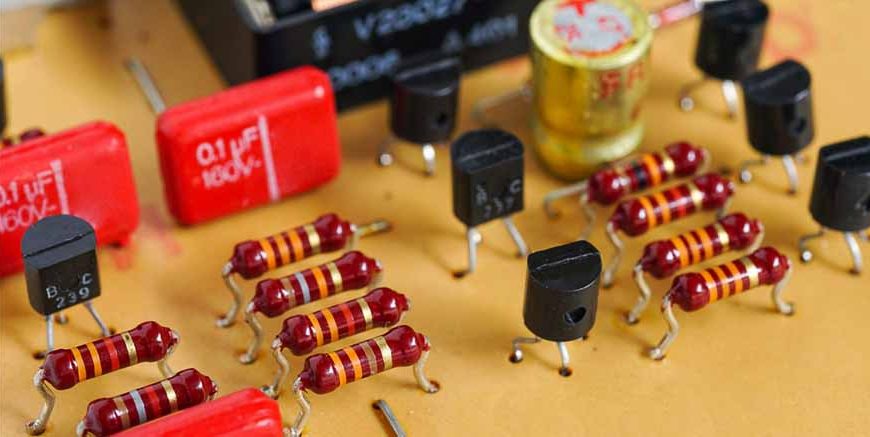
When you inevitably drop a television remote control on the hard kitchen floor and the plastic casing completely shatters, you are instantly greeted by a weird, miniature city. The green circuit board is completely covered in tiny, colourful plastic cylinders, flat ceramic discs, and metallic squares. Most of us just stare at them, sweep the broken bits into the bin, and buy a new remote. But those little cylinders are incredibly important pieces of engineering.
They are called capacitors. If you want to understand exactly what a capacitor is used for, you have to stop thinking about complicated physics textbooks and start thinking about a simple, physical water bucket. Let us break down exactly how these tiny, cheap electronic buckets keep our entire modern world running smoothly.
The Basic Mechanical Definition
Before looking at a specific use of a capacitor in a machine, we need to understand the absolute basic mechanics of how it handles power.
Imagine a standard chemical battery as a massive, towering water tank in your town. It holds absolute loads of water and slowly, steadily drips it out through the pipes all day long to keep the taps running. A capacitor, on the other hand, is like a small plastic bucket sitting under a tap.
It fills up with electricity incredibly fast, and then it can tip over and violently dump all of that electricity out in one massive, aggressive splash. Its primary role of capacitor is not to provide long-lasting power all day, but to store a temporary, static electrical charge and release it exactly when a device suddenly demands a massive burst of energy.
Read More – What is Electric Current?
Smoothing the Electrical Bumps
The most vital use of capacitors in electric circuit design is all about smoothing things out and acting as a shock absorber.
Electricity coming straight from a wall socket or a cheap power supply isn’t always a perfect, perfectly flat line of power. Sometimes the voltage aggressively spikes up for a millisecond, and sometimes it drops slightly. If you send that bumpy, messy, chaotic electricity straight into a delicate, expensive computer chip, the chip will instantly fry and die.
So, clever electrical engineers solder these tiny cylinders onto the board right in front of the delicate chips. When the power spikes too high, the cylinder acts like a sponge and sucks up that extra, dangerous energy. When the power randomly drops too low, it instantly empties its little bucket to fill the missing gap. It acts as an incredible electrical filter, ensuring the delicate computer parts only ever receive a flawlessly smooth, safe flow of electricity.
Spotting the Tech in the Wild
You certainly do not need to be a highly qualified electrician to spot a brilliant application of capacitor in daily life. You interact with them constantly in your own house without even realising it.
Take your smartphone camera, for example. When you try to take a photograph in a pitch-black room, your tiny phone battery physically cannot push out enough raw power instantly to create that blindingly bright white flash. So, a capacitor inside the phone slowly fills up from the battery over a few seconds. When you finally press the shutter button, it violently dumps all its hoarded energy into the LED bulb in a fraction of a second, creating a massive burst of light.
You can also find them hanging right above your head. Heavy ceiling fans require a massive, aggressive kick of power just to start spinning from a dead stop. A normal electrical wire cannot provide that sudden kick alone. A starting cylinder hidden inside the fan’s motor provides that exact jolt, acting as a brilliant application of capacitor technology.
Even your tablet screen relies on them. Modern touchscreens contain a microscopic grid of them. Because your human body naturally holds a tiny bit of electricity, when your bare finger touches the glass, it actually changes the electrical charge at that specific physical point. The tablet’s brain measures that exact change to figure out precisely where you tapped or swiped.
Read More – Uses of Electricity and Its Applications In Day to Day Life
Brilliant Scientific Facts
To really grasp the science behind these components, kids need to see how these things bend the rules of electronics. Here is a list of totally fascinating facts driven entirely by pure logic:
- They can hold a grudge: Even if you completely unplug an old television or a microwave from the wall socket, the massive cylinders hidden inside can still hold a highly dangerous, painful electrical charge for weeks at a time. They trap the energy perfectly until it finds a way out!
- They act as clever bouncers: In expensive audio equipment, a specific use of a capacitor is to block certain signals while letting others through. They stubbornly block straight, flat direct current (DC) but happily allow wavy alternating current (AC) to pass right through. This specific trick helps separate the heavy bass sounds from the high treble sounds in your stereo speakers.
- The future is massive: Modern scientists are completely obsessed with building ‘supercapacitors’. These are highly advanced, giant versions that can charge an electric bus or a car in just ten seconds, completely replacing the need to wait hours for standard chemical batteries to slowly fill up.
- A historical jar: The very first version of this technology was invented back in the 1700s. It was called a Leyden jar, which was literally just a glass jar coated in metal foil that scientists used to trap static electricity from early generators.
Read More – Fascinating Science Facts for Kids
Conclusion
Peering inside an open electronic device reveals a hidden, highly organised universe of metal and plastic. These tiny, colourful plastic cylinders are the undisputed unsung heroes of modern engineering. From smoothing out dangerous, chaotic electrical bumps to firing off a blinding camera flash in the dark, they are the ultimate fast-acting energy buckets. It is incredibly thought-provoking to realise that without these dirt-cheap components frantically hoarding and dumping electricity in fractions of a millisecond, none of our sleek modern smartphones, fast laptops, or electric cars would actually turn on.
If we teach our children to look past the shiny plastic casing and actively understand the hidden physics inside, they stop just passively consuming technology and start figuring out how to build it themselves. To find more brilliant ways to turn everyday curiosity into a fantastic educational adventure, explore the latest insights on the EuroKids Blog and secure a brilliant foundation for their future through EuroKids Preschool Admission today.
FAQs
Can these components wear out over time?
Yes, they certainly can. Over many years of heating up and cooling down inside a hot computer, the wet chemical paste inside them can dry up, swell, or leak out, which is exactly why old electronics suddenly refuse to turn on.
Are they completely safe to touch?
Absolutely not. You should never poke your fingers around inside an open electronic device like a television or a computer power supply, because the large cylinders can store a nasty, dangerous electrical shock even when the plug is pulled out of the wall.
Do they work exactly like normal batteries?
Not quite. While they both store energy, batteries rely on slow, internal chemical reactions to provide a steady stream of power for hours, whereas these components use pure static electricity to charge up in seconds and empty completely in milliseconds.