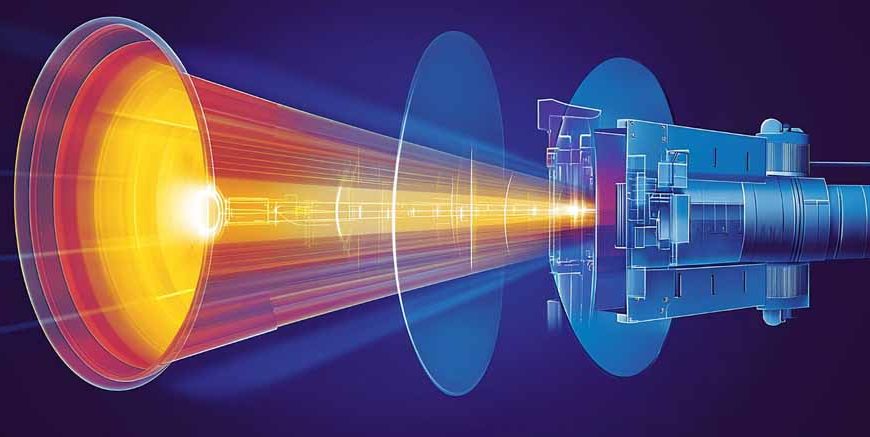
We often watch films where superheroes shoot invisible, glowing beams from their hands to save the city from disaster. It is a fantastic, crowd-pleasing trick on the big screen. Children are naturally obsessed with things they cannot see, like magic spells or sneaky ghosts. But what if you told your kids that invisible beams are actually flying around us in the real world right now? They are not destroying buildings or fighting villains, though.
Instead, clever scientists are using them to cure illnesses, run massive factories, and figure out how the universe actually works. Today, we are talking about a very specific type of tiny, fast-moving energy. It might sound like a complicated, dusty physics lesson at first glance, but once you break it down into everyday language, it is actually quite a brilliant story. Let us look closely at these tiny, invisible speedsters and figure out exactly what they do.
The Invisible Speedsters: Figuring Out the Basics
If you knock on a wooden door or tap your knuckles on a glass window, it feels completely solid. However, everything around us is built from microscopic building blocks called atoms. Inside the very centre of these tiny atoms, a place called the nucleus, things can sometimes get a little bit too crowded and unstable. Think of it like a completely packed commuter bus. For the bus to travel safely, someone occasionally has to hop off.
To settle down and get comfortable again, an unstable atom throws out a tiny piece of itself at an incredibly high speed. That tiny, escaping piece is exactly what is a beta particle. It is basically a super-fast electron making a quick getaway.
When a whole bunch of these tiny particles travel together in a fast, continuous stream, we call it a beta ray. You might also hear clever folks on the news refer to this exact same process as beta radiation. It sounds a bit scary because we are conditioned by films to fear that word, but it is actually just a natural, physical way that unstable atoms release their built-up, messy energy to become stable again.
So, if a student asks you what are beta rays, you can simply tell them that they are invisible rivers of tiny, speeding electrons trying to find a resting place.
Read More – Uses of Ultraviolet Rays
The Detective Behind the Discovery
We did not just wake up one random morning knowing all about this invisible energy. The burning question of beta rays discovered by whom takes us all the way back to the year 1899. A rather brilliant scientist named Ernest Rutherford was spending his days in a laboratory experimenting with a heavy, naturally radioactive metal called uranium.
He was incredibly observant. He noticed that the metal was quietly giving off different types of invisible beams. By testing how they moved, he realised they were not all the same. He named the heavy, slow-moving, clumsy beams ‘alpha’ and the fast, zippy, lightweight ones ‘beta’. He basically caught them speeding! It was a massive, ground-breaking moment that completely altered how we understand modern chemistry.
What Makes Them So Special?
So, what actually makes them behave the way they do? If we look at the specific properties of beta rays, we see some genuinely fascinating behaviour. They have their own strict set of physical rules. Here is a simple list explaining the main properties of beta particles that make them so unique:
- They are unbelievably fast: These tiny electrons shoot out of the atom travelling at nearly the speed of light. That is fast enough to travel around the entire Earth several times before you even manage to blink your eyes.
- They carry a negative charge: Because they are essentially just speedy electrons, they carry a negative electrical charge. This means that if you put a strong magnet near them, they will actually bend and change direction, steering away from their straight path.
- They are a bit sneaky, but stoppable: Alpha particles are huge and clumsy; a simple, thin sheet of notebook paper can stop them entirely. Beta particles are much smaller and craftier. They easily pass straight through paper and human skin. However, they are not completely unstoppable. A thin sheet of metal, like a piece of aluminium foil from your kitchen drawer, will block them completely.
- They are extremely lightweight: Compared to the heavy protons sitting inside the atom, they weigh almost nothing at all. This is precisely why they can zip around so quickly without causing massive, devastating physical damage to the objects they pass through.
Read More – Fascinating Science Facts for Kids
Brilliant Everyday Applications
Knowing how they move is certainly interesting for a science exam, but how does this help us in our daily, regular lives? Because scientists know exactly how far these rays can travel before they are stopped by a barrier, they put these speedy little electrons to work in some highly clever ways.
In modern hospitals, doctors use them to treat certain types of skin and eye cancers. Because these specific rays only travel a very short distance into the human body before stopping, doctors can point them directly at bad, unhealthy cells on the surface. The radiation destroys the nasty cells without pushing deep enough to damage the healthy, normal organs hiding further inside the body. It is a highly targeted, precise medical tool.
They are also surprisingly useful in busy manufacturing plants. Think about the crisp, flat, white sheets of paper in your child’s school notebook. How does the factory make sure every single sheet is exactly the same thickness? They put a machine shooting these particles on one side of the moving paper, and a sensor on the other side. If the paper comes out too thick, fewer particles manage to push through to the sensor. The machine instantly notices this and tells the heavy metal rollers to squeeze a bit tighter. It is an entirely automated, invisible quality control system working flawlessly without a human ever having to touch a button.
Scientists also use them in agriculture. By putting a tiny, safe amount of a beta-emitting substance into plant fertiliser, researchers can use special cameras to track exactly how a plant drinks up its food from the roots all the way to the top leaves. This helps farmers figure out the best ways to grow massive, healthy crops to feed the world.
Read More – Science Quiz Questions for Kids with Answers
Conclusion
When we take a step back and really look at the big picture, it is quite astonishing how the tiniest, most invisible building blocks of our universe affect our daily routines. These speeding electrons help to heal the sick, keep massive factory machines running perfectly, and help us grow better food. We spend so much of our time worrying about the massive, highly visible things in our chaotic world, but perhaps we should spend a little more time appreciating the quiet, invisible forces holding it all together.
It genuinely makes you wonder what other brilliant, microscopic secrets are hiding right under our noses, just waiting for a curious young mind to find them. For more wonderful ways to spark your child’s curiosity about science and the natural world around them, keep reading the EuroKids Blog, and discover a brilliant start to their educational journey through EuroKids Preschool Admission.
FAQs
Exactly what is a beta particle in simple terms?
It is a tiny, high-speed electron that gets shot out of an unstable atom when the atom is trying to settle down and balance its energy.
Is a beta ray the exact same thing as beta radiation?
Yes, they mean the same thing. A continuous stream of these fast-moving particles travelling through the air is referred to as both a ray and radiation.
What are the main properties of beta rays?
They are extremely fast, very lightweight, carry a negative electrical charge, and can easily pass through a piece of paper but will be completely stopped by a thin sheet of aluminium.
Who were beta rays discovered by?
They were discovered by the famous physicist Ernest Rutherford in 1899 while he was closely studying how the radioactive metal uranium releases different types of energy.