

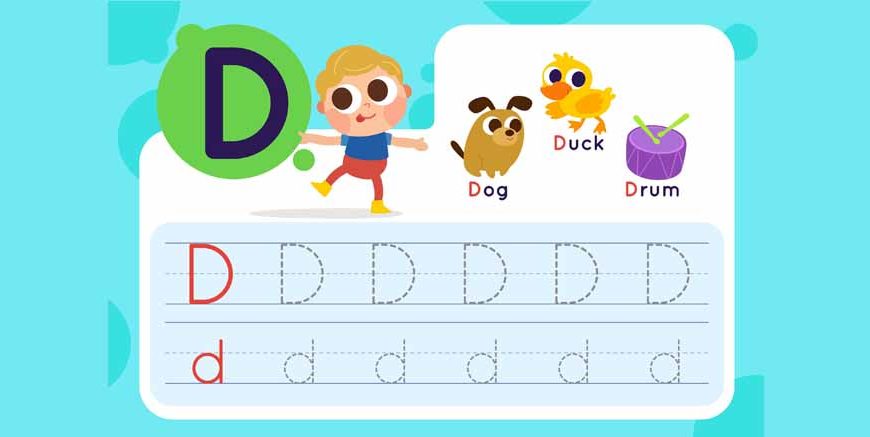
Small kids identify pictures of animals, cars, and fruits in seconds because they see them in cartoon videos and picture cards. But looking at an illustration is not reading. If you always leave the picture uncovered, your child simply guesses. They see a picture of a pup and say dog, or they see a picture of a kitten and say cat, without actually looking at the letters underneath. When parents get frustrated, shout, or make a tired child fill two pages of handwriting lines before dinner, the child starts dreading books altogether.
Teaching your child 3 letter words starting with d cuts straight through this habit. These words are short, they use clear phonetic sounds, and they name things your child spots around the colony or eats at tea time.
Everyday 3-Letter Words Starting with D
- Dam: A massive concrete wall built across a wide river to hold water back, stop floods, and send electricity to our homes.
- Den: A dark rock cave inside the forest where a lion or tiger sleeps with its cubs.
- Dot: A small round mark you make on paper using the sharp tip of your pencil at the end of an English line.
- Dog: The four-legged pet animal that wags its tail, guards the front door, and barks when the courier bell rings.
- Dad: The familiar name your child calls their father when he returns from the office in the evening with snacks.
- Day: The bright sunny hours between morning tea and sunset when children go to school and play in the park.
- Dig: Moving loose red soil in the garden pot using an old spoon or playing with dry sand on the beach.
- Dip: Lowering a sweet Marie biscuit into a glass of warm milk until it goes soft.
- Dry: What happens to washed school uniforms when you hang them on the balcony clothesline under the afternoon sun.
Read More – 3 Letter Words Starting With A for Kids
Teaching D Words Using Sound Families
The -OG Group
Join D to “-og” and you get Dog. Say it with fog, log, and jog. When your child sees that “-og” never changes, they can read three or four words without stopping to puzzle over each letter.
The -AD Group
Put D before “-ad” to make Dad. Practice it alongside bad, lad, mad, and sad. Point at their father sitting in the room to connect the three letters with a real face.
The -AM Group
Join D with “-am” to build Dam. Read it with jam, ham, and ram. Talk about sweet fruit jam on toast to show how these rhyming patterns work.
The -OT Group
Put D before “-ot” to make Dot. Read it with cot, hot, and pot. Hand your child a sketch pen and let them tap five colourful dots on a scrap page while spelling D-O-T out loud.
The -IP Group
Link D with “-ip” to get Dip. Read it with lip, sip, and tip. Take a spoon of curd at lunch and show the dipping action so the meaning sticks.
Read More – List of Sight Words in English for Kids
Sorting Out the B and D Mix-Up
Many four-year-olds mix up lowercase b and lowercase d when writing d three letter words in four-line notebooks. This happens because the two letters look like mirror images. A young child’s brain treats letters like spoons or cups; whether a cup points left or right, it still holds water. But with English letters, turning the circle around changes the sound completely.
You can sort this out with a straightforward physical trick. Teach your child the door handle rule. When you write the letter d, you draw the round door handle first on the left, and then you pull down the tall door stick on the right. Another trick is to show them that the tummy of the letter d always points left, towards the red margin line where writing begins. Having your child trace the circle in a flat plate of dry suji before drawing the straight stick helps their fingers remember the shape.
Read More – List of Spelling Words For Children To Learn
How EuroKids Builds Reading Skills Through Play
Real reading confidence grows when teachers let young children play with sounds, look through picture books, and share silly stories in a warm classroom. Children trace letter shapes in fine sand trays, read easy storybooks with friends, and learn new words during morning circle time. By making phonics a natural part of daily play, EuroKids helps children speak clearly, listen with patience, and step into primary school ready to read on their own.
Conclusion
Watching your child read a three-letter word without any hints is a quiet, proud moment. It marks the day when black pencil marks on paper stop being strange drawings and turn into real things they know. Taking ten quiet minutes on the rug each evening to practice these words gives your child a skill they will carry for years. A child who learns to read without fear looks at books with interest rather than dread.
To read more practical parenting pieces and early learning guides, check out the EuroKids Blog, and visit your neighbourhood centre to speak with our staff about simple EuroKids Preschool Admission options for your child today.
Frequently Asked Questions
Why do young children frequently confuse the letters b and d?
Young children confuse b and d because the two letters are visual mirror images, and developing brains take time to associate direction with different phonetic sounds.
At what age should a child start reading three-letter words?
Most children begin blending three-letter words between four and five years of age, once they recognise individual alphabet letters and their basic sounds.
How can parents help a child who struggles to blend letter sounds?
Say the sounds close together without long gaps in between, use rhyming families like -ad and -og, and have your child run their finger under the letters while speaking.