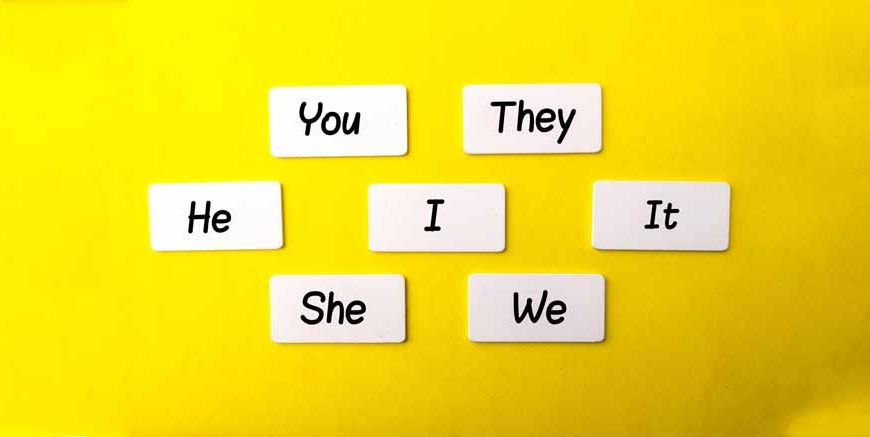
Let us jump right into how we talk every day. Think about telling a story about your best friend, Sam. If you say, “Sam went to the park. Sam played on the swing. Sam ate an apple,” it sounds very repetitive and clunky, right? That is exactly why we have a special group of words to help us. They act as the little helpers of our language. By teaching pronouns for kids, we help them make their sentences smooth, quick, and completely natural. Let us look closely at how these handy words work and how to teach them easily at home or in the classroom.
The Basic Meaning of Pronoun in English
To keep things very simple, the meaning of pronoun in English is a word that takes the place of a noun (a person, place, or thing). Instead of repeating a name over and over, we swap it out for a much shorter word.
If a young student needs a clear definition of pronoun for class 1, you can tell them: “A pronoun is a substitute word. It stands in for a name so we do not get tired of saying the exact same word again and again.” It is like having a backup player in a sports game. When the main player (the noun) needs a break, the backup player jumps into the sentence to keep the game going.
Read More – Guide to Teaching English Grammar for Kids
Types of Pronoun with Examples
There are a few different groups of these words depending on what exact job they are doing in the sentence. Here are the most common types of pronoun with examples that children use every day:
1. Personal Pronouns:
These replace the specific names of people, animals, or things.
- Words to know: I, you, he, she, it, we, they.
- Pronoun examples: Instead of saying “The dog barks loudly,” you simply say “It barks loudly.”
2. Possessive Pronouns:
These show that something belongs to someone.
- Words to know: Mine, yours, his, hers, ours, theirs.
- Examples of pronouns in English: Instead of saying “That is Sarah’s book,” you say “That book is hers.”
3. Demonstrative Pronouns:
These are pointing words. We use them to point to specific things we can see.
- Words to know: This, that, these, those.
- Pronoun examples: “This is my favorite toy car.”
4. Reflexive Pronouns:
These are used when the person doing the action is also receiving the action.
- Words to know: Myself, yourself, himself, herself, itself.
- Pronoun examples: “He tied his shoes all by himself.”
Pronoun Examples Sentences: Seeing Them in Action
Kids learn grammar rules best when they can see the clear “before and after” of a sentence. Let us look at a helpful pronoun definition and examples list using full sentences. Read the first sentence aloud, and then see how the substitute word fixes the repetition in the second sentence.
Example 1:
- Without: Maria loves to read books because Maria finds books very fun.
- With: Maria loves to read books because she finds them very fun.
Example 2:
- Without: The teacher told the students that the students did a great job on the test.
- With: The teacher told the students that they did a great job on the test.
Example 3:
- Without: Mark dropped Mark’s yellow pencil on the floor.
- With: Mark dropped his yellow pencil on the floor.
Example 4:
- Without: The cat washed the cat’s paws after playing in the mud.
- With: The cat washed its paws after playing in the mud.
Using these pronoun examples sentences during daily practice helps children see how much faster and smoother talking becomes when we use the correct substitute words.
Read More – Fun English Grammar Games for Kids
Making Grammar Practice Fun
You do not need boring paper worksheets to teach this concept. You can play a simple game at home called “Name Swap.” Point to an object in the room and ask your child to make a sentence about it without using its real name. If you point to Dad’s shoes, they have to say, “Those are his.” If they point to themselves in the mirror, they say, “I see myself.” It is a quick, fun way to practice every single day while keeping the learning light and enjoyable.
Conclusion
Whether they are using “he,” “she,” “it,” or “they,” these small words do the heavy lifting in our daily conversations, keeping our stories interesting and preventing boring repetition.
Looking at how these words work leaves us with a rather thought-provoking idea. Language is incredibly smart and efficient. We created these tiny substitute words hundreds of years ago just to save time and energy while talking to each other. By mastering them, a child does not just learn a strict grammar rule; they learn how to connect their ideas smoothly, speak clearly, and share their daily thoughts with real confidence.
To read more fun and educational articles, check out the EuroKids Blog, and visit our website for details on EuroKids Preschool Admission.
FAQs
What is the easiest way to explain pronouns to a child?
Call them “stand-in” or “substitute” words. Tell your child that just like a substitute teacher steps in when the real teacher is away, a pronoun steps in when we do not want to use the real noun again.
Should I teach all the types at once?
No, start with the basic personal ones first (I, you, he, she, it). Once they easily master those in spoken sentences, move on to possessive ones (mine, yours, his, hers).
Why does my child say “Me want an apple” instead of “I want an apple”?
This is very common for early learners! They are still figuring out the difference between subject and object words. Just gently correct them by saying, “Yes, I want an apple,” so they hear the right version without feeling like they made a big mistake.
Are ‘this’ and ‘that’ considered pronouns?
Yes! When they take the place of a noun (like saying “I want that“), they are officially called demonstrative pronouns because they actively point to a specific thing in the room.