Nursery rhymes are an essential part of early childhood learning. They help children develop language skills, rhythm, and coordination in a fun and engaging way. One of the most popular action rhymes for young learners is Two Little Hands. This delightful rhyme encourages children to clap, move, and follow simple instructions.
The Two Little Hands poem is especially loved by toddlers and preschoolers because it includes playful actions like clap clap clap, stamping feet, and turning around. These actions make learning interactive and enjoyable.
In this article, we will explore the “two little hands to clap, clap, clap” lyrics, understand their meaning, benefits, and fun ways to teach them to children.
Two Little Hands To Clap Clap Clap Lyrics
Here are the popular ‘Two little hands to clap, clap, clap’ lyrics:
Two little hands to clap clap clap,
Two little feet go tap tap tap,
Two little eyes are open wide,
One little head goes side to side.
Two little hands go clap clap clap,
Two little feet go jump jump jump,
One little body turns around,
One little child sits quietly down.
These simple and rhythmic lines make the Two Little Hands poem easy to learn and fun to perform.
What Is the Two Little Hands Poem?
The Two Little Hands poem is an action rhyme designed for young children. It uses simple words and repetitive patterns to help kids learn basic movements and vocabulary.
The phrase two little hands to clap, clap, clap is repeated, making it easier for children to remember and enjoy.
Each line is linked to a physical action:
- Clap hands
- Tap feet
- Turn head
- Sit down
This makes the rhyme both educational and entertaining.
Read More – Classic Preschool Nursery Rhymes
Why Kids Love Two Little Hands
Children enjoy the Two Little Hands rhyme for many reasons.
Easy Words
The words are simple and easy to understand.
Repetition
The repeated phrase clap clap clap helps children memorise the rhyme.
Fun Actions
The rhyme includes movements like clapping and jumping.
Interactive Learning
Children actively participate while learning.
Because of these features, the clap, clap, clap poem is widely used in preschools.
Educational Benefits of Two Little Hands Rhyme
The two little hands to clap, clap, clap rhyme offers many learning benefits.
Language Development
Children learn new words and improve pronunciation.
Motor Skills
Actions like clapping and jumping improve coordination.
Listening Skills
Children learn to follow instructions.
Memory Improvement
Repetition helps children remember lines easily.
These benefits make the clap clap poem an important part of early education.
Read More – Easy to Bed Nursery Rhyme
Actions for Two Little Hands Rhyme
Adding actions makes the Two Little Hands poem more engaging.
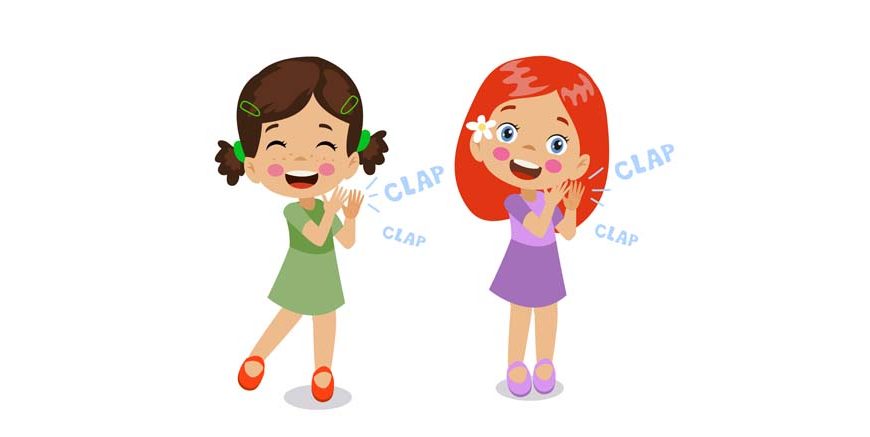
Clap Clap Clap
Children clap their hands together.
Tap Tap Tap
Children tap their feet on the floor.
Jump Jump Jump
Children jump in place.
Turn Around
Children spin in a circle.
Sit Down
Children sit quietly at the end.
These actions help children connect words with movements.
Fun Activities Based on Two Little Hands
Parents and teachers can use creative activities to teach the rhyme.
Action Game
Children perform actions while singing the rhyme.
Mirror Activity
Children copy the teacher’s movements.
Music and Dance
Play music and let children dance along.
Drawing Activity
Children draw hands and feet and label them.
These activities make the clap, clap, clap poem more engaging.
Importance of Action Rhymes
Action rhymes, like Two Little Hands, are important for child development.
Physical Development
Movements improve balance and coordination.
Social Skills
Group activities encourage teamwork.
Confidence Building
Performing rhymes boosts confidence.
Cognitive Development
Children learn to connect words with actions.
Read More – Unlock the Magic of Rhyming Words
Simple Explanation for Kids
Teachers often explain the rhyme in simple terms.
Example:
The rhyme tells children to use their hands, feet, and bodies to perform actions such as clapping, tapping, and turning. It helps them learn while playing.
This makes the Two Little Hands poem easy to understand.
How EuroKids Builds Strong English Foundations
Learning English at a young age becomes natural when children engage with stories, songs, real-life objects, and interactive activities. Instead of rote memorisation, EuroKids focuses on developing language skills through meaningful experiences that make reading, writing, speaking, and listening enjoyable.
At EuroKids, foundational English concepts are taught through storytelling, picture books, phonics-based exercises, and interactive vocabulary games, all aligned with the HEUREKA – Visible Thinking Curriculum. This approach helps children connect words to ideas, build comprehension skills, and express themselves confidently.
Activities such as narrating short stories, describing objects, and participating in “Think-Pair-Share” or “See-Think-Wonder” routines reinforce language understanding. Children learn grammar, vocabulary, sentence formation, and pronunciation in ways that feel playful yet purposeful.
With a child-focused, activity-driven methodology refined over 20+ years and implemented across 1600+ preschools, EuroKids emphasises communication and confidence first. As children enjoy English learning, fluency, reading comprehension, and writing skills develop naturally, laying the groundwork for strong lifelong language abilities.
Tips for Teaching Two Little Hands
Parents and teachers can follow these tips.
Use Clear Actions
Show each action clearly.
Repeat the Rhyme
Repetition helps children learn faster.
Encourage Participation
Let children perform actions independently.
Use Music
Adding music makes the rhyme more fun.
These tips help children learn the lyrics to “Two Little Hands to Clap Clap Clap” effectively.
Two Little Hands as a Daily Routine
This rhyme can be part of a daily routine.
Morning Activity
Start the day with the rhyme to energise children.
Classroom Break
Use it as a quick activity between lessons.
Playtime
Include it in games and fun sessions.
The clap, clap, clap actions help children stay active.
Quick Summary
Here is a quick recap:
- The poem Two Little Hands is an action rhyme.
- It includes movements like clapping and jumping.
- The rhyme improves language and motor skills.
- It is popular in India and around the world.
Conclusion
The Two Little Hands Nursery Rhyme is a fun and engaging way to help children learn language and movement. With its simple two little hands to clap clap clap lyrics, it encourages active participation and joyful learning.
Whether used in Indian classrooms or in homes around the world, the clap clap clap poem remains a favourite among young learners. Through actions, repetition, and music, children develop important skills while enjoying the rhyme.
To explore more learning ideas, simple explanations, and early childhood resources, parents can visit the EuroKids Blog. Those who wish to understand the preschool journey better or explore enrolment options can find complete information on the EuroKids Preschool Admission
Page, where learning is joyful, engaging, and child-friendly.