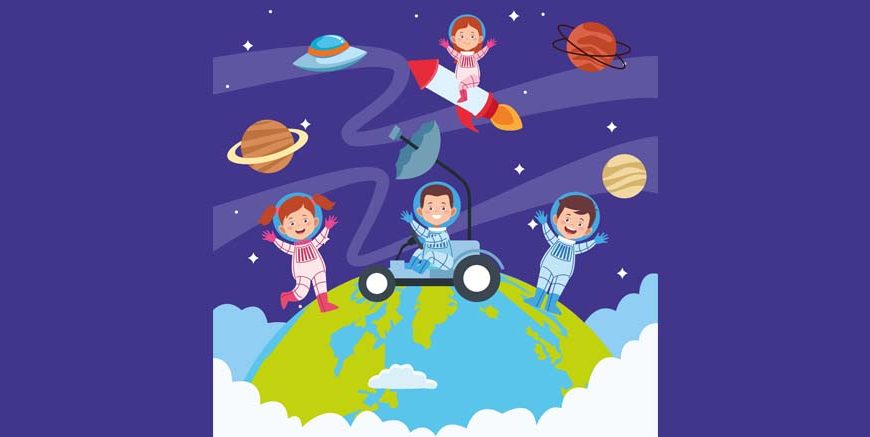
Space has always fascinated children and adults alike. The vast universe, sparkling stars, mysterious planets, and powerful galaxies spark curiosity about how everything works. One of the most interesting topics in science for young learners is the solar system. Learning about planets and space not only improves general knowledge but also encourages curiosity and scientific thinking.
Many children often ask questions such as what a planet is, how many planets there are in the solar system, and which planet is the largest. Asking and answering solar system GK questions helps children learn the basics of astronomy in a fun, interactive way.
In this article, we will explore the solar system, explain what a planet is, and provide a list of engaging GK questions on the solar system with answers that children can learn and enjoy.
What Is a Planet?
Before learning GK questions about the solar system, it is important to understand what a planet is.
A planet is a large object in space that orbits a star. In our solar system, all the planets revolve around the Sun. Planets do not produce their own light; instead, they reflect light from the Sun.
According to modern astronomy, a planet must meet three conditions:
- It must orbit the Sun.
- It must have enough gravity to form a round shape.
- It must have cleared its orbit of other objects.
There are eight planets in our solar system.
Read More – Solar System for Kids
The Eight Planets of the Solar System
The planets in our solar system, starting from the closest to the Sun, are:
- Mercury
- Venus
- Earth
- Mars
- Jupiter
- Saturn
- Uranus
- Neptune
Children often remember them using the mnemonic:
My Very Energetic Mother Just Served Us Noodles
Learning these names is often the first step when answering solar system GK questions.
Interesting Facts About the Solar System
Before jumping into the quiz, here are a few fascinating facts about space.
- The Sun is the centre of the solar system.
- Jupiter is the largest planet.
- Mercury is the closest planet to the Sun.
- Neptune is the farthest planet from the Sun.
- Earth is the only planet known to support life.
These facts often appear in GK questions on the solar system for children.
Easy GK Questions on Solar System for Kids
Here are some simple solar system GK questions suitable for young learners.
1. What is at the centre of the solar system?
Answer: The Sun
2. What is a planet?
Answer: A planet is a large object that moves around a star.
3. How many planets are there in the solar system?
Answer: Eight planets
4. Which planet do we live on?
Answer: Earth
5. Which planet is closest to the Sun?
Answer: Mercury
These basic questions help children understand the fundamentals of astronomy.
GK Questions on Planets
Let’s explore more GK questions on the solar system related to planets.
6. Which planet is known as the Red Planet?
Answer: Mars
7. Which planet is the largest in the solar system?
Answer: Jupiter
8. Which planet has beautiful rings around it?
Answer: Saturn
9. Which planet is known as Earth’s twin?
Answer: Venus
10. Which planet is the coldest in the solar system?
Answer: Uranus
These questions help children develop curiosity about space.
Read More – Science Quiz Questions and Answers for Kids
Intermediate Solar System GK Questions
Older children may enjoy slightly more challenging solar system GK questions.
11. Which planet takes the longest time to orbit the Sun?
Answer: Neptune
12. Which planet rotates on its side?
Answer: Uranus
13. Which planet has the most moons?
Answer: Jupiter
14. What galaxy is our solar system located in?
Answer: The Milky Way Galaxy
15. What is the natural satellite of Earth?
Answer: The Moon
These questions expand children’s knowledge about astronomy.
GK Questions on Space and Stars
Astronomy is not just about planets. It also includes stars, galaxies, and space missions.
16. What is the Sun?
Answer: A star
17. What do planets revolve around?
Answer: The Sun
18. What is a group of billions of stars called?
Answer: A galaxy
19. What is the name of our galaxy?
Answer: The Milky Way
20. Which planet is known as the Morning Star?
Answer: Venus
These questions help children connect different parts of space science.
Solar System GK Questions for School Quizzes
Many schools organise quizzes on science topics such as space. Here are some fun GK questions on the solar system for competitions.
21. Which planet has the shortest day?
Answer: Jupiter
22. Which planet is famous for its giant storm called the Great Red Spot?
Answer: Jupiter
23. Which planet is known for having the strongest winds?
Answer: Neptune
24. Which planet is sometimes called the Blue Planet?
Answer: Earth
25. What protects Earth from harmful solar radiation?
Answer: Earth’s atmosphere
Read More – Facts About Saturn Planet
Space Discoveries and Global Examples
Learning about space is a global effort. Scientists and space agencies from many countries work together to explore the universe.
India’s Space Achievements
India has made remarkable progress in space exploration through the Indian Space Research Organisation (ISRO).
Examples include:
- Chandrayaan missions to the Moon
- Mars Orbiter Mission (Mangalyaan)
These missions inspire many Indian students to learn more about space.
H3 Global Space Missions
Other space agencies around the world include:
- NASA (United States)
- ESA (Europe)
- Roscosmos (Russia)
These organisations conduct research and explore planets beyond our solar system.
How EuroKids Builds Strong EVS Foundations
When Environmental Studies (EVS) is introduced through observation, storytelling, nature walks, and hands-on exploration, young learners begin to understand their surroundings in a meaningful and lasting way. Instead of memorising facts about plants, animals, or seasons, children learn by experiencing and questioning the world around them. This is why structured early education programs focus on experiential and inquiry-based learning rather than rote memorisation.
At EuroKids, foundational EVS concepts are nurtured through the HEUREKA – Visible Thinking Curriculum. This approach encourages children to explore themes such as “My Family,” “My Community,” “Plants and Animals,” “Seasons and Weather,” and “Good Habits” through interactive discussions, thematic projects, role play, outdoor exploration, and guided observation.
The Visible Thinking framework helps children observe carefully, think deeply, and express their ideas confidently. Through activities like nature-based learning, environmental awareness projects, sensory exploration, and group conversations, children develop curiosity about how things grow, how communities function, and how they can care for the environment.
With a child-centric, play-based methodology refined over 20+ years and implemented across 1,600+ preschools, EuroKids focuses on building awareness, responsibility, and curiosity first, allowing knowledge, empathy, and critical thinking skills to develop naturally over time.
Why Children Should Learn About the Solar System
Learning solar system GK questions offers many benefits.
Encourages Curiosity
Space science sparks curiosity and imagination.
Improves General Knowledge
Children learn scientific facts about planets and stars.
Supports School Learning
Astronomy topics are included in science subjects.
Inspires Future Scientists
Many astronauts and scientists develop an interest in space during childhood.
Fun Activities to Learn About Planets
Parents and teachers can make learning about space more engaging.
Planet Model
Children can build a solar system model using balls or clay.
Space Quiz
Organise a quiz using GK questions on the solar system.
Storytelling
Tell stories about astronauts and space missions.
Educational Videos
Watch documentaries or animated videos about planets.
These activities make learning fun and interactive.
Quick Revision: Solar System GK Facts
Here are some important facts children should remember.
- The solar system has eight planets.
- Jupiter is the largest planet.
- Mercury is the closest planet to the Sun.
- Earth is the only planet known to support life.
- Saturn is famous for its rings.
These facts often appear in solar system GK questions.
Conclusion
The solar system is full of fascinating objects such as planets, moons, stars, and galaxies. Learning about space helps children understand the universe and develop curiosity about science.
Through fun quizzes and GK questions on the solar system, children can improve their knowledge while enjoying the learning process. Understanding what is a planet and how planets move around the Sun is an important part of basic astronomy.
By exploring space through questions, activities, and discussions, children can develop a lifelong interest in science and discovery.
To explore more learning ideas, simple explanations, and early childhood resources, parents can visit the EuroKids Blog. Those who wish to understand the preschool journey better or explore enrolment options can find complete information on the EuroKids Preschool Admission
Page, where learning is joyful, engaging, and child-friendly.