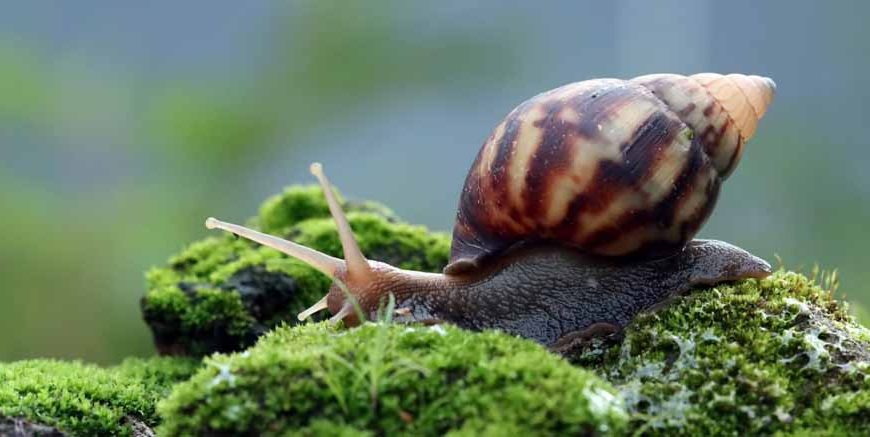
The snail is a small, slow-moving animal that most of us have seen in gardens, farms, ponds, or during the rainy season in India. Though often overlooked, the snail is a fascinating creature with a unique body structure, special adaptations, and an essential role in the ecosystem. From land snails to sea snails, this animal shows great diversity.
Here, we will learn in detail what is a snail, what is its classification, its major body parts, its habitat, types of snails, its characteristics, and some interesting snail facts, explained simply and clearly, primarily in an Indian context.
What is a Snail?
A snail is a soft-bodied, invertebrate creature that usually has a hard, spiral shell on its back. Snails belong to a group of animals called molluscs.
Snail definition:
A snail is a slow-moving mollusc with a soft body, muscular foot, and usually a coiled shell that protects it from predators.
In simple terms, the snail is an animal that crawls using its foot and carries its home (shell) on its back.
Snail Meaning in the English Language
The snail meaning in English refers to the animal known for its slow movement and spiral shell.
The word “snail” is often used metaphorically to describe something very slow. You may have heard of phrases such as “moving at a snail’s pace”.
In some Indian regions, snails are also known locally as “natha animal”, especially in rural or folk contexts.
Read More – Aquatic Animals for Kids
About the Snail in an Indian Context
In India, snails are commonly found:
- In gardens
- Near ponds and lakes
- In agricultural fields
- During the monsoon season
Snails are a familiar sight in many Indian villages, forests, and wetlands. While some snail species are considered pests in farming, others help improve soil quality.
Snail Classification
The snail classification is as follows:
- Kingdom: Animalia
- Phylum: Mollusca
- Class: Gastropoda
- Family: Depends on species (e.g., Helicidae)
This classification shows that snails are closely related to slugs, octopuses, and squids.
Snail Family and Snail Species
There are thousands of snail species found worldwide. Each species belongs to a specific snail family based on shell shape, habitat, and anatomy.
In India, both land and freshwater snail species are found, while sea snails are common along coastal areas.
Types of Snails
There are many different types of snails, broadly classified into three main groups:
1. Land Snails
- Live on land
- Found in gardens, forests, and farms
- Example: garden snail (small snail)
2. Freshwater Snails
- Live in ponds, lakes, and rivers
- Important for aquatic ecosystems
3. Sea Snails
- Found in oceans and seas
- Known for colourful shells
These are the main types of snails found around the world.
Read More – List of Animals That Live On Land And Water
Where Do Snails Live?
Snail Habitat
The snail habitat depends on the kind of snail:
- Land snails live in moist soil, under leaves, or on rocks
- Freshwater snails live in clean water bodies
- Sea snails live in oceans, coral reefs, and coastal waters
In short, snails live in places that are cool, moist, and safe from direct sunlight.
Snail Structure
The snail’s structure is simple but well-adapted to its lifestyle.
Main Parts of a Snail
The parts of a snail include:
- Shell
- Head
- Foot
- Mantle
- Tentacles
These parts together help the snail survive and move.
Snail Body Parts Explained
1. Shell
- Hard and spiral
- Protects the snail from enemies
- Grows with the snail
2. Snail Foot
- A muscular structure
- Helps in movement
- Produces mucus for smooth crawling
3. Head
- Contains the mouth and sensory organs
4. Tentacles
- Two pairs present
- Upper tentacles have eyes
- Lower tentacles help in smelling
Snail Anatomy
The snail anatomy includes both external and internal structures.
Sea Snail Anatomy
Sea snails have:
- Gills for breathing
- Strong shells
- Adaptations for salty water
The snail’s anatomy helps it breathe, move, eat, and protect itself.
Snail Labelled Diagram
A snail labelled diagram usually shows:
- Shell
- Head
- Tentacles
- Foot
- Mantle
Such diagrams are commonly taught in Indian school EVS and biology classes.
Snails have how many teeth?
Yes, snails have teeth!
A snail has thousands of tiny teeth arranged on a ribbon-like structure called the radula.
So, when asked, “Snails have how many teeth?”, the answer is:
- A snail can have 10,000 to 25,000 microscopic teeth
These teeth help in scraping food.
Kind of Food of Snail
The kind of food snails eat depends on their habitat.
Snails eat:
- Leaves
- Algae
- Fruits and vegetables
- Decaying plant matter
Some sea snails also feed on small marine organisms.
Characteristics of Snail
The main characteristics of snails include:
- Slow movement
- Soft body
- Presence of shell
- Cold-blooded nature
- Ability to retract into a shell
These characteristics help snails survive in different environments.
Read More – Wild Animals for Kids
Snail Facts
Here are some cool snail facts:
- Snails move using mucus
- Some snails can sleep for months
- Snails can survive without food for days
- Snails play an essential role in nature
Small Snail and Its Importance
A small snail may seem insignificant, but it:
- Helps decompose organic matter
- Improves soil fertility
- It is part of the food chain
Thus, snails are essential for ecological balance.
Snail Information Summary
Here is a quick recap on snail information:
- A snail is a mollusc
- Found on land and in water
- Has a shell, a foot, and tentacles
- Eats plant matter
- Has thousands of teeth
How EuroKids Builds Strong EVS Foundations
When Environmental Studies (EVS) is introduced through observation, storytelling, nature walks, and hands-on exploration, young learners begin to understand their surroundings in a meaningful and lasting way. Instead of memorising facts about plants, animals, or seasons, children learn by experiencing and questioning the world around them. This is why structured early education programs focus on experiential and inquiry-based learning rather than rote memorisation.
At EuroKids, foundational EVS concepts are nurtured through the HEUREKA – Visible Thinking Curriculum. This approach encourages children to explore themes such as “My Family,” “My Community,” “Plants and Animals,” “Seasons and Weather,” and “Good Habits” through interactive discussions, thematic projects, role play, outdoor exploration, and guided observation.
The Visible Thinking framework helps children observe carefully, think deeply, and express their ideas confidently. Through activities like nature-based learning, environmental awareness projects, sensory exploration, and group conversations, children develop curiosity about how things grow, how communities function, and how they can care for the environment.
With a child-centric and play-based methodology refined over 20+ years and implemented across 1600+ preschools, EuroKids focuses on building awareness, responsibility, and curiosity first, allowing knowledge, empathy, and critical thinking skills to develop naturally over time.
About the Snail: Frequently Asked Questions (FAQs)
What Is a Snail?
A snail is a soft-bodied animal with a shell that moves slowly using its foot.
Where Do Snails Live?
Snails live on land, in freshwater, or in the sea, depending on the species.
Do Snails Have Teeth?
Yes, snails have thousands of tiny teeth.
Is Snail Harmful?
Most snails are harmless, though some can damage crops.
The snail is a simple yet fascinating animal found widely across India and the world. From its unique snail anatomy to its slow movement and shell protection, the snail teaches us how even small creatures play significant roles in nature. Understanding the features, characteristics, habitat, and structure of snails helps students appreciate biodiversity and environmental balance.
Whether seen in a garden after rain or studied in textbooks, the snail remains an integral part of the natural world.
To explore more learning ideas, simple explanations, and early childhood resources, parents
can visit the EuroKids Blog. Those who wish to understand the preschool journey better or
explore enrolment options can find complete information on the EuroKids Preschool Admission
Page, where learning is designed to be joyful, engaging, and child-friendly.