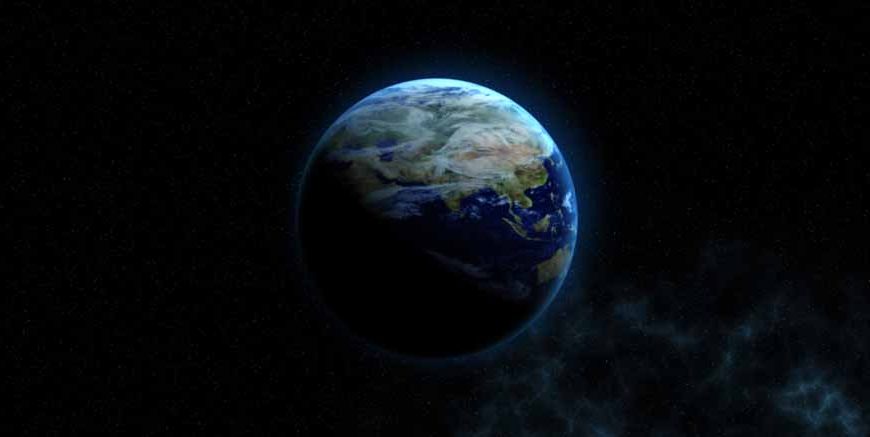
Look down at your shoes for a moment. You might see green grass, gray concrete, or brown dirt. Now imagine zooming out. Way out. Past the clouds, past the glowing moon, until you are floating entirely alone in the silent, dark ocean of outer space. Looking back, you wouldn’t see the dirt or the concrete anymore. You would see a glowing, bright blue and white marble suspended in the dark.
That beautiful marble is our home. Let’s explore exactly what makes this floating ball of water and rock the absolute most amazing place in the universe, uncovering its hidden secrets and understanding why it behaves the way it does.
What Is It Exactly?
Let’s start at the very beginning. To officially define earth, we have to look at astronomy and language. The true earth meaning traces all the way back to ancient English and Germanic words that simply translated to “the ground” or “the soil.”
But kids often ask a very basic science question: is earth a planet? Yes, absolutely! It is the third rock circling our massive Sun. Unlike the bright stars that create their own fiery, burning light, our home is a solid, rocky world that relies entirely on the Sun for all of its warmth and illumination. Without that giant star nearby, our world would be completely dark and frozen solid.
Read More – Facts About the Layers of the Earth for Kids
The Grand Cosmic Tour
If an alien landed a spaceship in your backyard and asked for a quick earth planet description, what exactly would you tell them?
Basic earth planet information tells us that it is a medium-sized terrestrial (rocky) globe. When students search the library for reliable our earth information, they quickly learn it is the fifth-largest world in our entire solar system. If you are reading about earth planet in english science textbooks, you will find it is perfectly positioned in something called the “Goldilocks Zone.” This is a fun term astronomers use to describe a specific distance from the Sun. It means we are not too close (where the oceans would completely boil away) and not too far away (where everything would turn into ice blocks). It is positioned just right.
What Makes It Stand Out?
Every single world in our night sky is unique, but the characteristics of earth are truly one of a kind. When observing the features of earth, the most massive and obvious one is the liquid water. Over 70% of the entire surface is covered by deep, salty oceans. This is why it looks like a glowing blue sapphire from space!
Another one of the incredibly special features of earth planet is its atmosphere. Our atmosphere acts like an invisible, cozy blanket made mostly of nitrogen and oxygen. This invisible shield does a massive amount of heavy lifting. It allows us to breathe comfortably, it traps the Sun’s heat so we don’t freeze at night, and it acts as a physical barrier that burns up dangerous space rocks and meteors long before they can crash into your neighborhood.
The Moving, Shaking Parts
Science teachers often ask their students to explain why earth is called a dynamic planet. The word “dynamic” simply means something that is constantly changing, shifting, and moving.
Our home is not a dead, boring, silent rock. It is incredibly active. Deep underground, giant pieces of the crust called tectonic plates are constantly sliding around. When they crash into each other, they push up massive mountain ranges like the Himalayas and trigger rumbling earthquakes. Hot liquid rock bursts through the surface to create towering volcanoes and brand new islands. Above ground, the weather changes daily, and giant ocean currents constantly shift. The entire globe is literally alive with motion!
Speaking of motion, we are not alone on this cosmic racetrack. When looking at the layout of our solar system, the first outside orbit of the earth planet is the path taken by Mars! The famous rusty red planet is our next-door neighbor, traveling on a wider, slower path around the Sun.
Read More – Heat Zones of the Earth
Why It Matters
We can gather data all day long, but the true importance of earth is beautifully simple: it is the only place we know of in the entire universe that supports life. From microscopic bacteria hiding in the dirt to massive blue whales swimming in the ocean, this specific rock provides everything needed for survival.
To wrap up our cosmic tour, here are a few quick earth planet facts to share with your friends:
- It isn’t actually a perfect sphere! Because it spins so fast, it actually bulges out slightly around the middle.
- The core at the very center of the globe is a solid ball of iron that is just as hot as the surface of the Sun!
- It spins at over 1,000 miles per hour, even though your body cannot feel the movement at all.
Conclusion
Think about this for a moment. Out of billions of swirling galaxies, filled with trillions of stars and countless freezing or boiling planets, we somehow ended up on this perfectly warm, wet, dynamic blue sphere. We don’t just live in this world; we are an active piece of its complex, moving puzzle.
The water we drink and the air we breathe tie us directly to the soil and the oceans. Taking care of our environment isn’t just about picking up litter; it is about protecting the absolute only spaceship we have. To read more fun, engaging, and educational articles, check out the EuroKids Blog, and visit our website for details on EuroKids Preschool Admission.
FAQs
How old is the world we live in?
Scientists have studied ancient rocks and determined that our home is roughly 4.5 billion years old!
Why does the sky look blue during the day?
As the white light from the Sun hits our atmosphere, gases in the air scatter the blue light waves much further and wider than the other colors, painting the sky blue for our eyes.
Does the ground really move beneath my feet?
Yes! The solid ground is broken into puzzle pieces called tectonic plates. They move very slowly, about as fast as your fingernails grow, but over millions of years, they completely change the map of the world.
How long does it take to circle the Sun?
It takes exactly 365.25 days to complete one full orbit around the Sun, which is why we add a special “Leap Day” to our calendars every four years to make up for that extra quarter of a day!