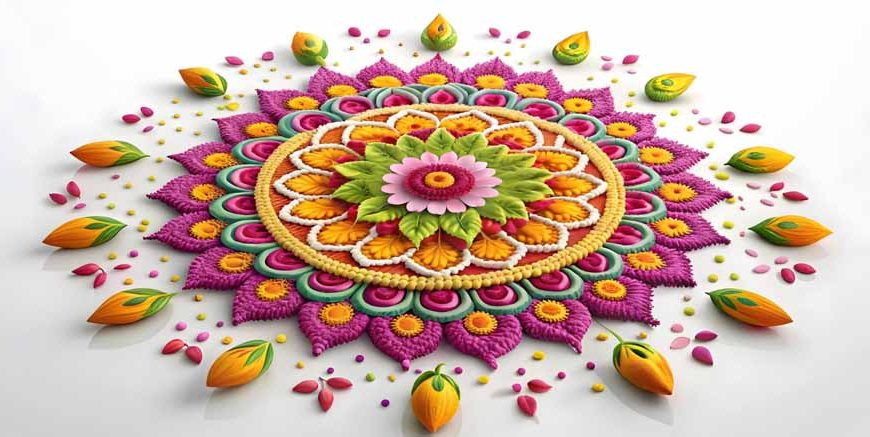
You often look for activities that keep your child engaged without feeling forced. Something that does not feel like homework. Something that lets them express themselves freely while still learning something valuable. This is where rangoli quietly steps in. Long before children learn to write neatly or solve sums confidently, they learn through colours, shapes, and movement. Rangoli brings all of that together in one simple, joyful activity.
For a child, rangoli does not begin as tradition or decoration. It begins as play. Powdered colours on the floor feel exciting. Patterns feel like puzzles waiting to be solved. Each dot and line feels like a small achievement. That is why rangoli for kids works so beautifully. It teaches without announcing itself as learning.
When you introduce rangoli designs for kids thoughtfully, you give your child space to explore creativity, patience, focus, and confidence. This blog helps you understand how easy rangoli for kids and simple rangoli for kids support early development, which designs work best at a young age, and how parents and schools can use rangoli as a meaningful learning tool rather than a festive task.
Read More – Easy & Beautiful Diwali’ Drawing Ideas For Kids
Understanding Rangoli Through a Child’s Eyes
When adults think of rangoli, they often think of festivals, symmetry, and neat designs. Children see it very differently. To them, rangoli feels like drawing without limits. The floor becomes a canvas. Colours feel alive in their hands. There is no fear of erasing mistakes, because mistakes simply blend into the design.
This is why rangoli for kids feels natural. Children do not approach it with rules in mind. They approach it with curiosity. They notice how colours spread, how shapes connect, and how patterns emerge step by step. Rangoli becomes an early form of self expression, especially for children who may not yet feel confident expressing thoughts in words.
Through rangoli designs for kids, children learn to observe their surroundings more closely. They begin recognising flowers, shapes, leaves, and symbols. They also learn to sit with one activity for longer periods, which strengthens attention span. Most importantly, rangoli gives children a sense of ownership. The design belongs to them. That feeling builds pride and emotional confidence from an early age.
Why Rangoli Is a Powerful Learning Activity for Young Children
Rangoli supports multiple areas of development at the same time, which makes it especially valuable during early childhood. When your child bends down to place colours carefully, they strengthen fine motor skills. Fingers learn control. Eyes learn coordination. These skills later support writing, drawing, and everyday tasks.
Easy rangoli for kids also supports early mathematical thinking. Children begin to notice patterns, repetition, balance, and spacing. When they place dots evenly or mirror shapes, they practise symmetry without realising it. This early exposure helps children feel comfortable with numbers and geometry later in school.
Emotionally, rangoli teaches patience. Children learn that beautiful designs take time. They learn to slow down, focus, and complete what they start. Simple rangoli for kids also encourages calmness. Many parents notice that children feel relaxed while creating rangoli, especially when colours flow freely without judgement.
Rangoli also builds confidence. Completing a design gives children a sense of achievement. They see tangible results of their effort. That confidence carries into other learning areas, from classroom participation to problem solving.
Read More – Fun Diwali Activities And Crafts To Do With Your Kids
Getting Started With Rangoli at Home Without Pressure
Introducing rangoli to your child does not require perfection or planning. It requires comfort and freedom. Start by choosing a safe space where your child can move freely. Floors, balconies, or outdoor areas work well. Use child safe rangoli powders, coloured rice, flower petals, or chalk.
When you introduce rangoli for kids, avoid instructions at first. Let your child explore colours freely. Ask gentle questions instead of giving directions. Questions like what colour comes next or which shape feels right encourage thinking without pressure.
Keep the sessions short. Young children benefit more from frequent short activities than long structured ones. Easy rangoli for kids works best when it feels playful, not scheduled. Praise effort rather than neatness. When children feel appreciated, they stay motivated to explore more complex designs over time.
Simple Rangoli Designs for Kids That Build Confidence
Children feel confident when designs feel achievable. This is why starting with basic patterns works best. Straight lines, dots, circles, and flowers help children feel successful quickly. Simple rangoli for kids should focus on repetition rather than complexity.
Dot based designs work particularly well. Children enjoy connecting dots and watching patterns emerge. Flower petals drawn around a circle also feel rewarding because they look complete even when uneven. These designs allow children to practise control without fear of failure.
When children repeat these patterns, they begin recognising structure. They learn how one shape connects to another. Over time, confidence grows naturally. This confidence encourages children to experiment with colours, spacing, and creativity without needing guidance at every step.
Easy Rangoli for Kids Using Everyday Shapes
Children already recognise shapes long before they learn their names formally. Circles appear in plates and wheels. Squares appear in tiles and books. Triangles appear in roofs and flags. Using these familiar forms makes easy rangoli for kids intuitive.
You can encourage your child to draw a circle and fill it with colours or patterns. Squares can turn into houses or windows. Triangles can become flowers or festive motifs. These designs feel approachable and familiar, which keeps frustration low.
Through these activities, children develop spatial awareness. They learn how shapes fit together and how space works on a flat surface. This visual understanding supports later learning in maths, art, and design. Rangoli designs for kids built on everyday shapes feel meaningful and easy to repeat.
Exploring Simple Geometrical Rangoli Designs for Structured Thinking
As your child grows more confident, introducing simple geometrical rangoli designs helps strengthen structured thinking. These designs include symmetry, repetition, and balance. They encourage children to think step by step rather than randomly.
Geometrical rangoli designs often involve repeating shapes in a circular or square pattern. Children begin understanding that consistency creates harmony. This understanding supports logical thinking and problem solving skills.
What makes simple geometrical rangoli designs special is that they balance creativity with structure. Children feel free to choose colours while following a basic framework. This balance mirrors real life learning, where creativity thrives best within gentle boundaries.
Seasonal and Festival Rangoli That Children Love
Festivals make rangoli feel exciting and meaningful for children. During celebrations, rangoli becomes a shared family activity rather than an individual task. Children feel included and valued when their designs become part of festive decorations.
Festival themed rangoli designs for kids often include diyas, flowers, stars, or simple symbols. These designs connect children to culture without overwhelming them with explanations. They learn through participation rather than instruction.
Seasonal rangoli also supports memory building. Children associate colours and patterns with moments of joy and togetherness. These memories strengthen emotional bonds and positive learning experiences.
Common Challenges Children Face While Making Rangoli
Children do not always feel patient or confident while making rangoli. Some feel frustrated when colours spill or shapes look uneven. Others lose interest midway. These moments are part of learning, not failure.
When your child struggles, avoid correcting the design. Instead, acknowledge effort. Encourage them to continue or start fresh without judgement. Rangoli for kids works best when mistakes feel acceptable.
Children also compare their work with others. Remind them that every design is unique. This reassurance builds self worth and emotional resilience. Over time, children learn persistence and adaptability through creative challenges.
How Schools Encourage Creativity Through Rangoli Activities
Early learning environments play a strong role in nurturing creativity. Schools introduce activities like rangoli to support observation, coordination, and group participation. Children learn by watching peers, sharing space, and collaborating.
Creative activities help children express emotions they may not yet articulate verbally. Teachers guide without controlling, allowing children to explore confidently. EuroKids follows the HEUREKA Curriculum, which encourages experiential learning through hands-on creative activities such as rangoli.
This approach helps children develop curiosity, independence, and confidence alongside academic readiness.
How You Can Support Creative Learning at Home
Your involvement strengthens everything your child learns at school. When you encourage creative activities like rangoli at home, you reinforce confidence and curiosity. You do not need expertise. You only need presence and patience.
Set aside small moments for creative play. Celebrate effort. Display your child’s designs proudly. These small actions show your child that creativity matters. By supporting simple rangoli for kids regularly, you help your child develop focus, emotional balance, and self expression naturally.
Conclusion
Rangoli may appear simple, but its impact on early childhood development runs deep. Through easy rangoli for kids, children build coordination, confidence, patience, and creativity. They learn through joy rather than pressure.
Choosing the right early learning environment matters just as much. If you want your child to grow in a space that values creativity alongside structured learning, exploring EuroKids Admission can be a meaningful step. You can also read more thoughtful parenting and learning insights on the EuroKids Blog, designed to support you through every stage of your child’s journey.
FAQs
1. At what age can children start making rangoli?
Children can begin simple rangoli activities from the age of three using safe materials.
2. Why is rangoli good for early learning?
Rangoli improves fine motor skills, focus, creativity, and emotional confidence.
3. Are geometrical rangoli designs suitable for young children?
Yes, simple geometrical rangoli designs help children understand patterns and structure.
4. How long should a rangoli session last for kids?
Short sessions of fifteen to twenty minutes work best for young children.
5. How can parents encourage children without forcing perfection?
Focus on effort, creativity, and enjoyment rather than neatness or comparison.