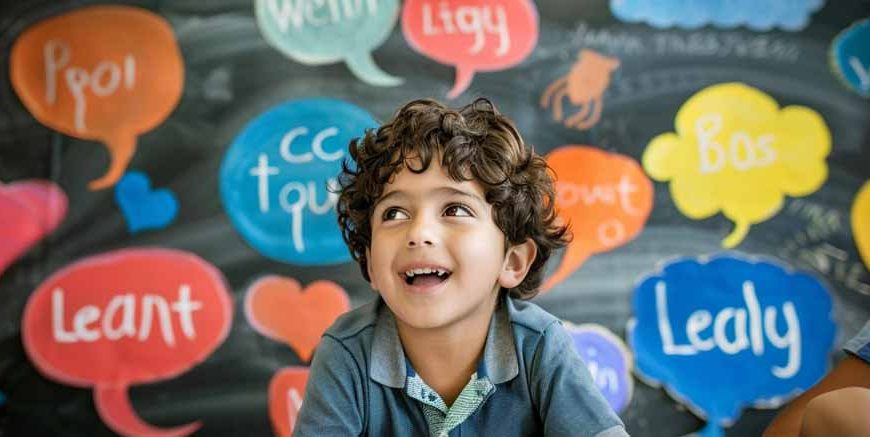
Imagine walking into a room full of strangers. Your palms sweat slightly and your heart beats a little faster than normal. Now, imagine doing that when you are only a toddler or a young primary school student, stepping into a noisy classroom for the very first time. It is a monumental, often overwhelming experience.
When a child hides behind your leg on the first day of school, they are not just being shy. They simply do not have the vocabulary to assert their presence in a new environment. Teaching your child how to confidently say hello is one of the most empowering tools you can give them. A strong self introduction in English for students is not about reciting a robotic script. It is about giving a child the voice to claim their space, make new friends, and feel secure when you are not there to speak for them.
Today, we are going to explore exactly how to build that confidence. We will look at age-appropriate scripts, the physical habits of confident speaking, and highly practical ways to practise at home without causing any stress.
The Power of Owning Your Story
Before we look at the exact words to use, we must understand why this skill matters so much. When a child learns how to introduce themselves, they are learning the very basics of social independence.
A well-practised introduction serves as an icebreaker. If your child approaches a group of peers playing with building blocks, standing there in silence usually results in them being ignored. However, if they have a simple phrase ready to go, they immediately invite interaction. This tiny burst of courage is the foundation of childhood friendships. It teaches them that their voice has value and that people are interested in knowing who they are.
Read More – Myself Essay in English for Students
Crafting a Self Introduction for 4 Year Old Children
Very young children do not need complicated sentences. Their working memory is still developing, and asking them to memorise a long paragraph will only lead to tears and frustration. An effective self introduction for 4 year old children should be limited to three absolute basics: their greeting, their name, and a fun fact to spark a conversation.
Here is a perfect, simple example for a young toddler:
“Hello, my name is Leo. I am four years old. I really love dinosaurs.”
This is entirely sufficient. It is short enough to remember, but the addition of the “fun fact” is crucial. By stating that he loves dinosaurs, Leo is giving the other children something to respond to. Another child might hear that and say they like dinosaurs too, instantly forming a connection.
When practising this with your four-year-old, keep the fun fact highly visual and easy to understand. They might say they love the colour red, they love eating strawberries, or they love playing with toy cars. Keep the sentences short and punchy.
Building a Complete Introduction for Kids in Primary School
As your child grows and enters primary school, their social world expands. They are capable of holding much longer conversations and understanding more complex social cues. A proper introduction for kids at this age should include a few more layers of their personality.
A great structure for a primary school student includes a polite greeting, their name and age, a mention of their family or pets, their favourite school subject or hobby, and a polite closing.
Here is an example of a confident introduction for a slightly older student:
“Good morning everyone. My name is Maya and I am seven years old. I live with my parents and my big brother. My favourite subject in school is art because I love painting animals. When I grow up, I want to be a veterinarian. It is very nice to meet you all.”
This script works beautifully because it paints a complete picture of who Maya is. It gives the teacher and her classmates multiple points of connection. Someone might also have a big brother, or someone else might also love painting. By sharing these small details, she opens the door for plenty of new friendships.
Read More – My Hobby Essay for kids
The Silent Half of the Introduction: Body Language
The words a child uses are only half the battle. The way they deliver those words changes the entire interaction. We must teach children that their body speaks just as loudly as their voice.
First, focus on eye contact. Many children look at their own shoes when they feel nervous. Teach them to look gently at the other person’s eyes or nose. Eye contact shows the listener that you are genuinely interested in speaking to them.
Second, work on the volume of their voice. A whisper is very hard to hear in a busy classroom, which might result in the other person walking away. This can make the child feel rejected, even though it was just a hearing issue. Ask your child to use their “playground voice” when introducing themselves to ensure they are heard clearly.
Finally, encourage a warm smile. A smile is a universal sign of friendliness. It tells the other child that they are safe and welcome to play.
How to Practise Without the Pressure
If you sit your child down at the kitchen table and demand they memorise a script, they will view it as a punishment. You have to make the learning process active and entirely play-based.
One of the best methods is the Mirror Game. Stand with your child in front of a large mirror. Introduce yourself to your reflection in a very silly voice. Then, ask your child to introduce themselves to their reflection. Seeing their own face helps them become aware of their smile and their posture.
Another excellent method is role-playing with their favourite toys. Grab a teddy bear and pretend it is a new student at school. Have the teddy bear introduce itself, and then ask your child to introduce themselves back to the bear. Children feel much less intimidated talking to a stuffed animal than they do performing for an adult. Practising this scenario repeatedly removes
the fear of the unknown.
Conclusion
Teaching your child how to introduce themselves is one of the greatest gifts you can offer them before they step out into the world. It gives them the agency to make friends, the courage to speak to their teachers, and the foundational confidence to exist comfortably in new spaces. By starting with a simple name and a fun fact, and eventually adding hobbies and aspirations, you help them build a strong sense of identity.
As we spend time coaching our children on how to stand tall, look people in the eye, and speak clearly, it is worth looking at our own habits. When we meet someone new, do we share our true passions, or do we hide behind generic job titles and polite small talk? Perhaps in teaching our children how to bravely show the world who they are, we might just remember how to do it ourselves.
Frequently Asked Questions
How can I help my child if they are extremely shy?
Do not force them into uncomfortable situations. Start very small. Have them practice introducing themselves to family members they already know, then progress to family friends. Always praise their bravery, even if they only manage to whisper their name.
Should my child offer to shake hands?
For a four-year-old, a simple wave and a smile is perfect. As they reach primary school, teaching them how to offer a firm, polite handshake is an excellent skill, especially when introducing themselves to adults or teachers.
What if they forget what to say halfway through?
Teach them that it is completely okay to pause. Tell them to take a deep breath and just smile. The most important part of an introduction is being friendly, not having a perfect memory.
How often should we practice this at home?
Keep it natural. You do not need daily drills. Practice a few times in the weeks leading up to the start of a new school term, a birthday party, or joining a new sports club.