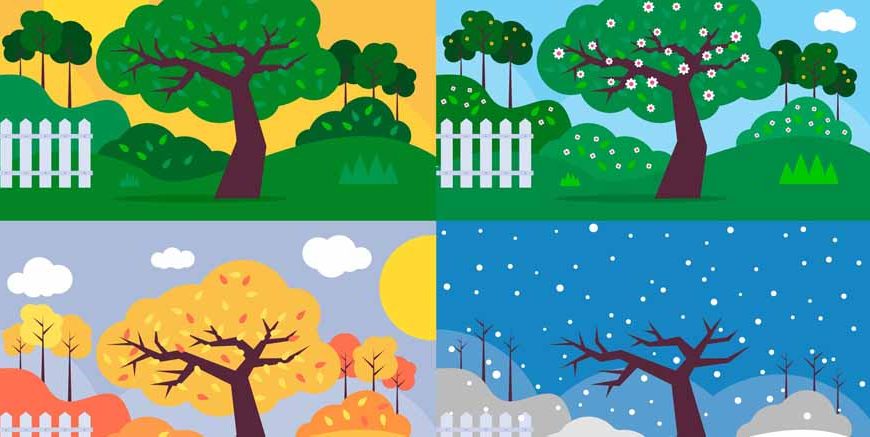
The world around us keeps changing throughout the year. Sometimes the days are hot and sunny, sometimes cold and foggy, and sometimes rainy and fresh. These regular changes in weather are called seasons. Learning about seasons helps children better understand nature, weather patterns, clothing choices, festivals, and daily life.
From blooming flowers in spring to chilly winds in winter, each season has its own beauty and features. Students often learn about seasons early in school because it connects science with everyday observation. In this blog, we will explore the definition, types of seasons, key features of each season, why seasons happen, important terms, and fun facts for kids.
What is Season?
As the year moves forward, we notice regular changes in temperature, rainfall, wind, and daylight. Sometimes the weather is hot, sometimes cold, and sometimes wet. This repeating pattern of weather change is divided into parts called seasons. Understanding the season definition helps children learn how nature works and why our surroundings change during the year.
A season is a period of the year with similar weather conditions that lasts for a few months. The most commonly taught all seasons are winter, spring, summer, and autumn. Each season brings different weather, clothing needs, foods, and activities.
Read More – Teaching Kids About Weather and Seasons
How Many Seasons in the World – All Seasons Name
There are four main types of seasons commonly taught to children around the world.
- Autumn Season
- Summer Season
- Winter Season
- Rainy (Monsoon) Season
1. Autumn Season
Autumn usually comes after the rainy season and before winter. In many regions, it begins around October and continues until early December.
Key Features:
- Rainfall reduces
- Skies become clearer
- The weather becomes pleasant
- Leaves begin to fall in many trees
- Humidity decreases
In India, this period is sometimes called the retreating monsoon phase because the southwest monsoon winds gradually withdraw. However, some coastal regions may still receive rainfall due to cyclonic systems.
2. Summer Season
Summer is the hottest phase of the year and one of the most noticeable seasons for children.
Key Features:
- High temperatures
- Strong sunlight
- Longer days
- Shorter nights
- Dry weather in many places
In the northern parts of India, very hot and dry winds blow during peak summer. These winds are locally called loo. Due to the intense heating of the land, low-pressure areas form, which later help draw in monsoon winds.
3. Winter Season
Winter is the coldest season and follows autumn.
Key Features:
- Low temperatures
- Cold mornings and nights
- Fog in many northern areas
- Snowfall in mountain regions
- Shorter days and longer nights
Temperature varies by region. Coastal areas remain milder, while northern plains and hill regions become much colder. Winter is also associated with warm clothing, hot foods, and clear skies in many places.
4. Rainy (Monsoon) Season
The rainy season begins when seasonal winds bring moisture-filled clouds from the oceans toward land.
Key Features:
- Frequent rainfall
- Cloudy skies
- Increased humidity
- Cooler temperatures than summer
- Lush green vegetation
The southwest monsoon plays a major role in bringing rain to the Indian subcontinent. When these winds arrive, the weather changes quickly from hot and dry to wet and cloudy. Some regions receive extremely heavy rainfall. For example, Mawsynram is known as one of the wettest places on Earth. The rainy season supports farming, plant growth, water storage, and river flow.
Why Do Seasons Occur?
Seasons are not random. They happen due to two important reasons:
1. Earth’s Rotation and Revolution
The Earth rotates on its axis and revolves around the Sun. This movement causes changes in sunlight and temperature.
2. Tilt of the Earth
The Earth is tilted at an angle. When one part of the Earth tilts towards the Sun, it experiences summer, while the other part experiences winter.
This natural process creates different weather conditions throughout the year.
Read More – Top Healthy Foods for Kids During the Rainy Season
The Role EuroKids Plays in Teaching Seasons to Children
EuroKids introduces seasons through activity-based and observation-led learning. Instead of only teaching the season definition, teachers help children experience seasonal changes through nature walks, weather charts, dress-up activities, and seasonal craft projects. Students learn all seasons’ names and types of seasons through songs, storytelling, and visual calendars. Children also connect seasons with food, festivals, and clothing choices, which makes learning meaningful and practical. This playful and structured approach helps young learners understand seasonal concepts clearly while building curiosity about the natural world.
Conclusion
Understanding the season definition helps children connect science with everyday life. Seasons explain why the weather changes through the year and why plants, animals, clothing, and activities also change. Learning about different types of seasons builds awareness about nature and the environment. From spring flowers to winter chills, each season has its own role and beauty. When students observe seasonal patterns and connect them with real-life experiences, learning becomes easier and more memorable. A strong understanding of seasons builds early environmental knowledge and curiosity.
To explore more learning ideas, simple explanations, and early childhood resources, parents can visit the EuroKids Blog. Those who wish to understand the preschool journey better or explore enrolment options can find complete information on the EuroKids Admissions Page, where learning is designed to be joyful, engaging, and child-friendly.
FAQs:
1. What is the simple season definition for kids?
A season is a part of the year when the weather stays mostly the same for a few months, such as hot, cold, or rainy. These repeating weather periods are called seasons.
2. How many types of seasons are there?
There are mainly four types of seasons taught to students: Summer, Rainy (Monsoon), Autumn, and Winter. In some countries, Spring is also counted separately.
3. What causes seasons to change?
Seasons change because the Earth moves around the Sun and is slightly tilted. This tilt makes different parts of the Earth receive different amounts of sunlight during the year.
4. Which is the hottest and coldest season?
Summer is the hottest season, and winter is the coldest season in most parts of the world.
5. Why does the rainy season happen?
The rainy season happens when moisture-filled winds and clouds bring rainfall to land areas. In India, this is mainly due to monsoon winds.