As a parent, watching your little one put on their tiny backpack for the very first time is a moment filled with immense pride, paired with a tiny bit of natural anxiety. One of the biggest hurdles that parents worry about is the initial school interview or interaction session. What exactly will the teachers ask a three-year-old?
Will they be expected to read long words or write their names perfectly? Let us take a collective deep breath and completely demystify this process. Today, we are going to focus heavily on the actual verbal questions and activities your child might encounter. We will provide you with a comprehensive, easy-to-understand guide to help your child prepare with a massive, confident smile.
The Truth About exam papers for nursery class
Before we dive directly into the verbal questions, let us quickly clear up a very common parental misconception. When anxious parents frantically search the internet for exam papers for nursery class, they often picture young toddlers sitting in absolute silence, tightly gripping a sharp pencil, and staring at complex worksheets.
Please rest assured, this is simply not the reality of early childhood education. Modern educational institutions rely entirely on gentle observation and play-based interaction. There are absolutely no written exams or harsh grading systems. The only ‘paper’ involved is simply the friendly teacher’s private clipboard, where they quietly tick off basic developmental milestones while your child happily plays with wooden building blocks, soft toys, or colourful puzzles.
Read More – Learn about Question Mark
Personal nursery class admission test questions
The core part of the evaluation involves a friendly, one-on-one chat. The teacher primarily wants to see how well your child communicates and if they are aware of their own identity and immediate family environment. Here are the most common nursery class admission test questions regarding personal information, along with the ideal, expected answers:
- Question: “Hello there! Can you tell me your beautiful name?”
- Ideal Answer: “My name is [Child’s Name].” Even if they simply state their first name clearly without a full sentence, it is considered a wonderful, confident response.
- Question: “How old are you today?”
- Ideal Answer: “I am three years old,” or the child simply holding up three little fingers proudly.
- Question: “What is your mummy’s or daddy’s name?”
- Ideal Answer: Stating the parent’s actual first name is brilliant, though enthusiastically saying “Mummy” or “Daddy” is completely normal and widely acceptable for this age group.
- Question: “Are you a boy or a girl?”
- Ideal Answer: A clear, simple statement identifying their gender shows solid self-awareness.
- Question: “Who held your hand and brought you to school today?”
- Ideal Answer: “My mum,” “My grandad,” or whoever accompanied them. This question tests their awareness of their immediate surroundings and family members.
Questions Testing Cognitive Skills and General Awareness
Educators also want to see if your child can correctly identify basic everyday objects, colours, and shapes. This helps them accurately gauge the child’s early vocabulary and observational skills. Let us look at some specific cognitive questions:
- Question: “Can you point your nose?” (The teacher might also ask them to point to their bright eyes, little ears, or chin).
- Ideal Answer: The child accurately touches the correct body part without too much hesitation, demonstrating an understanding of physical vocabulary.
- Question: “What colour is this lovely apple?” (The teacher will usually hold up a bright flashcard or a shiny plastic toy).
- Ideal Answer: “It is red.” Recognising basic primary colours like red, blue, green, and yellow is highly encouraged.
- Question: “What animal says ‘moo’?” or “What animal is this?” (Pointing to a picture of a dog, cat, or farm animal).
- Ideal Answer: “A cow,” or correctly identifying the furry animal in the picture.
- Question: “When you are very thirsty after playing, what do you drink?”
- Ideal Answer: “Water,” “Milk,” or “Juice.” This specifically tests their logical reasoning and their ability to clearly express their basic daily needs.
- Question: “Can you tell me what shape this wooden block is?” (Holding up a square block or a round, bouncy ball).
- Ideal Answer: “It is a square” or “It is a circle.”
Read More – List of Fun Yes or No Questions for Kids
Action-Based Questions and Motor Skills
Sometimes, the questions are actually gentle physical instructions. These action-based tasks help the observing teacher carefully evaluate your child’s hand-eye coordination, fine motor skills, and their general willingness to follow simple directions.
- Question/Instruction: “Can you please pick up the red block and put it inside this blue basket?”
- Ideal Answer: The child correctly identifies the red block and successfully places it inside the container. This demonstrates brilliant listening skills and colour recognition working together.
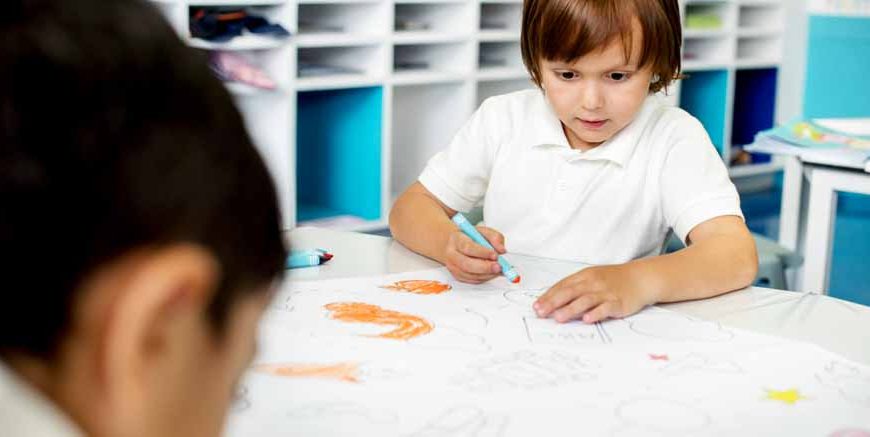
- Question/Instruction: “Would you like to draw a colourful picture for me?” (Handing the child a blank sheet of paper and a large, chunky crayon).
- Ideal Answer: The child confidently gripping the crayon (even if it is a basic fist grip) and happily scribbling lines on the page. They absolutely do not need to draw a masterpiece; the teacher is simply checking their fine motor grip.
- Question/Instruction: “Can you catch this soft, squishy ball?”
- Ideal Answer: The child reaching out their hands to catch or gently roll back a plush toy, showing basic gross motor skills and visual tracking.
- Question/Instruction: “Can you help me turn the page of this storybook?”
- Ideal Answer: The child using their index finger and thumb to carefully turn a single page of a thick board book, showing excellent physical dexterity.
Top Tips for Preparing Your Child at Home
Now that you know the specific questions, how do you prepare them without causing unnecessary stress? The golden rule is to keep it entirely playful. Do not sit them down at a desk for a rigid study session. Instead, seamlessly turn your daily routine into a fun learning game.
While sorting the weekly laundry, playfully ask them, “Can you find the yellow socks for me?” When eating lunch, ask, “What shape is your sandwich?” Read plenty of vibrant picture books together before bedtime, pausing on each page to ask, “Where is the little brown dog hiding?”
Furthermore, gently encourage them to speak in full sentences and teach them polite magic words like ‘please’ and ‘thank you’. A polite, cheerful child will inevitably leave a brilliant, lasting impression!
Conclusion
Watching your child step out of the house and into an educational environment for the very first time is a profound, deeply emotional milestone. By completely stripping away the intimidating idea of formal tests and focusing instead on joyful, everyday conversations, you can easily prepare your little one for this exciting new chapter. These early interactions are certainly not designed to find flaws; they are beautifully crafted to discover the bright, curious spark within your child and ensure they are genuinely ready to thrive in a busy, social classroom.
It truly makes you pause and reflect: if a young child can confidently answer these gentle questions today, imagine the incredibly complex and wonderful problems they will be brilliantly solving in just a few short years! To explore more engaging educational resources and to secure a brilliant foundation for your little one, take a moment to read the EuroKids Blog and find out all the necessary details regarding EuroKids Preschool Admission today.
FAQs
What should I do if my child refuses to answer any questions on the day?
Please do not panic. Teachers are highly trained to handle toddler anxiety and shyness. They will usually switch to a playful, non-verbal toy to gently coax your child out of their shell without applying any pressure.
Do I need to teach my child how to perfectly write the alphabet before the interview?
Absolutely not. The focus is entirely on verbal communication, basic object recognition, and motor skills. Formal alphabet writing is appropriately taught much later in the academic curriculum.
How long does this initial Q&A interaction usually last?
To comfortably accommodate a toddler’s naturally short attention span, the entire question, answer, and play session typically lasts no longer than ten to fifteen minutes.