Right then, let us try a very quick experiment before we go any further. Wiggle your toes inside your shoes. Now, blink your eyes twice, take a deep breath, and give the biggest, silliest smile you possibly can. You just completed a whole series of complicated physical tasks without even breaking a sweat. We often give our hard, bony skeletons all the credit for keeping us standing upright, but the skeleton is honestly just a rigid frame.
A bicycle frame cannot move itself without a chain and pedals, and your bones absolutely cannot move without the fleshy, stretchy engines pulling them along. You have hundreds of hidden rubber bands wrapped around your skeleton, working around the clock to keep you moving, breathing, and even digesting your lunch. Let us dive straight into the sticky, fascinating mechanics of the human body to see exactly how these stretchy tissues get the job done.
Grasping the true muscular system definition
When we look for a proper muscular system definition, we are talking about an incredibly complex network of tissues that have one primary superpower: they can physically contract and relax. Imagine a thick elastic band. When you let it go, it shrinks and pulls tight. That is exactly what your tissues are doing underneath your skin.
A lot of kids mistakenly think that this system is only important for professional athletes or bodybuilders lifting ridiculously heavy weights in a gym. But the reality is that every single person relies on this network just to survive. Without it, your lungs could not suck in fresh air, your eyes could not dart across the pages of a comic book, and you wouldn’t even be able to swallow a sip of water. It is the ultimate movement machine, responsible for both the massive leaps across a playground and the tiny, invisible actions happening deep inside your tummy.
Read More – Human Body Systems to Students
The muscular system organs and muscular system main organs
When you hear the word ‘organ’, your brain probably jumps straight to the lungs, the liver, or the kidneys. But it surprises a lot of young learners to discover that muscles are officially classified as organs too!
When we talk about the muscular system organs, we are looking at specific, highly specialised bundles of tissue that do very targeted jobs. So, what are the muscular system main organs?
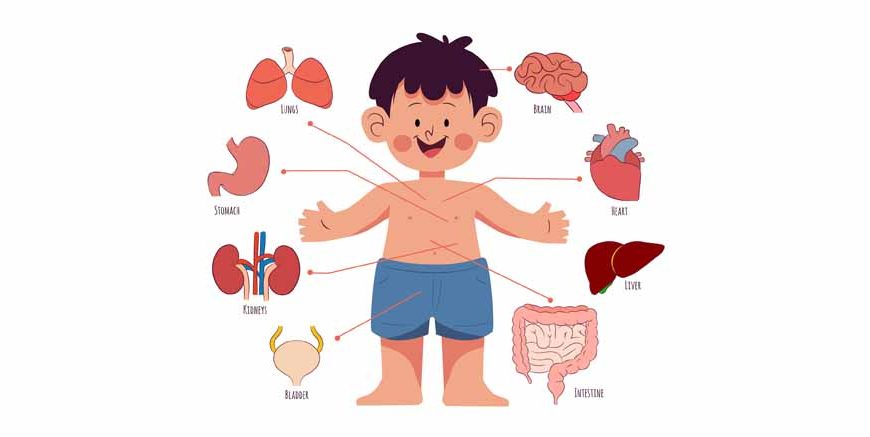
The absolute most important one is sitting right in the middle of your chest: your heart. The heart is basically one giant, incredibly tough lump of muscle that never stops squeezing. Another major organ in this network is your stomach. Yes, the stomach! It is a thick, muscular pouch that actively churns and squeezes your food to break it down. Even your tongue is a highly flexible, incredibly busy organ made up of eight different interlaced muscles, allowing you to speak, sing, and push food to the back of your throat.
Exactly what is the function of the muscular system?
If a science teacher asks you, what is the function of the muscular system, you might just answer “movement” and sit back down. While you wouldn’t be wrong, you would be missing out on a lot of the brilliant behind-the-scenes work. Here is a clear list of the vital jobs this network handles every single day:
- Pumping blood: As we mentioned, your heart is the hardest worker in your chest, continuously squeezing to push fresh, oxygen-rich blood through miles of veins and arteries.
- Generating heat: Have you ever waited for a bus on a freezing winter morning and started shivering uncontrollably? That is no accident. Your brain forces your muscles to quickly spasm and shake because that rapid movement generates instant thermal heat, keeping your internal temperature safe.
- Keeping you upright: Even when you think you are sitting completely still in a chair, tiny tissues in your back and neck are constantly making micro-adjustments to stop you from flopping forward onto the floor. This is called maintaining your posture.
- Moving food: Digestion is not just a chemical reaction. It is a physical journey. Your throat and intestines use slow, rhythmic squeezes to push your dinner all the way through your body.
Read More – GK Questions On Human Parts Of The Body
A closer look at muscular system parts and functions
To really understand how the whole operation runs, we need to break down the specific muscular system parts and functions. Scientists divide the entire network into three completely different types of tissue, and they each have their own unique set of rules.
Skeletal Muscles (The ones you control)
These are the tissues attached directly to your bones by thick, tough cords called tendons. These are ‘voluntary’, which simply means you have to actively think about using them. When you want to kick a football, your brain sends a spark of electricity down to your leg to make it happen. They always work in clever pairs. For example, when you bend your elbow to show off your biceps, the muscle on the front pulls tight, while the tricep on the back has to relax. They constantly play a game of tug-of-war to move your limbs.
Smooth Muscles (The quiet background workers)
These are ‘involuntary’, meaning they work completely on autopilot. You never have to remind your stomach to digest a cheese sandwich, do you? The smooth tissues line your stomach, your intestines, and even your blood vessels. They work slowly and steadily in the background, gently pushing food and fluids exactly where they need to go without you ever having to worry about it.
Cardiac Muscle (The tireless engine)
This type of tissue exists in one place and one place only: your heart. It is also completely involuntary, but unlike your leg or arm muscles which get tired and achy after a long run, cardiac tissue is built for pure endurance. It starts beating before you are even born and continues a steady, rhythmic squeeze every minute of every single day for your entire life.
Gathering vital muscular system information
If you want to keep this internal engine running smoothly, you need to arm yourself with some practical muscular system information. These tissues are essentially made out of long, stringy fibres that need fuel to repair themselves.
Whenever you run around the garden or climb a steep hill, you actually create microscopic little tears in those fibres. Your body then uses protein from your diet, found in foods like eggs, beans, nuts, and chicken, to patch those tiny tears up, making the fibre even thicker and stronger than it was before.
This is exactly why athletes eat so much protein. Alongside a good diet, drinking plenty of water is absolutely crucial. If you don’t drink enough water, your fibres can suddenly cramp up tightly, which is incredibly painful!
Read More – Facts About Human Body for Preschoolers
Fascinating facts about muscular system quirks
Kids absolutely love weird biology trivia. If you want to impress your friends with some brilliant facts about muscular system quirks, keep these in your back pocket:
- Smiling is easier: It actually takes far more effort and uses significantly more individual muscles to frown and look grumpy than it does to simply smile.
- The strongest pound-for-pound: While your leg muscles are the largest, the absolute strongest one for its size is the masseter. That is your jaw muscle! It allows your teeth to clamp down with incredible, bone-crushing force when you chew.
- The busiest workers: The tissues that control your eyes are the most active in your entire body. They constantly dart back and forth, adjusting your focus over 100,000 times a day as you look around the room.
Conclusion
It is a genuinely wild thought to realise that underneath our skin, we are basically just a highly coordinated collection of pulling rubber bands, firing electrical brain signals, and tireless pumps. We so easily take our daily movements for granted, whether we are chasing a dog around the park or just quietly chewing our breakfast. Understanding the mechanics behind how we physically interact with the world teaches children to properly respect and care for their own health. When they know that eating a healthy meal actually repairs the torn fibres in their legs after a football match, they are far more likely to make sensible dietary choices.
Building this kind of raw, biological curiosity and teaching kids how to practically apply it to their own lives is a massive part of the Heureka Curriculum. When we empower children to understand their own internal engines, we give them the confidence to run further, jump higher, and treat their bodies with the respect they deserve. To dive into more brilliant parenting guides and explore our unique educational approach, simply pop over to the EuroKids Blog and secure a vibrant, active future for your child today through EuroKids Preschool Admission.
FAQs
Why do my legs feel sore the day after a really long run?
That soreness is completely normal. When you exercise harder than usual, you create tiny, microscopic tears in the tissue fibres. The achy feeling is just your body working hard to repair those tears, which ultimately makes your legs much stronger.
Do we get new muscles as we grow up?
No, you are actually born with all the muscle fibres you will ever have! As you grow up and exercise, those exact same fibres simply get thicker, longer, and much stronger.
What happens if I don’t use them?
If you stop being active and sit on the sofa all day, your body thinks you don’t need that extra strength anymore. The tissues will actually start to shrink and get significantly weaker, which is why regular daily exercise is so important.