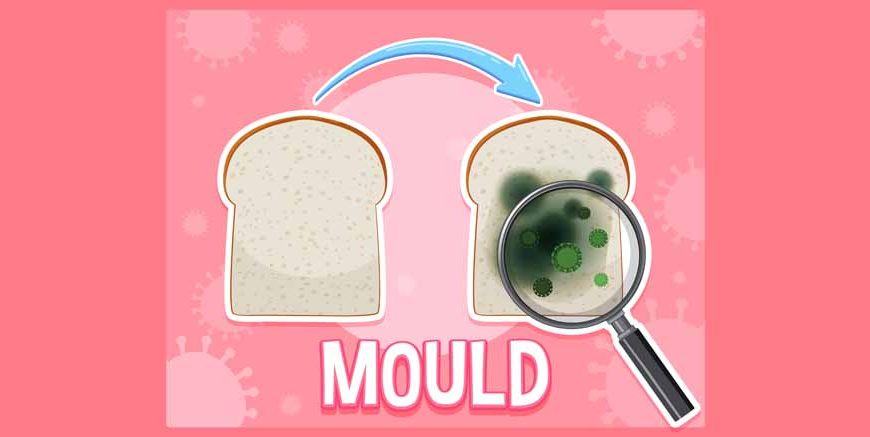
Mould is something we often notice in everyday life, whether it appears on leftover food, damp walls, or even in the environment around us. While it may seem unpleasant at first, mould is actually a fascinating living organism that plays an important role in nature. For students, learning about mould helps build a better understanding of science, especially topics related to fungi, hygiene, and the environment. By exploring what mould is, how it grows, and why it matters, children can connect classroom learning with real-life experiences. This blog will help you understand mould.
What Is a Mould?
A mould is a type of fungus that grows in the form of multicellular filaments called hyphae. It is commonly found in damp, warm, and humid environments. Moulds reproduce by releasing tiny spores that travel through the air and settle on surfaces where they can grow.
Read More – About Fungi for Kids
Where Can Mould Be Found?
Mould can grow almost anywhere if the conditions are suitable. Some common places where mould is found include:
- On leftover or spoiled food
- In damp areas like bathrooms and kitchens
- On walls with water leakage
- On wet clothes or carpets
- In gardens and soil
Characteristics of Mould
1. Multicellular Structure
Mould is made up of many cells that form thread-like structures called hyphae. These hyphae grow and spread over surfaces.
2. Reproduction Through Spores
Mould reproduces by producing spores, which are tiny particles that can travel through the air. When these spores land on a suitable surface, they grow into new mould.
3. Grows in Damp Conditions
Mould needs moisture to grow. That is why it is often found in damp and humid places.
4. Different Colours
Mould can appear in different colours such as black, green, white, or orange, depending on its type.
5. Fast Growth
Under the right conditions, mould can grow quickly, sometimes within a few days.
Types of Mould
1. Bread Mould
Bread mould is one of the most common types. It grows on stale or moist bread and appears as fuzzy patches.
2. Black Mould
Black mould is often found in damp areas of homes, such as bathrooms and walls. It can sometimes be harmful to health.
3. Penicillium
This type of mould is used in making antibiotics like penicillin. It also plays a role in producing certain types of cheese.
4. Aspergillus
Aspergillus is a common mould found in soil and indoor environments. Some types are harmless, while others can cause health issues.
5. Green Mould
Green mould is often seen on fruits and vegetables when they start to spoil.
Read More – Science Quiz Questions and Answers for Kids
Uses of Mould
- Medicine: Mould is used to produce antibiotics
- Food Production: Certain moulds are used in making cheese
- Decomposition: Mould helps break down dead organic matter in nature
- Industrial Use: Moulds are used in biotechnology and research
Harmful Effects of Mould
- Health Problems: Mould can cause allergies, breathing issues, and infections
- Food Spoilage: Mould makes food unsafe to eat
- Damage to Property: It can damage walls, furniture, and fabrics
How to Prevent Mould Growth
- Keep your surroundings dry and clean
- Fix water leaks quickly
- Ensure proper ventilation in rooms
- Avoid storing wet items
- Clean damp areas regularly
Difference Between Mould and Yeast
Both mould and yeast are fungi, but they are different:
- Mould is multicellular, while yeast is single-celled
- Mould grows in filaments, while yeast grows as individual cells
- Yeast is commonly used in baking, while mould is used in decomposition and medicine
Read More – Uses of Yeast in Everyday Life & Science
Interesting Facts About Mould
- Mould spores are present almost everywhere in the air
- Some moulds glow under ultraviolet light
- Mould has existed on Earth for millions of years
- Not all moulds are harmful; some are beneficial
Real-Life Examples of Mould
- Bread turning green or black after a few days
- Damp walls are developing dark patches
- Fruits get fuzzy spots when spoiled
- Cheese production using specific moulds
How EuroKids Helps Children Understand Concepts Like Mould
At EuroKids, children are introduced to scientific concepts. Instead of focusing only on theory, teachers use interactive methods such as storytelling, experiments, and visual aids. For example, children may observe how food changes over time or learn about cleanliness through fun activities. This helps them understand how mould forms and why maintaining hygiene is important.
The learning environment at EuroKids encourages curiosity and exploration, allowing children to ask questions and discover answers on their own. This makes complex topics like mould easy to understand and remember.
Conclusion
Mould is a fascinating type of fungus that plays an important role in nature and human life. While it can be harmful in certain situations, it also has many useful applications in medicine, food production, and environmental processes. By understanding what mould is, its types, and its effects, students can learn how to maintain cleanliness and prevent its growth. Learning about mould also helps children appreciate the role of microorganisms in our environment.
With interactive learning methods and real-life examples, concepts like mould become easier and more interesting to understand. This knowledge not only supports academic learning but also helps students develop practical life skills.
Parents looking to give their child a strong foundation in early learning can explore EuroKids Preschool Admission to begin this enriching journey.
For more insightful articles that support early learning, awareness, and child development, parents and educators can explore the wide range of resources available on EuroKids Blogs.
For those interested in being part of this impactful learning ecosystem and contributing to quality early education across communities, EuroKids Franchise opportunities offer a meaningful path forward.
Frequently Asked Questions (FAQs)
1. What is mould?
Mould is a type of fungus that grows in damp environments and reproduces through spores.
2. Where does mould grow?
Mould grows in moist places such as bathrooms, kitchens, walls, and spoiled food.
3. Is mould harmful?
Some types of mould can cause health problems and damage property, while others are useful.
4. What are common types of mould?
Common types include bread mould, black mould, Penicillium, and Aspergillus.
5. How can we prevent mould growth?
We can prevent mould by keeping areas dry, ensuring ventilation, and maintaining cleanliness.