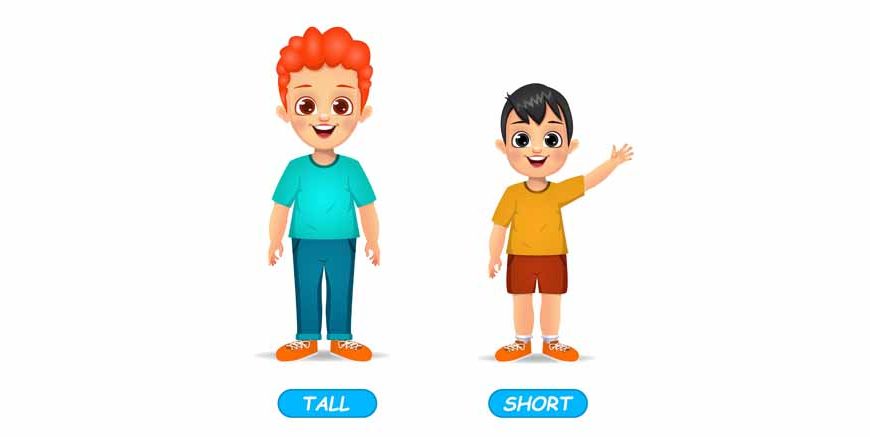
Imagine being just three feet high and navigating a world built entirely for grown-ups. For a toddler, looking up at the kitchen counter, gazing at the leaves of a backyard tree, or trying to reach a light switch is a daily study in physical contrast. Every single day brings a brand-new spatial comparison. One of the most fundamental physical awareness skills a young child develops is understanding vertical heights. Grasping the tall and short concept for preschoolers goes far beyond simply learning two new descriptive words; it is the absolute building block for early mathematics, logical reasoning, and making sense of the environment they are so eager to explore.
Understanding the Basics of Tall and Short
Let us break down the core idea behind tall and short. When we introduce this specific vocabulary to little ones, we are essentially teaching them how to measure things vertically, from the ground up to the sky. It differs slightly from ‘long and short’, which typically measures things horizontally across the floor.
Introducing a tall short comparison helps inquisitive minds organise their space. It is how they suddenly realise why daddy has to stoop down to get through their tiny plastic playhouse door, whilst they can run straight through without ducking their heads at all. It teaches them to look at where an item sits firmly on the floor and trace their eyes all the way up to its highest peak.
Read More – Measurement for Kids
Spotting Tall Short Objects in Everyday Life
Finding tall short objects around your own house or during a lively afternoon park visit is incredibly easy and naturally engaging for early learners. Children learn best when they can physically touch and see the differences side-by-side.
During a nature walk, you can enthusiastically point out the majestic, towering oak tree standing proudly right next to a small, low-lying rose bush. In the kitchen, you might compare a towering cardboard carton of milk to a tiny, round yoghurt pot. Even their own messy toy box is full of brilliant, ready-made examples! Try placing a towering stack of wooden building blocks next to a single, solitary brick on the living room rug. By giving children these tangible, real-world examples, they quickly cement the visual height differences in their rapidly growing minds.
Fun Tall and Short Activities for Kindergarten
To truly bring this educational concept to life, we need to make it delightfully playful. Sitting with a worksheet is rarely as effective as active play. Here are some fantastic, hands-on tall and short activities for kindergarten that you can easily replicate at home:
- The Tower Building Challenge: Grab a large bucket of colourful interlocking plastic bricks. Challenge your child to build the tallest tower they possibly can before it wobbles and topples over. Once it falls, ask them to build the shortest possible tower (just one brick!) right beside the remaining pieces.
- The Family Line-Up: Get everyone in the household to stand shoulder-to-shoulder in the hallway. Have your little one step back and arrange the family members in order, from the shortest person all the way up to the tallest.
- Nature Scavenger Hunt: Take a leisurely stroll through your local garden or park and give them a mission. Ask them to actively seek out and collect one tall stick and one short stick, or perhaps pluck a tall blade of grass and a short, wide leaf.
- Shadow Play: On a sunny afternoon, stand on the pavement and look at your shadows. Point out how your shadow is incredibly tall, whilst their shadow is wonderfully short.
Read More – What Are Some Fun and Educational Activities for Preschoolers ?
Summary
Wrapping up, understanding spatial dimensions is a massive, exciting leap in your child’s overall cognitive development. When they begin to accurately and confidently label the world as tall or short, they are secretly practising vital observational skills that will eventually translate into complex mathematical sorting, geometry, and grouping.
The next time your child proudly stretches their little arms up high to show you just how big they are getting, remember that this simple, joyful stretch represents a beautiful, expanding awareness of the vast universe they live in. It certainly makes you wonder how differently they view the everyday furniture in your home! To discover more wonderful ways to nurture your child’s early development, explore the EuroKids Blog and find out all the essential details regarding EuroKids Preschool Admission today.
FAQs
What is the best age to teach this physical concept?
Most children naturally begin to grasp basic size and height comparisons between the ages of three and four years old.
How can I explain the height difference simply?
Use highly visual aids and exaggerated physical gestures, such as reaching your hands high up to the ceiling for ‘tall’, and crouching right down near the floor for ‘short’.
Are there any good household items for teaching this?
Absolutely! Drinking glasses, cereal boxes, resting brooms, and even differently sized spoons make excellent, practical learning tools for toddlers.