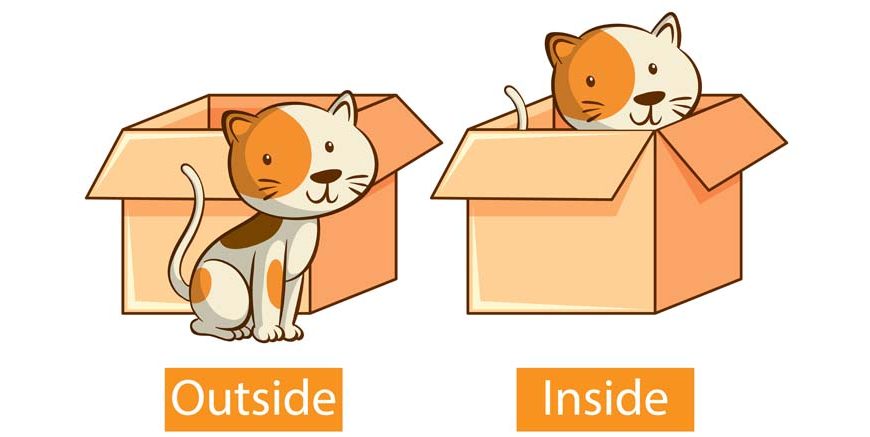
Picture this: you are standing right in the middle of a completely cluttered living room floor on a chaotic Saturday evening. Toys cover every single square inch of the carpet. You hand your three-year-old toddler a giant plastic storage bin and give them a simple instruction: put the blocks into the bin. Instead of doing what you asked, your child grins happily and drops every single block on the floor right beside the container. You repeat the command, but your child just stares back at you with blank, confused eyes.
This little breakdown happens in houses all over India every single day. It does not mean your child is being naughty or ignoring your voice. It simply means they do not understand a basic physical concept that adults take completely for granted.
Early childhood learning requires children to wrap their minds around relative positions before they can follow household rules or learn mathematics at school. When you teach your little child the actual difference between inside and outside, you fix this communication breakdown instantly. This understanding keeps your child safe, helps them follow basic chores, and prepares their brain for school success. This guide shows you exactly how to teach this concept using simple household items and everyday chats.
Defining the Basic Physical Borders for a Child
To teach this concept properly, you must use highly practical visual examples that a toddler can grasp in two seconds flat. Young kids do not understand abstract definitions from a heavy dictionary. They need to see a real physical border that cuts one space off from another.
The word inside simply means the space hidden behind walls, placed within a container, or wrapped by a clear border line. You can explain this to your little child by pointing to a metal tiffin box while you pack their afternoon lunch. When you place a stuffed paratha into the box and snap the metal clips shut, the food stays on the inside of the box. You can tell your child that anything in this zone is locked away, safe, and contained.
On the flip side, the word outside describes the wide open space that sits past that container or border. The moment your child pulls the lid off and takes that paratha out onto a plate, the food moves to the outside. You can explain that this zone has no walls, no lids, and leaves things completely free. Contrasting these two states during your regular daily chores helps your child build a sharp mental map of how the world handles boundaries.
Read More – Best Pattern Activities for Preschoolers
Simple Home Items for Practical Lessons
You do not need to spend thousands of rupees on fancy educational toys or complex flashcards to teach these definitions. Your house is already packed with everyday items that turn any room into a fun classroom.
Look at your daily routine when you get dressed to go to the local market or visit a relative. You can tell your child to watch their feet closely while they pull on their cotton socks. The foot slides deep into the sock, which means the foot is now firmly on the inside part. Next, look at their shoes. The socks are now on the inside part of the shoe, while the hard rubber soles touch the ground on the outside. This double comparison forces a young brain to think about layers and positions.
You can also use simple kitchen tasks to drive the point home. Gather three empty steel bowls and a handful of loose raw rajma beans or green peas. Have your youngster pick up the beans one by one and drop them into a bowl, stating the position out loud with every single drop. Once the bowl fills up completely, tip the whole thing over so the beans scatter across the clean kitchen counter. This simple action shows them how objects move from an enclosed space to an open space in the blink of an eye.
How EuroKids Helps Young Learners
Long before children walk into a primary school class to study drawing, geography, or maths, their spatial thinking forms during simple preschool years. EuroKids handles this beautifully by designing early learning spaces that encourage children to move their bodies, touch physical objects, and explore safely. Through structured games, fun physical layout tracking, and interactive storytelling sessions, the preschool format ensures that toddlers pick up these relative positions naturally through play. This early setup builds the raw confidence and sorting skills that help students later when they face complex academic subjects in higher classes.
Read More – Simple Preschool Activities For Learning
Conclusion
Figuring out these physical boundaries is far more than just ticking off a basic developmental box; it provides the core lens your child uses to sort out, understand, and master their surroundings. From the basic chore of dropping blocks into a bin to the complex task of following street rules, this understanding drives their personal independence and daily logic. Real teaching happens when you pull these ideas out of boring school books and wrap them naturally into your casual afternoon table talks, park walks, and bedroom games. The way you guide your child through these early boundaries today determines how well they will sketch out their own path in a complicated world tomorrow.
To pick up more useful tips on child milestones and early growth, you can check out the EuroKids Blog, and secure your toddler’s early learning spot today through EuroKids Preschool Admission.
Frequently Asked Questions
1. What is the simplest way to introduce the inside and outside to a two-year-old child?
Use their favourite snacks or toys during normal playtime. Drop a small biscuit into a plastic cup to show them the inner position, and then tip the cup over so the biscuit drops out onto the table to show them the outer position clearly.
2. Can a lack of spatial awareness cause difficulties in writing down numbers?
Yes, children who struggle to understand boundaries often find it difficult to align numbers in neat columns or write letters within the designated lines of a school notebook. Mastering physical boundaries early helps fix this issue before formatting habits settle in.
3. How do outdoor playground games reinforce these specific spatial concepts?
Games like hopscotch, football, or throwing balls into a central bucket force children to constantly judge whether an object or their own body has crossed a boundary line. This active movement turns abstract positional rules into real muscle memory.
4. Should I correct my child if they confuse these two terms during everyday speech?
You should gently correct them by showing them the physical reality rather than scolding them. If they say a toy is on the outer side when it is hidden in a drawer, open the drawer together and explain that it is safe on the inner side.