We all know the feeling. It is 10 AM on a Saturday, the toy box is completely empty, and your toddler is staring at you, expecting a grand adventure. Keeping a young child engaged is a full time job. You want them to have fun, but you also want them to learn. You do not want to just sit them in front of a television.
The secret to a peaceful, productive day at home is having a solid game plan. You do not need expensive toys or a degree in education to build a great environment. You just need a bit of creativity. When you are searching for the best preschool preschool activities, the goal is to bridge the gap between pure play and cognitive growth. By organising your days around engaging preschool themes, you can turn your kitchen, living room, and garden into a vibrant learning laboratory.
Whether your child is three years old or just taking their first wobbly steps into toddlerhood, these pre preschool activities will build their brain architecture. We have compiled a massive list of fifty brilliant, zero stress preschool learning activities that you can set up in minutes. Let us dive into the ultimate survival guide for parents.
Sensory and Messy Play (Activities 1 to 10)
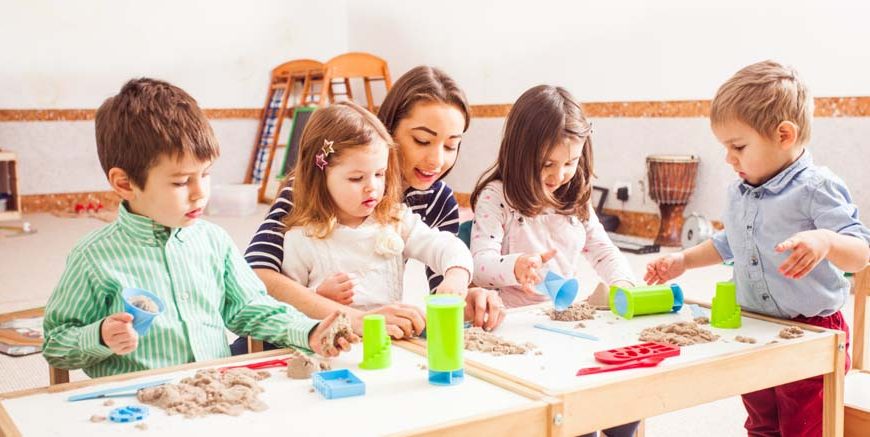
Sensory play is the foundation of early learning. It builds nerve connections in the brain and encourages scientific observation.
- The classic rice bin: Fill a plastic tub with dry rice. Add spoons, cups, and hidden toy dinosaurs for them to dig up.
- Shaving foam tracing: Spray foam on a baking tray. Let them trace shapes and letters with their fingers.
- Water pouring station: Give them two jugs and let them practice pouring water from one to the other in the bathtub.
- Ice block rescue: Freeze small plastic toys in ice cube trays. Give them warm water and a dropper to “rescue” the toys.
- Homemade playdough: Mix flour, salt, and water. Let them knead the dough to build hand strength.
- Jelly excavation: Hide small plastic blocks inside a bowl of set jelly. Let them dig the blocks out using safe plastic tweezers.
- Spice smelling jars: Put cinnamon, vanilla, and coffee in different small jars. Blindfold them and play a guessing game.
- Mud kitchen: Take old pots and pans into the garden. Let them mix mud, leaves, and water to make “soup”.
- Bubble wrap stomp: Tape bubble wrap to the floor and let them jump to pop the bubbles.
- Cloud dough: Mix flour and baby oil to create a silky, mouldable sand alternative.
Read More – Best Group Activities for Students
Fine and Gross Motor Skills (Activities 11 to 20)
These activities prepare their hands for writing and their bodies for balance.
- Pasta threading: Give them pipe cleaners and dry penne pasta. Ask them to thread the pasta to make a necklace.
- Tape peeling: Stick strips of colourful painter’s tape on the floor or a wall. Ask them to peel it off using their pincer grip.
- Balloon keep up: Blow up a balloon and challenge them to keep it from touching the floor.
- Sticky note jump: Place sticky notes high up on a wall. Ask them to jump and high five the notes.
- Scissor skills: Give them child safe scissors and let them cut strips of old newspaper into tiny squares.
- Pillow stepping stones: Scatter pillows across the living room. They must jump from one to the next without touching the “lava” floor.
- Coin drop: Cut a slit in the lid of a plastic tub. Ask them to drop coins or buttons through the slot.
- Animal walks: Call out an animal. They must walk like a bear, hop like a frog, or slither like a snake.
- Tweezing cotton balls: Provide a bowl of cotton balls and some tongs. Have them move the balls to an empty egg carton.
- Indoor bowling: Set up empty plastic bottles and use a rolled up pair of socks as a bowling ball.
Read More – Activities For Kids Aged 5 To 8 Years Old
Early Math and Logic (Activities 21 to 30)
Math does not start with numbers on a page. It starts with sorting, counting, and recognising patterns in the real world.
- Sock matching: Dump a basket of clean laundry on the floor. Have them find and match the pairs of socks.
- Shape hunt: Give them a piece of paper with a circle on it. Ask them to find five circular objects in the house.
- Macaroni sorting: Mix different types of dry pasta in a bowl. Ask them to sort them by shape into separate cups.
- Shoe measuring: Use their shoe to measure the length of the sofa or the rug. Count the “footsteps” together.
- Lego colour towers: Ask them to build a tower using only red blocks, then only blue blocks.
- Snack time fractions: Cut an apple into halves and then quarters. Explain how the pieces make up a whole.
- Button counting: Roll a dice. Ask them to count out that exact number of buttons.
- Size ordering: Give them three different sized spoons. Ask them to line the spoons up from smallest to largest.
- Pattern making: Use fruit to make a pattern on a skewer. Grape, strawberry, grape, strawberry.
- Sink or float: Fill a basin with water. Guess whether a rock, a leaf, and a plastic spoon will sink or float, then test it.
Language and Phonics (Activities 31 to 40)
Building vocabulary is all about rich conversation and playing with the sounds of different words.
- Label the house: Use sticky notes to label the door, the window, and the table. Read the words together daily.
- Rhyme time game: Say a word like “cat”. Ask them to shout out as many rhyming words as they can think of.
- Story sequencing: Cut up three pictures from an old comic book. Ask them to put the pictures in the correct order to tell a story.
- Letter tracing in sand: Pour salt or sand into a shallow tray. Show them how to draw the first letter of their name.
- The mystery bag: Put a familiar object in an opaque bag. Have them feel it without looking and describe what it feels like.
- Singing instructions: Instead of speaking, sing your instructions to them. It captures their auditory attention instantly.
- Puppet shows: Use an old sock to make a puppet. Have the puppet ask them questions about their day.
- Syllable clapping: Say their name and clap out the syllables. Re-becc-a gets three claps.
- Picture reading: Look at a book without reading the text. Ask them to tell you what is happening just by looking at the illustrations.
- Alphabet scavenger hunt: Give them a basket. Ask them to find an object that starts with the ‘B’ sound.
Read More – Fun Literacy Activities for Preschoolers
Art, Science, and Discovery (Activities 41 to 50)
Nurture their inner artist and scientist by focusing on the creative process rather than the final product.
- Colour mixing: Put red and yellow paint in a zip lock bag. Let them squish it to discover the colour orange.
- Shadow tracing: Put a toy dinosaur on a piece of paper in the sunlight. Let them trace the shadow with a crayon.
- Leaf rubbing: Place a dry leaf under a piece of thin paper. Rub a crayon over it to reveal the leaf veins.
- Baking soda volcanoes: Put baking soda in a cup. Let them use a dropper to add vinegar and watch it fizz.
- Ice painting: Freeze water with a drop of food colouring and a popsicle stick. Use the coloured ice to paint on thick paper.
- Nature bracelets: Wrap a piece of masking tape sticky side out around their wrist. Let them stick flowers and leaves to it during a walk.
- Toilet roll binoculars: Tape two empty toilet rolls together. Attach a string and go bird watching out the window.
- Magic milk: Pour milk on a plate. Add drops of food colouring. Dip a cotton bud in dish soap and touch the milk to watch the colours explode.
- Cardboard box fort: Give them a large empty cardboard box and some markers. Let them turn it into a spaceship.
- Water painting: Give them a bucket of plain water and a paintbrush. Let them “paint” the brick wall or the patio outside and watch it evaporate.
Taking Learning to the Next Level
When you practice these activities at home, you are doing incredible work. You are building their confidence. But eventually, a child needs a social environment to test these skills. They need a space where their curiosity is guided by experts.
At EuroKids, we believe that every single game a child plays is an opportunity for profound learning. We do not just keep children busy. We utilise the HEUREKA Curriculum, which is heavily inspired by Harvard University’s Project Zero. This framework focuses on “Visible Thinking”. When a child builds a block tower in our classroom, we ask them why they chose a wide base. We teach them how to think critically and solve problems, turning simple play into a cognitive masterpiece.
If you are looking for a preschool that matches your dedication to your child’s growth, the EuroKids Admission process is your clear next step. We invite you to explore the EuroKids Blog for more expert advice, detailed milestones, and parenting support. Partner with us to give your child the right start.
Learning Through Play
|
Play Category |
Core Benefit |
Best Activities |
|
Sensory Play |
Brain connection building. |
Cloud dough, ice rescue. |
|
Fine Motor |
Prepares hands for writing. |
Pasta threading, peeling tape. |
|
Gross Motor |
Balance and core strength. |
Pillow stepping stones, animal walks. |
|
Early Math |
Logic and pattern recognition. |
Sorting socks, button counting. |
|
Language |
Vocabulary and speech clarity. |
Rhyme games, syllable clapping. |
Frequently Asked Questions (FAQs)
1. How long should I expect a preschooler to focus on one activity?
Keep your expectations realistic. A three year old typically has an attention span of about ten to fifteen minutes per activity. If they lose interest, do not force it. Move on to something physical and come back to the table later.
2. Are pre preschool activities really necessary if they are starting school soon?
Absolutely. Home activities build the baseline. When a child already knows how to hold a crayon, wait for instructions, or sort objects, they transition into a formal preschool classroom much more smoothly and confidently.
3. What do I do if my child hates messy sensory play?
Some children are tactile defensive. Start very slowly. Put the messy items (like paint or foam) inside a sealed zip lock bag first so they can squish it without getting their hands dirty. Gradually introduce dry textures like rice before moving to wet textures.
4. How does the HEUREKA curriculum make a difference?
Instead of just asking a child to memorize facts, HEUREKA makes their thinking process visible. Teachers use specific questioning routines to help children articulate how they solved a problem. This creates deeper understanding and stronger independent thinking skills.
5. I work full time. How can I fit these activities in?
Do not try to do all fifty in a week. Pick just one simple activity for a Saturday morning. Or, involve them in your daily chores. Sorting laundry is math. Cooking dinner is science. You do not need a special setup; you just need to talk to them while you do life together.