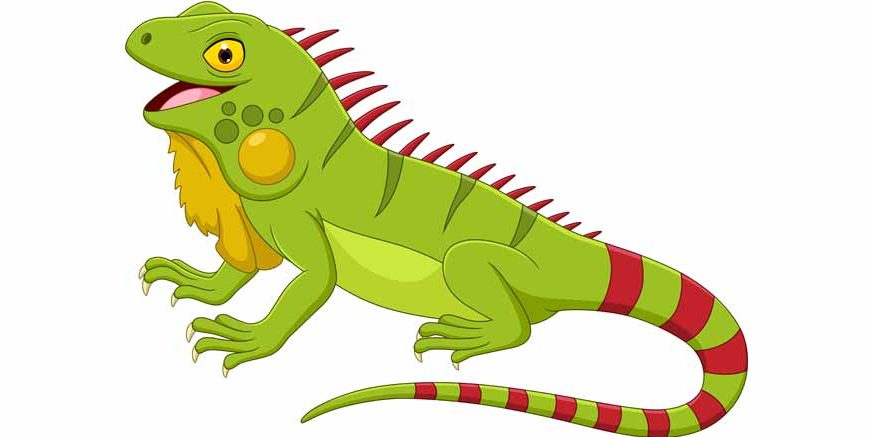
Picture a creature that looks exactly like a miniature, modern-day dragon. It features tough, scaly skin, a long whip-like tail, and a rather intimidating row of sharp spikes running straight down its back. It sits perfectly still on a warm rock, soaking up the intense midday sun without blinking. This is not a CGI monster from a fantasy film; it is a very real, incredibly fascinating reptile. For young students learning about the diverse wildlife sharing our planet, this lizard is always an absolute favourite. Let us peel back the scales and uncover the wonderfully bizarre daily life of these ancient-looking survivors.
Sorting Out the Basics
If we want to give a proper Iguana definition for a school project, we need to be specific. When biologists talk about an Iguana animal, they are describing a large, heavy-bodied lizard found primarily in the tropical regions of Central and South America, as well as scattered across the sunny islands of the Caribbean.
They are cold-blooded, which means their bodies cannot produce their own heat. That is exactly why you will always find them lounging lazily in the sunshine; they are essentially charging their biological batteries. They feature a very distinct flap of loose skin hanging under their chins, known as a dewlap, which helps them regulate their body temperature and communicate with their neighbours. They also have incredibly sharp, curved claws that make them fantastic, fearless tree climbers.
Read More – Fascinating Reptile Facts for Kids
Where Did the Name Actually Come From?
It is always fun to dig into the history of how animals got their names. The Iguana meaning does not come from Latin or Greek like many other animal names do. Instead, it traces its roots straight back to the indigenous Taino people who originally lived in the Caribbean islands centuries ago.
These native islanders called the large, scaly creatures roaming their forests iwana. When Spanish explorers eventually arrived on their wooden ships and heard the locals talking about the animals, they tried to write the word down. With their heavy Spanish accents, iwana slowly morphed into the word we use today. Therefore, the Iguanas meaning is simply a historical echo, carrying the original, ancient voice of the Caribbean people into our modern dictionaries.
The Official Science Tag
Scientists absolutely love categorising things, giving every single bug, bird, and beast a highly specific Latin label to avoid global confusion. When it comes to the Iguana scientific name, the experts kept things wonderfully, almost comically simple.
The most common, famous green lizard you might spot in a local pet shop or zoo is officially known as Iguana iguana. It sounds as though the researchers simply ran out of creative ideas that afternoon! However, this double-barrelled name specifically refers to the Green Iguana, the undisputed king of the jungle canopy.
Read More – Wild Animals for Kids
A Brilliant World of Variety
While the bright green tree-huggers are the most famous, the world is actually packed with an astonishing variety of these reptiles. There are roughly 35 different recognised Iguana species, and they have evolved to survive in some genuinely extreme, hostile environments.
Let us look at a few of the most remarkable family members:
- The Marine Iguana: This is perhaps the weirdest cousin of the bunch, living exclusively on the remote Galapagos Islands. While most lizards hate cold water, these dark, moody-looking creatures voluntarily dive into the freezing Pacific Ocean to scrape slimy green algae off underwater rocks. Because they swallow so much salty seawater while eating, they have to literally sneeze the excess salt out of their noses! You will often see them resting on the beach with funny white salt crusts completely covering their heads.
- The Rhinoceros Iguana: Hailing from the Caribbean island of Hispaniola, this heavy, grey creature looks like a bad-tempered dinosaur. It features thick, bony bumps sitting right on the end of its snout, closely resembling a rhino’s horn. They look fierce and grumpy, but they spend most of their days peacefully searching for ripe berries and crunchy leaves.
- The Desert Iguana: These pale, sandy-coloured reptiles live in the boiling hot deserts of North America. They can comfortably withstand blistering temperatures that would quickly kill most other animals, hiding down deep, cool burrows when the midday heat finally becomes too much to handle.
Unbelievable Superpowers
If you really want to impress a classroom full of students, you just need to share some of the utterly bizarre biological tricks these animals keep hidden up their scaly sleeves. They might look sleepy, but they are built for extreme survival.
Did you know they actually have three eyes? It sounds like pure science fiction, but it is entirely true. On the very top of their heads, they possess a pale, specialised scale called a parietal eye. It cannot see shapes or colours like normal eyes do, but it is highly sensitive to changes in light and dark shadows. If a hungry hawk swoops over them from above, that secret third eye detects the moving shadow, giving the lizard a split-second warning to dive into the bushes.
They also perform a brilliant magic trick when they are caught. If a wild predator, like a feral cat or a snake, manages to grab their long tail, the lizard simply flexes a special muscle and snaps its own tail right off! The detached tail continues to wildly wiggle and thrash around on the ground, completely distracting the confused predator. Meanwhile, the lizard quietly scurries up a tree to safety. Over the next few months, a brand new tail will magically grow back, though it usually ends up looking slightly darker and shorter than the original one.
Despite looking like fierce meat-eating hunters, they are surprisingly gentle giants. They are strict herbivores. They have tiny, serrated teeth designed perfectly for shredding tough leaves, tearing up brightly coloured flowers, and mashing up sweet, ripe tropical fruits.
Read More – List of Animals That Live On Land And Water
Conclusion
Sharing our planet with these spiky, sun-loving reptiles is a brilliant reminder of just how adaptable nature truly is. From sneezing out ocean salt on volcanic rocks to dropping their own tails to cheat death in the rainforest, they have spent millions of years perfecting the art of survival. They look like terrifying prehistoric beasts, yet they simply want to eat flowers and take long, warm naps in the sunshine. It makes you pause and rethink how we judge animals purely on their tough, scaly appearances. Encouraging our children to look past the scary spikes and discover the wonderful science underneath builds a deep, lifelong respect for wildlife. For more engaging learning adventures, fascinating animal facts, and wonderful parenting resources, do explore the EuroKids Blog, and discover a vibrant educational journey for your little ones through EuroKids Preschool Admission.
FAQs
Do these lizards make a lot of noise?
No, they are incredibly quiet animals. Instead of barking or hissing loudly, they communicate with each other using a complex system of visual body language, such as rapidly bobbing their heads up and down to show who is boss.
How big can a Green Iguana actually grow?
They can grow to be astonishingly large! A healthy adult male can reach nearly two metres in length from its nose to the very tip of its tail, and can easily weigh over nine kilograms.
Are they dangerous to humans?
They are generally very peaceful and prefer to run away from danger. However, if they are cornered or heavily provoked, they can deliver a painful bite or use their heavy, strong tail like a cracking whip to defend themselves.
Why do their colours sometimes change?
While they cannot change colours as dramatically as a chameleon, their skin tone does shift depending on their mood, their health, or the surrounding temperature. They often turn darker when they are cold to absorb more heat from the sunshine.