Imagine stepping into a time machine and travelling back thousands of years to the bustling streets of ancient Rome. If you wanted to count your toys or pay for a sweet treat at the market, you would not write down the numbers 1, 2, or 3. Instead, the Romans used a fascinating system made entirely out of alphabet letters! Today, we are going to act as historical detectives and crack a very specific number puzzle: figuring out 106 in Roman numerals.
The Building Blocks of an Ancient Code
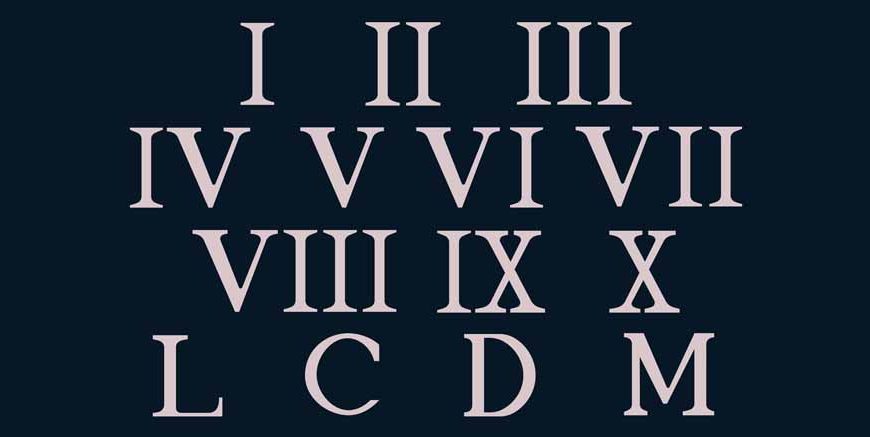
To understand this old-fashioned code, we first need to look at our basic building blocks. The Romans used seven main letters to write down all their numbers. For our specific puzzle today, we only need to memorise three special characters.
The letter ‘C’ stands for 100. A great way to remember this is to think of the word ‘Century’, which means 100 years. Next, the letter ‘V’ stands for 5. Finally, the letter ‘I’ stands for 1. By snapping these simple letter blocks together, just like colourful plastic bricks, we can build a massive variety of numbers.
Read More – Teaching Kids About Roman Numerals
Decoding 106 in Roman Numerals
Now, let us piece the entire puzzle together. When converting our modern digits into this ancient format, the smartest trick is to break the number apart into smaller, manageable chunks. We need to split our number into hundreds, tens, and units.
First, we pull out the 100. As we just learned, 100 is written using the letter C.
Next, we look at the 6. There is no single letter that means 6, so we have to build it ourselves. We do this by adding 5 and 1. Since 5 is V and 1 is I, we stick them closely together to make VI.
Finally, we join the two parts together. 100 (C) plus 6 (VI) gives us our final answer: CVI. So, if you ever need to quickly write down 106 in Roman numerals on a secret treasure map, you will boldly write CVI!
Fun Ways to Remember 106 in Roman
Learning how to write 106 in roman is much easier when you turn it into a physical game. Try going out into the garden and using small wooden twigs to spell out CVI on the grass. You can even roll out some soft modelling clay to shape the letters. The more you see these symbols as a fun, interactive code rather than a boring maths lesson, the faster your brain will remember them.
Read More – The Importance of Math in Everyday Life
Conclusion
Cracking an ancient numerical code is exactly like learning to speak a brand-new language. Once you understand that C, V, and I simply mean 100, 5, and 1, the mystery completely disappears, leaving behind a brilliant piece of human history. It is quite amazing to think that the exact same symbols carved by stone masons and emperors centuries ago can still be read, written, and perfectly understood by bright young minds today. The next time you spot a giant grandfather clock or read the date on an old building, you might just spot these familiar letters staring back at you. Who knew that simple counting could act as a thrilling bridge to the past?
FAQs
What does the letter ‘C’ mean in Roman counting?
It always stands for 100. It comes directly from the ancient Latin word ‘Centum’.
Is it possible to write 106 in any other way using these letters?
No! The rules of this system are very strict. CVI is the only correct way to express it.
Why is there no zero in this ancient code?
The Romans simply did not use a zero because their system was designed for trading physical objects, not for doing highly complex paper equations.