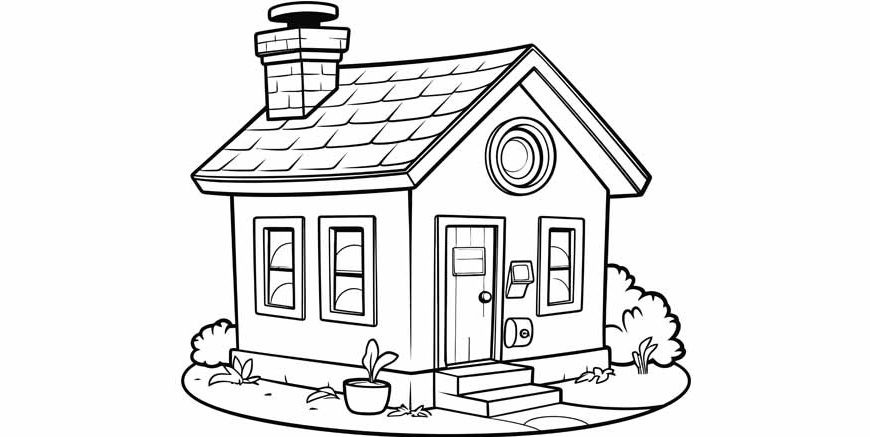
Handing a young child a completely blank sheet of paper and a brand new pack of wax crayons is exactly like handing them the keys to an empty, waiting universe. To an adult, it is just a flat, white surface. To a toddler, it is a massive, empty plot of land just waiting for a solid foundation. One of the very first things almost every single child attempts to sketch is a family home.
It is a brilliant, universal milestone in early childhood development that crosses all cultural boundaries. But how do we actually guide those chaotic, heavy scribbles into a recognisable structure without completely crushing their wild, natural creativity? Today, we are going to break down the exact, logical mechanics of teaching your child how to construct a fantastic building on paper, blending basic geometry with pure, joyful imagination.
Building a dream house beautiful house drawing
When a child sits down at the kitchen table to sketch a building, they are doing far more than just scratching a pencil against a page. They are actively processing the physical world around them. They are thinking heavily about where they sleep, where their family eats dinner, and how a group of people physically fits inside a sheltered space.
If you want to encourage them to create a dream house beautiful house drawing, you need to push them completely past the boring, standard brown box. Ask them highly descriptive questions. Does their fantasy home have a roof made of shiny, green dragon scales? Is the front door bright, glowing pink? Does it sit on top of a massive, fluffy white cloud, or is it buried deep underground like a badger’s secret den?
This active, hands-on approach to discovering their environment sits right at the heart of the Heureka Curriculum. Instead of passively telling a child what a building looks like, we encourage them to logically piece the shapes together themselves, turning a simple art session into a heavy-duty cognitive puzzle.
Read More – Easy Drawing Ideas For Kids
The Simple, Step-by-Step Construction Guide
Children thrive on clear, predictable instructions. If you ask them to draw a whole mansion at once, they will instantly feel overwhelmed and frustrated. You have to break the architecture down into simple, manageable geometric shapes. Here is a highly effective, logical sequence to follow:
Step 1: The Solid Foundation
Start by asking them to draw a massive square directly in the centre of the paper. Explain that this is the main, heavy body of the building. It has to be wide and strong enough to hold all the furniture, the kitchen sink, and the family dog safely inside.
Step 2: The Protective Roof
Next, we need to keep the rain out. Have them draw a large triangle resting perfectly on top of the square. Explain how the steep, sloping sides of the triangle are a brilliant piece of engineering that forces heavy rainwater to completely slide off the sides rather than soaking into the ceiling.
Step 3: The Welcoming Door
A building is completely useless if you cannot get inside. Ask them to draw a tall, thin rectangle sitting right at the bottom edge of the square. Add a tiny, dark circle on one side of the rectangle to act as the heavy metal doorknob.
Step 4: The Bright Windows
Humans need natural light to see what they are doing. Have the child add two small squares on either side of the tall door. To make them look like real glass panes, tell them to carefully draw a cross right through the middle of each small square, creating a proper wooden window frame.
Step 5: The Fun Details
Now they can add the messy, wonderful extras. They can draw a tall, thin rectangle on the roof for a brick chimney, and add swirling, curly lines coming out of the top to show hot smoke from a winter fire.
Read More – Creative Activities for Preschoolers Learning and Development
Incorporating a drawing of home safety
Art time is arguably one of the absolute best moments to introduce vital, real-world lessons in a highly relaxed environment. We can seamlessly use this sketching session to talk about personal security.
You can easily challenge your child to create a drawing of home safety by asking them to actively protect the building they just designed. Suggest they draw a solid, heavy wooden fence all the way around the garden to stop wild animals or stray dogs from wandering in. Have them draw a bright, glowing yellow lamp hanging right above the front door so that nobody trips on the dark steps at night.
You can even ask them to sketch a sturdy padlock on the front garden gate. By physically drawing these protective barriers, the child actively learns why we lock our doors at night and why boundaries are so incredibly important, turning a simple crayon sketch into a brilliant conversation about practical safety rules.
Mastering how to colour in drawing Properly
Once the stark pencil outline is completely finished, it is time to bring the architecture to life. However, filling a shape with ink is a highly complex physical task for small hands. It requires intense fine motor control and heavy concentration.
When you sit down to teach them exactly how to colour in drawing, the very first rule is to establish a border. Teach your child to take their wax crayon and trace heavily right along the inside of their pencil lines before they do anything else. This creates a thick, waxy barrier that acts like a physical bumper, stopping their messy colouring from spilling out over the edges.
Next, talk to them about physical pressure. Show them how pressing the crayon violently against the paper creates a dark, heavy shade, which is absolutely perfect for the dark shadows hiding under the roof.
Then, show them how gently sweeping the crayon across the page creates a soft, light texture, which is highly suited for a bright, sunny daytime sky. Encourage them to mix wildly different shades together. Let them discover that aggressively scribbling yellow directly over blue magically creates a brand new green lawn for their front garden.
Read More – How To Engage Kids In Drawing And Painting Activities At Home
Conclusion
Watching a young child proudly hold up a slightly crooked, brightly scribbled picture of a building completely changes how you view early education. That messy piece of paper is not just a fridge decoration; it is the very first time they have actively attempted to organise their physical universe and establish a safe, secure haven on a blank canvas. It shows us exactly how they logically view their personal space and what makes them feel protected. It is genuinely thought-provoking to realise that by simply teaching them how to balance a triangle on top of a square, we are actively laying the heavy, structural foundations for their spatial awareness, their fine motor skills, and their emotional expression. If we continue to patiently guide their tiny hands through these creative puzzles, we build fiercely confident problem solvers who are never afraid to design their own futures. To uncover more fantastic, creative ways to fuel your child’s daily development, dive into the latest parenting resources on the EuroKids Blog and secure their next great educational adventure through EuroKids Preschool Admission today.
FAQs
At what age should a child be able to draw a basic building?
Most children begin to successfully combine simple shapes like squares and triangles to form a recognisable structure between the ages of four and five, as their spatial reasoning and fine motor control naturally mature.
How can I stop my child from getting frustrated when they make a mistake?
Remind them constantly that there are absolutely no strict rules in art. If they accidentally draw a wobbly line, encourage them to creatively turn that ‘mistake’ into a crawling garden caterpillar or a climbing ivy vine.
Are thick wax crayons better than thin coloured pencils for beginners?
Yes, thick crayons are highly recommended for toddlers. They are much easier for small, clumsy hands to physically grip, and they do not snap as easily when a child presses down heavily on the paper.