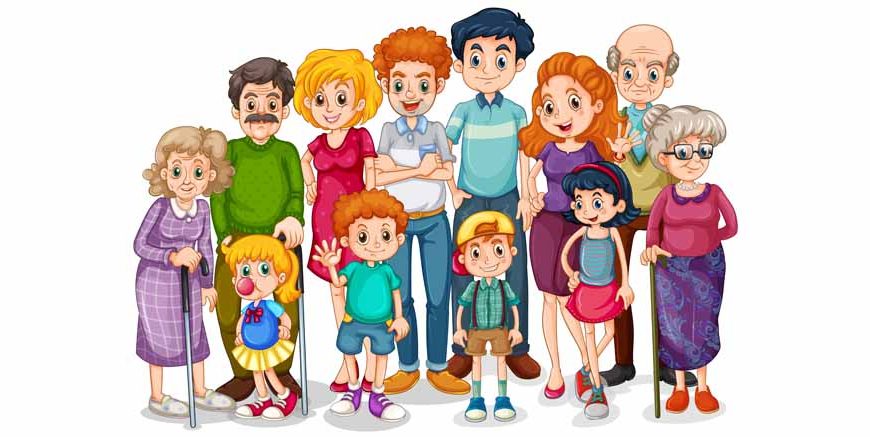
A family is the first little world a child understands. Before children learn numbers or letters, they learn love, care, and belonging from the people around them. When a child says “This is my mother” or “That is my dadi”, they are not just naming people. They are building relationships, language skills, and emotional confidence.
For young learners, especially in early childhood, learning the names of family members in English helps improve communication and social understanding. In Indian families, children often grow up hearing words like dadi, nana, bua, and masi. Knowing how to explain these relative name terms in English makes children more confident both at school and in daily conversations. This simple guide is designed for kids and parents to explore family relationships in an easy, friendly, and joyful way, just like learning happens at EuroKids.
What Are Family Members
Family members are the people who are related to us by birth or through relationships. They live with us or stay connected to us through love and care. A family teaches children values like sharing, respect, kindness, and trust. When children learn family words, they also learn how to answer simple questions like what is your father or what is your father name, which are often asked in classrooms.
Immediate Family Members in English
Let us begin with the closest people in a child’s life.
A father is a male parent. When someone asks what is your father, the correct answer is “My father is my parent.”
A mother is a female parent who takes care of the child.
A brother name refers to a male sibling.
A sister is a female sibling. Some families also use a sweet nickname for sister at home to express love.
Children slowly learn to introduce these members proudly during school activities and storytelling.
Read More – Why is Family Important in Child Development?
Grandparents and Their English Meanings
Grandparents hold a special place in Indian families.
Dadi is the father’s mother. The correct dadi in english term is grandmother.
Nana is the mother’s father. The nana in english meaning is maternal grandfather.
Grandfather and grandmother often tell stories, teach values, and spend quality time with children. Knowing these words helps children connect traditional family terms with English learning.
Uncles and Aunts in Indian Families
Indian families have specific names for uncles and aunts, which can sometimes confuse children when they try to explain them in English.
Bua is the father’s sister. The correct bua in English is aunt.
Masi or mausi is the mother’s sister. The mausi in English is also aunt.
Mama in english means uncle. Mama is the mother’s brother.
Bade papa in english refers to the father’s elder brother. In English, he is also called uncle.
Sometimes children hear words like indian aunty, which is commonly used in daily life but in English, the correct word remains aunt.
Cousins and Their Meanings
Cousins are children of our uncles and aunts.
A sisters son is called nephew.
A brothers son is called nephew as well.
A brothers daughter is called niece.
These words help children understand extended family relationships clearly and answer questions confidently in school.
Read More – The Impact of Family Traditions on Bonding and Connection
How Children Learn Family Words Easily
Children learn best through stories and conversations. For example, a child might say, “On Sunday, I went to my nana’s house. My mama played with me and my bua told me a story.”
Such sentences naturally build vocabulary and emotional expression. At EuroKids, family concepts are introduced through pictures, role play, storytelling, and everyday examples so that learning feels natural and joyful.
Importance of Learning Family Member Names for Kids
Understanding family relationships supports language development and emotional growth. It helps children:
- Answer questions about their family
• Build confidence while speaking English
• Understand relationships and social roles
• Strengthen emotional bonds
When children know how to explain mother’s sister is called aunt or father’s brother is called uncle, they feel proud of their learning.
Read More – Tips for Raising Child in a Nuclear Family
Family Learning Through the HEUREKA Curriculum
EuroKids follows the research based HEUREKA Curriculum, which focuses on holistic development of young children. This curriculum blends language learning with emotional, social, and cognitive growth. Family concepts are taught through real life examples, picture talk, conversations, and activities that children relate to. Instead of memorising terms, children understand relationships through experience and expression. This approach ensures that learning family names is meaningful, age appropriate, and long lasting.
Fun Activities to Learn Family Members at Home
Parents can support learning with simple activities. Drawing a family tree, role playing family introductions, or sharing stories about grandparents helps children connect emotionally and linguistically. Talking daily about relatives using correct English words builds confidence naturally and gently.
Why Family Topics Are Important in Early Education
Family lessons help children understand their identity and surroundings. They also encourage respect for elders and appreciation for relationships. When children learn about family members early, they develop empathy, communication skills, and social awareness which are key foundations for lifelong learning.
Building Strong Foundations with EuroKids
Learning the names of family members is more than just vocabulary. It helps children understand relationships, emotions, and communication. Through engaging stories, conversations, and the HEUREKA Curriculum, EuroKids makes early learning meaningful and joyful.
For parents looking to give their child a strong start in life, the EuroKids Franchise offers a trusted early childhood education experience. Explore more helpful learning guides in the EuroKids Blog section and take the first step towards nurturing confident, curious learners.
Read More – Exploring the Characteristics of Healthy Families
Frequently Asked Questions
What are family members for kids?
Family members are people related to us like parents, grandparents, uncles, aunts, brothers, sisters, cousins, nieces, and nephews.
What is nana in English meaning?
Nana means maternal grandfather, which is the mother’s father.
Mother’s sister is called what in English?
Mother’s sister is called aunt.
Sisters son is called what?
Sister’s son is called nephew.
What is bua in English?
Bua means aunt, specifically the father’s sister.