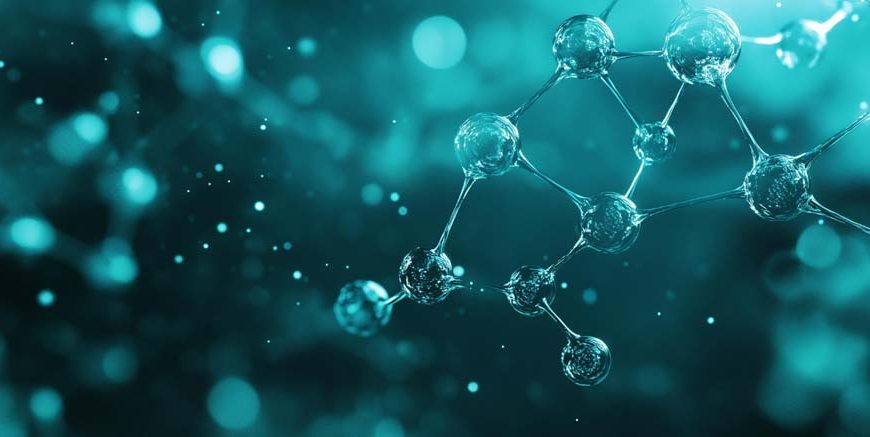
From the air we breathe to the food we eat, science helps us understand the world around us. And at the heart of everything in the universe are atoms and molecules. While atoms are the smallest units of matter, molecules are formed when atoms join together. Here, we will explain in detail the facts about molecules, key concepts, and fun examples to help students easily understand this fascinating topic.
What Are Molecules?
To begin with, let us understand what is meant by molecules.
Molecules Are
Molecules are groups of two or more atoms chemically bonded together. These atoms can be the same or different. Molecules are tiny particles that make up everything around us: water, air, food, plants, animals, and even our own bodies.
For example:
- A water molecule (H₂O) is made up of two hydrogen atoms and one oxygen atom.
- An oxygen molecule (O₂) has two oxygen atoms bonded together.
In simple words, molecules are the building blocks of matter.
Read More – Solids, Liquids, and Gases
What Are Molecules Made Up Of?
One of the most common student questions is: What are molecules made up of?
Molecules are made up of atoms. Atoms join together through chemical bonds to form molecules. These bonds are formed when atoms share or exchange electrons.
- If atoms of the same element combine, they form elemental molecules (like O₂ or N₂).
- If atoms of different elements combine, they form compound molecules (like CO₂ or H₂O).
This concept is taught early in Indian school science textbooks under EVS and basic chemistry.
About Molecules in Everyday Life
When we talk about molecules, it is important to understand their role in daily life.
Everything we see, touch, or feel is made of molecules:
- The water we drink is made of water molecules
- Air contains oxygen, nitrogen, and carbon dioxide molecules
- Food contains complex molecules like carbohydrates, proteins, and fats
Even smells and tastes occur because molecules travel through the air and react with our senses.
Facts About Molecules
Here are some important facts about molecules that every student should know:
- Molecules are extremely small and cannot be seen with the naked eye
- A molecule retains the chemical properties of a substance
- Molecules are always in motion
- Different substances have different types of molecules
- Molecules can exist as solids, liquids, or gases
These facts about molecules help explain why substances behave differently.
Read More – How do you make science interesting for kids?
Facts About Atoms and Molecules
Understanding molecules becomes easier when we also learn about atoms.
Facts About Atoms and Molecules
- Atoms are the smallest units of elements
- Molecules are formed when atoms combine
- Atoms can exist independently, but molecules usually represent substances
- Chemical reactions involve breaking and forming molecular bonds
- Atoms and molecules are always conserved in chemical reactions
Some More Interesting Facts About Atoms and Molecules
Learning science becomes more exciting with fun and surprising details.
Interesting Facts About Atoms and Molecules
- A single drop of water contains billions of molecules
- Molecules move faster when heated
- The human body is made of trillions of molecules
- Molecules can rearrange themselves during chemical reactions
- Even solid objects have vibrating molecules
Such interesting facts about atoms and molecules make science fun and relatable for students.
Read More – Facts About the Noble Gases
Did You Know This About Molecules?
Let’s explore some fun facts about molecules that students enjoy learning:
- The smell of food spreads because molecules move through the air
- Ice floats on water because water molecules form a unique structure
- Sugar dissolves in water because sugar molecules mix with water molecules
- Molecules decide whether something is hard, soft, sticky, or smooth
Types of Molecules
Molecules can be classified into different types:
1. Elemental Molecules
Formed by the same type of atoms (O₂, N₂)
2. Compound Molecules
Formed by different atoms (H₂O, CO₂)
3. Large Molecules
Such as proteins, starch, and DNA found in living organisms
Understanding types helps students learn about molecules more clearly.
Importance of Molecules in Science
Molecules are important because:
- They help explain physical and chemical changes
- They form the basis of chemistry, biology, and physics
- They help scientists create medicines, fuels, and materials
- They explain processes like digestion, respiration, and photosynthesis
Without understanding molecules, science learning would be incomplete.
Read More – Science Quiz Questions and Answers for Kids
Molecules vs Atoms: A Simple Comparison
|
Atoms |
Molecules |
|
Smallest unit of an element |
Group of atoms |
|
May exist alone |
Usually exist together |
|
Form molecules |
Form substances |
This table helps students quickly revise facts about atoms and molecules.
Common Examples of Molecules
Some simple examples students often learn:
- Water (H₂O)
- Oxygen (O₂)
- Carbon dioxide (CO₂)
- Glucose (C₆H₁₂O₆)
These examples make it easier to answer exam questions about what molecules are made up of.
How EuroKids Builds Strong EVS Foundations
When Environmental Studies (EVS) is introduced through observation, storytelling, nature walks, and hands-on exploration, young learners begin to understand their surroundings in a meaningful and lasting way. Instead of memorising facts about plants, animals, or seasons, children learn by experiencing and questioning the world around them. This is why structured early education programs focus on experiential and inquiry-based learning rather than rote memorisation.
At EuroKids, foundational EVS concepts are nurtured through the HEUREKA – Visible Thinking Curriculum. This approach encourages children to explore themes such as “My Family,” “My Community,” “Plants and Animals,” “Seasons and Weather,” and “Good Habits” through interactive discussions, thematic projects, role play, outdoor exploration, and guided observation.
The Visible Thinking framework helps children observe carefully, think deeply, and express their ideas confidently. Through activities like nature-based learning, environmental awareness projects, sensory exploration, and group conversations, children develop curiosity about how things grow, how communities function, and how they can care for the environment.
With a child-centric and play-based methodology refined over 20+ years and implemented across 1600+ preschools, EuroKids focuses on building awareness, responsibility, and curiosity first, allowing knowledge, empathy, and critical thinking skills to develop naturally over time.
Key Facts About Molecules
Let us revise the key points:
- Molecules are made up of atoms
- Molecules form all matter
- Molecules are always moving
- Atoms and molecules work together in chemical reactions
- Learning molecules helps understand the natural world
These facts about molecules are essential for every student.
To explore more learning ideas, simple explanations, and early childhood resources, parents
can visit the EuroKids Blog. Those who wish to understand the preschool journey better or
explore enrolment options can find complete information on the EuroKids Preschool Admission
Page, where learning is designed to be joyful, engaging, and child-friendly.