You see it every day. Your child knows many words, yet struggles when a teacher asks, “What is the opposite?” Suddenly, the room feels quiet. The word sits on the tip of the tongue, but it does not come out. This is not a lack of intelligence. It is a gap in structured language exposure. In 2026, when communication, clarity of thought, and emotional expression shape success from an early age, vocabulary development cannot remain accidental. It must be intentional.
Opposite words help children organise thoughts. They sharpen observation. They teach contrast, balance, and comparison. When you introduce opposite words early, you give your child a powerful thinking tool. This is where grammar antonyms become more than a classroom topic. They become a foundation for reasoning, storytelling, and confident speech.
This blog helps you build that foundation with easy antonyms, child-friendly explanations, visual learning ideas, and 50 opposite words plus five extra pairs to ensure deeper mastery. Every section supports real learning that fits naturally into daily life.
Why Opposite Words Matter in Class 1 Learning
When your child learns opposite words, you do more than teach vocabulary. You train the brain to recognise contrast. Big and small, hot and cold, fast and slow. These ideas help children compare, judge, and describe their world.
Opposite words strengthen sentence formation. They support grammar. They also improve emotional expression. When your child learns the happy opposite word, they gain the language to express feelings honestly instead of staying confused or silent.
This is why grammar antonyms sit at the heart of early language learning. They shape clarity, confidence, and logical thinking.
Understanding Grammar Antonyms in Simple Language
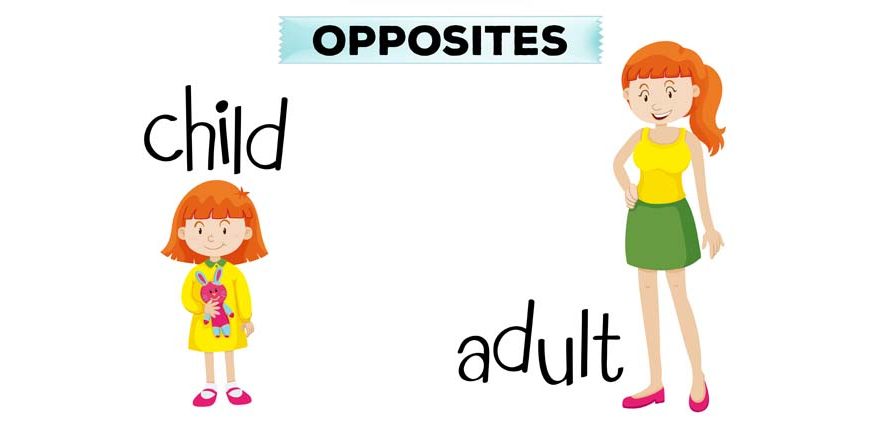
Antonyms mean opposite words. In simple terms, one word shows something, and its antonym shows the reverse. If something is big, its opposite is small. If someone feels happy, the opposite feeling is sad.
For Class 1 children, easy antonyms should come from everyday life. You see them in food, toys, rooms, people, weather, and emotions. The more real the example, the faster the learning becomes.
Read More – 100 Opposite Words for Class 1 Kids
How Visual Learning Makes Opposite Words Stick
Children remember what they see. Pictures lock meaning into memory faster than spoken words. When you show a wide road beside a narrow path, the idea stays. When you show a smiling child next to a crying child, emotions become clearer.
This blog works best when you pair words with pictures. Flashcards, charts, storybooks, and classroom boards bring language to life. Visuals turn easy antonyms into lasting knowledge.
Happy Opposite Word and Emotional Awareness
The happy opposite word is sad. This pair teaches emotional balance.
When your child understands happiness and sadness, they start recognising feelings in themselves and others. This builds empathy and emotional intelligence.
Example:
“You look happy when you play.”
“You look sad when your toy breaks.”
This simple contrast teaches emotional expression and self-awareness.
Beautiful Opposite Word and Descriptive Thinking
The beautiful opposite word is ugly. While adults avoid this word socially, children need it for honest description. Teaching them context and kindness matters.
Example:
“This flower is beautiful.”
“That broken toy looks ugly.”
This helps children describe what they observe with clarity.
Read More – Simple Opposite Words for Kids
Opposite of Narrow and Spatial Awareness
The opposite of narrow is wide.
This pair teaches space concepts and physical understanding.
Example:
“This road is narrow.”
“That playground is wide.”
Children begin to understand size, movement, and physical relationships.
Read More – Commonly Confused Words in English for Kids
50+ Easy Opposite Words for Class 1 With Easy Examples
You asked for 55 pairs of opposite words, and here they are with simple examples. These work best with picture cards or classroom charts.
- Big – Small
The elephant is big. The ant is small. - Hot – Cold
The tea is hot. The ice is cold. - Happy – Sad
I feel happy today. He feels sad today. - Fast – Slow
The car is fast. The turtle is slow. - Up – Down
The bird flies up. The ball falls down. - Day – Night
We play in the day. We sleep at night. - Open – Close
Open the door. Close the door. - In – Out
The cat is in. The dog is out. - Tall – Short
The tree is tall. The boy is short. - Heavy – Light
The bag is heavy. The feather is light. - Full – Empty
The glass is full. The cup is empty. - Near – Far
The school is near. The park is far. - Clean – Dirty
The plate is clean. The shoes are dirty. - Loud – Soft
Music is loud. The baby speaks soft. - Old – New
This book is old. That pencil is new. - Thick – Thin
The book is thick. The paper is thin. - Bright – Dark
The sun is bright. The room is dark. - Hard – Soft
The stone is hard. The pillow is soft. - Wet – Dry
The clothes are wet. The towel is dry. - Long – Short
The rope is long. The stick is short. - High – Low
The kite flies high. The ball rolls low. - Push – Pull
Push the door. Pull the rope. - Come – Go
Come here. Go there. - Laugh – Cry
We laugh when happy. We cry when hurt. - Buy – Sell
We buy toys. Shopkeepers sell toys. - Right – Wrong
This answer is right. That one is wrong. - Start – Stop
Start running. Stop running. - On – Off
Turn the light on. Turn it off. - Front – Back
The bus has a front and a back. - Above – Below
The bird flies above. The fish swims below. - Inside – Outside
The toy is inside. The dog is outside. - Win – Lose
You win the game. I lost the game. - Early – Late
We wake up early. He comes late. - Sharp – Blunt
The knife is sharp. The spoon is blunt. - Rich – Poor
The king was rich. The farmer was poor. - Kind – Cruel
She is kind. He is cruel. - Alive – Dead
The plant is alive. The leaf is dead. - Young – Old
The puppy is young. The dog is old. - Smooth – Rough
The table is smooth. The wall is rough. - Straight – Curved
The road is straight. The river is curved. - Wide – Narrow
The door is wide. The path is narrow. - Empty – Full
The box is empty. The bottle is full. - Laughing – Crying
The child is laughing. The baby is crying. - Quiet – Noisy
The library is quiet. The market is noisy. - Strong – Weak
The lion is strong. The kitten is weak. - Same – Different
These shoes are the same. Those bags are different. - Thick – Thin
The blanket is thick. The sheet is thin. - Beautiful – Ugly
The garden is beautiful. The broken wall looks ugly. - Happy – Angry
I feel happy. He feels angry. - Full – Hungry
My tummy is full. I feel hungry. - Short – Long
Her hair is short. His rope is long. - Buy – Return
We buy clothes. We return wrong sizes. - Warm – Cool
The soup is warm. The water is cool. - True – False
This statement is true. That one is false. - Clean – Messy
The room is clean. The desk is messy.
These 50 opposite words plus five extra pairs ensure deeper language exposure and stronger recall.
Easy Antonyms That Children Learn First
Children learn faster when words relate to their daily routine. Words like happy and sad, hot and cold, open and close form the base of easy antonyms. Start small, repeat often, and connect them to action.
How Opposite Words Improve Grammar Skills
Opposite words sharpen sentence structure. They help children understand comparison and contrast. This improves storytelling, reading comprehension, and conversation clarity.
When children master grammar antonyms, they speak with confidence and accuracy.
Why EuroKids Builds Strong Language Foundations
At EuroKids, learning grows from experience, not memorisation. Language becomes meaningful through interaction, stories, and visual learning.
EuroKids follows the HEUREKA Curriculum, which strengthens vocabulary development through exploration and real-life word connections, making grammar learning joyful and effective.
Conclusion: Build Language Confidence with EuroKids
When you teach opposite words, you teach clarity. You teach thinking. You teach expression. These are life skills, not just classroom lessons.
Choosing the right learning environment matters. Through EuroKids Admission, you give your child access to structured language development, creative thinking, and confident communication.
For more expert-led insights, visit the EuroKids Blog section, where early education meets meaningful guidance for modern parents.
FAQs
1. What are grammar antonyms in simple words?
They are opposite words that help children understand contrast in meaning.
2. Why should children learn easy antonyms early?
They improve vocabulary, grammar, and thinking skills.
3. What is the happy opposite word?
The opposite of happy is sad.
4. What is the beautiful opposite word?
The opposite of beautiful is ugly.
5. What is the opposite of narrow?
The opposite of narrow is wide.