Language becomes magical for children when words come alive through meaning, action and playful discovery. One of the most effective and enjoyable ways to build vocabulary during early childhood is through simple opposite words. These word pairs help children understand contrast, context, comparison and relationships between everyday concepts. They also strengthen memory and support early reading skills because opposites are easy to remember and recognise.
For young learners, especially those in kindergarten, practising simple opposite words for kids can turn into a joyful learning routine. They can explore them through storytelling, play, classroom activities, conversations and picture-based learning. Parents and teachers often find that opposites help children understand the world around them more clearly. When a child learns the difference between hot and cold or day and night, they are not just learning words but building awareness and observation.
This detailed guide covers 70+ simple opposite words, grouped into eight child friendly categories. Each pair is explained in a way that supports natural learning and helps children relate the words to everyday experiences. These categories also align with how young children absorb information through themes and sensory cues. This makes the learning process helpful both at home and in school, especially for children in preschool and kindergarten.
Toward the end, this blog also includes a helpful section about the EuroKids learning approach, the Heureka Curriculum, answers to frequently asked questions, and guidance on EuroKids Admission for parents who want a strong educational foundation for their child.
Let us begin.
Why Opposite Words Matter in Early Learning
Children learn best when ideas feel connected to their real world. This is why teaching simple opposite words becomes a very effective technique during the early years. When children compare two things, they begin to form mental categories. These categories build the foundation of logical thinking, problem solving and communication.
Opposites also help with:
Understanding differences:
Children learn to identify and name contrasting qualities.
Strengthening memory:
Opposites are easy to recall because they come in pairs.
Improving sentence formation:
Children learn how to describe things clearly using vocabulary.
Supporting reading readiness:
Opposites are common in children’s stories and picture books.
Whether you are a parent, a preschool teacher or a caregiver, using simple opposite words for kindergarten can add richness to daily learning. They are fun, practical and age appropriate. Children can learn them through play, songs, books, actions and creative games.
Below are 75 opposite pairs divided into eight meaningful groups. Each pair comes with a short explanation that helps children relate the words to familiar ideas.
Read More – Commonly Confused Words in English for Kids
Group 1: Size and Quantity Opposites
This group helps children understand the idea of measurement, comparison and the difference between big and small quantities.
- Big Small
Big means large in size, while small means tiny.
- Tall Short
Tall describes height that is high, while short refers to less height.
- Fat Thin
Fat means wide or heavy, while thin means slim or narrow.
- Heavy Light
Heavy things are hard to lift, while light things are easy to carry.
- Full Empty
Full means something contains a lot, while empty means nothing is inside.
- Many Few
Many refers to a large number, while few means very limited.
- Thick Thin
Thick means wide from the sides, while thin is narrow.
- Wide Narrow
Wide spaces are broad, while narrow spaces are tight and small.
- More Less
More means a greater amount, while less means a smaller amount.
- Huge Tiny
Huge means very big, while tiny means extremely small.
Read More – CVC Words List for Kids: Definition & Activities
Group 2: Time and Speed Opposites
These pairs help children understand concepts related to daily routines and the movement of things.
- Day Night
Day is when the sun is out, while night is when it is dark.
- Early Late
Early means arriving before time, while late means arriving after the expected time.
- Fast Slow
Fast means moving quickly, while slow means taking more time to move.
- Before After
Before means earlier, while after refers to a later time.
- Now Later
Now means at this moment, while later means sometime afterward.
- Quick Gradual
Quick means immediately, while gradual means slowly over time.
- Past Future
Past refers to events already done, while future refers to what is yet to come.
- Start Finish
Start means the beginning, while finish means the end.
- Soon Never
Soon means happening shortly, while never means not at all.
- Young Old
Young refers to early age, while old refers to someone or something that has aged.
Read More – Mastering Position Words: Meaning, Significance, Examples
Group 3: Feelings and Behaviour Opposites
This group helps children name emotions and understand social behaviour.
- Happy Sad
Happy means joyful, while sad means unhappy.
- Brave Scared
Brave means fearless, while scared means afraid.
- Kind Unkind
Kind describes caring behaviour, while unkind means hurtful.
- Polite Rude
Polite means showing good manners, while rude means impolite behaviour.
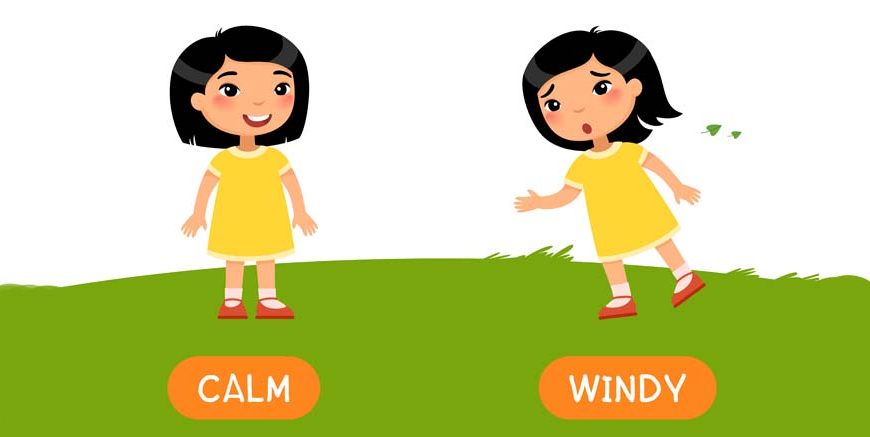
- Calm Angry
Calm means peaceful, while angry means upset.
- Friendly Unfriendly
Friendly refers to warm behaviour, while unfriendly means cold or distant.
- Excited Bored
Excited means enthusiastic, while bored means uninterested.
- Confident Shy
Confident means believing in oneself, while shy means feeling reserved.
- Neat Messy
Neat means tidy, while messy means untidy.
- Honest Dishonest
Honest means telling the truth, while dishonest means lying.
Read More – Transition Words for Kids: Types, Examples & Importance
Group 4: Nature Opposites
These pairs help children understand natural surroundings and weather conditions.
- Hot Cold
Hot means warm in temperature, while cold means the opposite.
- Wet Dry
Wet means covered with water, while dry means without water.
- Rainy Sunny
Rainy describes weather with rain, while sunny means the presence of sunlight.
- Cloudy Clear
Cloudy means the sky is covered with clouds, while clear means no clouds.
- Bright Dark
Bright means full of light, while dark means no light.
- High Low
High refers to something at a great height, while low refers to something closer to the ground.
- Soft Hard
Soft means smooth to touch, while hard means firm and tough.
- Near Far
Near means close in distance, while far means distant.
- Deep Shallow
Deep means far down inside, while shallow means not very deep.
- Strong Weak
Strong means having power, while weak means lacking strength.
Read More – High-Frequency Words for Kids
Group 5: Direction and Position Opposites
This group builds spatial awareness.
- Up Down
Up means moving higher, while down means lower.
- Left Right
Left and right refer to opposite sides of direction.
- Inside Outside
Inside means within something, while outside means beyond it.
- Over Under
Over means above something, while under means below something.
- In Out
In means going within a space, while out means leaving a space.
- Front Back
Front refers to the forward side, while back refers to the rear side.
- Top Bottom
Top means upper part, while bottom means lower part.
- On Off
On means switched or placed on, while off means turned away or removed.
- Open Closed
Open means not shut, while closed means tightly shut.
- Here There
Here refers to the current place, while there refers to another place.
Read More – Simple Words for Kids
Group 6: Action Opposites
These everyday verbs help children describe movement and activity.
- Push Pull
Push means moving something away, while pull means drawing it closer.
- Come Go
Come means moving toward someone, while go means moving away.
- Give Take
Give means handing over, while take means receiving.
- Stand Sit
Stand means being upright, while sit means resting on a surface.
- Walk Run
Walk means moving slowly, while run means moving quickly.
- Build Break
Build means putting things together, while break means damaging something.
- Buy Sell
Buy means purchasing, while sell means offering something for money.
- Laugh Cry
Laugh means expressing joy, while cry means tears during sadness.
- Teach Learn
Teach means to share knowledge, while learn means to receive it.
- Win Lose
Win means succeeding, while lose means not achieving the goal.
Group 7: Object and Material Opposites
These help children learn properties of things around them.
- Clean Dirty
Clean means free from dirt, while dirty means filled with dust or mess.
- Smooth Rough
Smooth means soft to touch, while rough means uneven and harsh.
- Sharp Dull
Sharp means pointed, while dull means blunt.
- Empty Filled
Empty means nothing inside, while filled means full.
- Old New
Old means aged, while new means recently made.
- Real Fake
Real means genuine, while fake means not genuine.
- Loose Tight
Loose means not firm, while tight means firmly fixed.
- Sweet Sour
Sweet refers to sugary taste, while sour means tangy.
- Soft Loud
Soft means gentle sound, while loud means high volume.
- Fresh Stale
Fresh means newly prepared, while stale means old.
Group 8: Conceptual and Learning Opposites
These help children understand thinking and learning skills.
- Right Wrong
Right means correct, while wrong means incorrect.
- Easy Difficult
Easy means simple to do, while difficult means hard.
- True False
True means correct, while false means incorrect.
- Same Different
Same refers to being alike, while different means not alike.
- Safe Unsafe
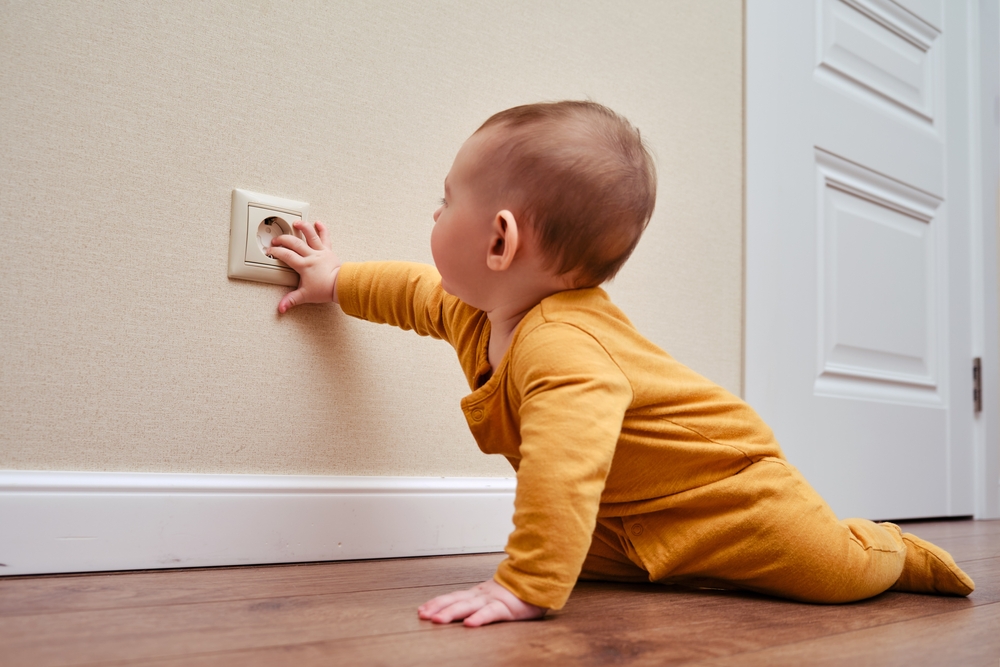
Safe means protected, while unsafe means harmful.
How to Teach Simple Opposite Words Effectively
Teaching simple opposite words for kids works best when children can see, hear and feel the difference. Parents and teachers can use:
Picture books and flashcards
Visuals make learning effortless.
Storytelling
Stories naturally include contrasts.
Role play and actions
Children love learning with movement.
Classroom activities
Sorting objects, matching cards and drawing opposites.
Daily conversations
Point out opposites during routines like meals, play and bath time.
This approach helps children remember opposites long term.
How EuroKids Supports Vocabulary Learning
EuroKids integrates vocabulary growth into everyday learning in an enjoyable and age suited manner. Children do not feel like they are memorising words. Instead, they learn through purposeful play, exploration and interaction with real world objects.
The Heureka Curriculum
The Heureka Curriculum focuses on the natural curiosity of children and encourages them to question, observe and discover. It supports language development through:
- Hands on discovery
- Play based learning
- Sensory activities
- Early literacy exposure
- Concept based understanding
- Emotional expression
- Creative engagement
Children learn opposites in a structured yet playful environment. The focus is always on exploration rather than pressure, helping young minds become confident speakers and thoughtful learners.
Build Strong Vocabulary with Simple Opposite Words
Learning simple opposite words for kindergarten helps children express themselves better, understand ideas more clearly and build early literacy skills. From daily routines to playful moments, these opposites allow children to connect language with real life. With consistent practice, your child’s vocabulary will grow naturally and confidently.
EuroKids strongly believes in supporting this early foundation through its child friendly classrooms, interactive activities and the Heureka approach, which encourages curiosity and learning through meaningful exploration.
EuroKids Admission
If you want your child to learn in an environment that inspires confidence, curiosity and communication, EuroKids offers a structured preschool programme built around safety, comfort and research backed learning. Admissions are open for the upcoming academic year. Parents can enquire at the nearest EuroKids centre to understand curriculum details, preschool facilities, safety standards and the enrolment process.
A strong beginning leads to a strong future, and EuroKids ensures your child receives the right start.
FAQs
1. What are simple opposite words?
They are pairs of words that have opposite meanings. They help children understand contrast and learn vocabulary easily.
2. Why should young children learn opposites?
Opposites support cognitive development, communication skills and early reading readiness.
3. How many opposite pairs should a child in kindergarten know?
Around 20 to 30 pairs are ideal, but learning more is always helpful.
4. How to teach opposites to children at home?
Parents can use books, daily conversations, toys and objects in the house to demonstrate opposites.
5. Does EuroKids teach vocabulary through play?
Yes, EuroKids integrates vocabulary learning through play based methods guided by the Heureka Curriculum.
Related Blogs
- Hands On Pattern Activities for Preschoolers
Discover engaging and hands-on ways to teach your little one about shapes, colours, and sequencing through fun pattern activities designed to boost logical thinking and creativity.
- New Year’s Activities for Kids: Fun Ways to Celebrate and Learn
Ring in the New Year with excitement! Explore creative and educational New Year’s activities for kids that make celebrations meaningful while encouraging learning through play.
- Learning Activities for Preschoolers
Help your child learn through fun and exploration. From sensory play to storytelling, these learning activities promote curiosity, fine motor skills, and early cognitive development.