Dump a bucket of wooden building blocks onto the floor, and watch what a child reaches for first. Almost instinctively, they will grab the sturdy, perfectly even blocks to form the base of their tower. There is something incredibly satisfying about a shape that refuses to wobble, a shape that looks the exact same no matter how you flip, turn, or spin it.
We are talking about the ultimate building block of the physical world: the cube shape. Long before children ever open a geometry textbook, they are holding this shape in their hands, stacking it high, and knocking it down. Today, we are going to look past the toy box and dive into the fascinating mathematics behind this shape. We will break down its parts, figure out the formulas used to measure it, and discover why this specific shape is completely hiding in plain sight all around your house.
Cube Definition in Maths
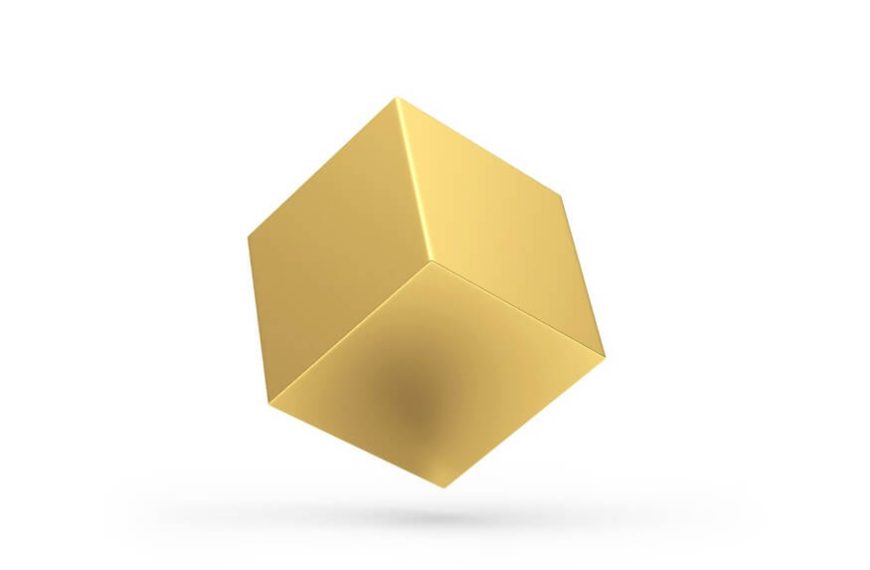
Before we start measuring anything, we need to know exactly what we are looking at. If you want a proper cube definition in maths, it is a three-dimensional solid object bounded by six square faces, with three meeting at each vertex.
Let’s translate that into simpler terms for young learners! Think of a regular, flat square drawn on a piece of paper. That square only has length and width. But if you magically pull that flat square up off the page and pump it full of air so it has length, width, and depth, it puffs up into a solid object. Because every single side of the original flat square was perfectly equal, the new 3D shape is also perfectly equal in every single direction. It is the most balanced shape in the mathematical universe.
Read More – The Importance of Math in Everyday Life
Anatomy of a Box: Parts of a Cube
To truly understand how this shape works, you have to break it down into pieces. Every single object of cube shape shares the exact same biological anatomy, no matter how big or small it is. Here are the three main parts of a cube:
- Faces: These are the flat, smooth surfaces. A cube has exactly 6 flat faces. If you take a pencil and trace the outline of any one of these faces, you will draw a perfect square.
- Edges: An edge is the straight, sharp line where two flat faces crash into each other. If you run your finger along the sides of a box, you are touching the edges. There are exactly 12 edges in total, and every single one of them is the exact same length.
- Vertices: This is a fancy mathematical word for the pointy corners. A vertex is the exact spot where three different edges meet at a sharp point. There are 8 vertices in total.
Discover the Features of Cube (Interactive Explorer)
Sometimes, the best way to understand a shape is to grab it and spin it around. Let’s use this interactive 3D explorer to highlight the different features of cube. You can adjust the size of the shape and watch how the math changes in real-time!
Read More – Teaching Square Shape To Preschoolers
A Few Lines About Cube Formulas
As children grow older, they transition from just looking at shapes to actually measuring them. When you are writing a few lines about cube measurements for a school project, you absolutely need to know two magical formulas: Volume and Surface Area.
Because every single side is identical, we just call the length of one edge a.
1. The Volume Formula:
Volume tells you exactly how much empty space is inside the shape. Imagine you have a hollow plastic box and you want to know exactly how much water it can hold without spilling over. To find this out, you just multiply the edge length by itself three times.
Volume = a^3
(Which means a \times a \times a)
2. The Surface Area Formula:
Surface area tells you the total size of the outside of the shape. Imagine you are trying to wrap a present in wrapping paper. How much paper do you need to cover the entire outside without leaving any gaps? Since there are 6 square faces, and the area of one face is a^2, you simply multiply it by six!
Surface Area = 6a^2
Cube Shape Examples in Real Life
Once you understand the rules of this shape, you will start seeing it absolutely everywhere. Finding a perfect example of cube in nature is incredibly rare (though some shiny minerals like pyrite do grow this way!), but humans love manufacturing things in this shape because they are so easy to stack and store.
Here are some awesome cube shape examples in real life that kids interact with daily:
- A Pair of Dice: Take a look at a die the next time you play a board game like Snakes and Ladders. It is a perfect miniature cube, with numbers one through six painted on its flat square faces.
- The Rubik’s Puzzle: The famous, colorful Rubik’s toy is a brilliant mechanical example. It is a giant block made up of 27 smaller, twisting blocks!
- Ice Cubes: When you drop an ice block into a glass of lemonade on a hot summer day, you are literally cooling your drink down with geometry!
- Sugar Cubes: Instead of scooping loose sugar with a spoon, some people drop small, perfectly pressed blocks of sugar into their hot tea.
- Cardboard Boxes: Whenever a delivery truck drops off a perfectly square cardboard package at your front door, you are looking at this sturdy, stackable shape.
Read More – Geometric Shapes Name for Kids
Summary
Geometry is so much more than just a chapter in a dusty math book. It is the invisible scaffolding holding up the entire universe. By simply understanding the cube shape, knowing its 6 flat faces, its 12 straight edges, and its 8 sharp corners, you unlock a brand new way of looking at the world.
Think about this today: every time you pack a lunchbox, roll a pair of dice, or build a towering fort out of cardboard boxes, you are interacting directly with the laws of mathematics. Shapes are the physical alphabet of our reality, and when you learn how to read them, you begin to understand the brilliant, balanced design behind everything you touch.
For more engaging learning concepts and wonderful parenting insights, check out the EuroKids Blog, and visit our website for all the details on EuroKids Preschool Admission.
FAQs
1. Is a square the exact same thing as a cube?
No, they are different! A square is entirely flat (2D) like a drawing on a piece of paper. A cube is a solid object (3D) that you can actually hold in your hand, made out of six squares put together.
2. What happens if the edges are different lengths?
If the straight edges are not all the exact same length, the shape stretches out. It is no longer a cube; it becomes a completely different shape called a rectangular prism (like a shoebox).
3. Why do we measure volume with a small number 3 (a^3)?
Because it is a 3 Dimensional shape! You are multiplying three different directions together: the length, the width, and the height.