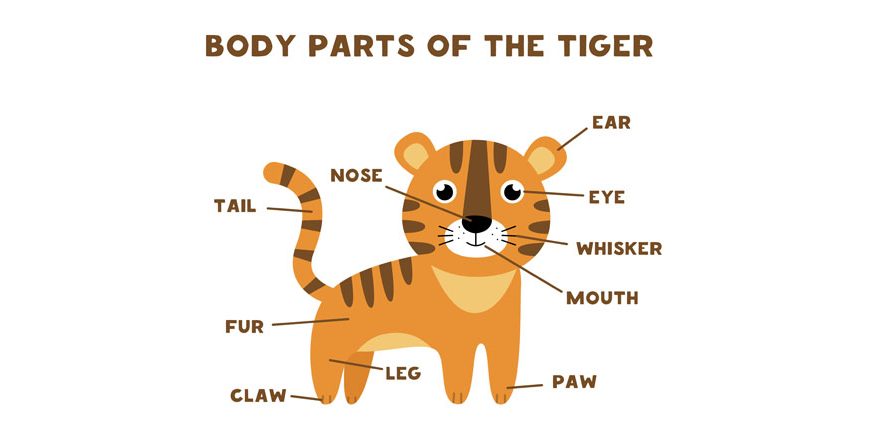
Look closely at a busy local park or a thick, green forest. Every single creature moving through the tall grass or flying far above the oak trees has a completely unique set of physical tools attached to them. While humans rely on a standard set of two arms and two legs to navigate the busy world, nature has designed an absolutely incredible, highly specialised toolkit for wildlife. A tiny bird cannot hold a metal fork, and a silver fish cannot wear a pair of running shoes, but they survive perfectly well because their physical forms are expertly adapted to their exact environments. Let us break down how these living, breathing machines actually work and explore the fascinating biology that keeps them moving, eating, and surviving in the wild.
The Basic Blueprint of the animal body
When a young child looks at a fluffy family pet or a colourful picture book, they instantly recognise that an animal body is built entirely differently from their own. The physical structure of a creature directly dictates exactly where it can safely live and what it can easily eat.
For instance, a creature living deep at the bottom of the freezing, pitch-black ocean desperately needs a thick layer of heavy blubber and gills to breathe underwater. Conversely, a small lizard darting across the baking desert sand needs tough, scaly skin to firmly lock moisture inside its tiny frame. Understanding this basic, brilliant structural blueprint is a fantastic way to teach kids about natural adaptation.
The Heureka Curriculum actively encourages young learners to observe these stark physical differences in nature, asking messy, brilliant questions about why a frog feels slimy or why a local stray cat has incredibly sharp claws, rather than just staring passively at flat pictures in a dusty textbook.
Exploring the Crucial parts of animals
If you break down the essential parts of animals, you will quickly see that every single feature serves a highly specific, vital survival purpose. Absolutely nothing in nature is there just for pretty decoration.
Consider a bird’s wings. They are not just flat pieces of dead skin flapping in the breeze; they are complex, muscular structures covered in lightweight, interlocking feathers that catch the fast wind and provide massive upward lift. Now, think about a wild monkey’s tail. To a curious young child, a long tail might just look like a funny, wiggly string attached to the back of the creature. In reality, it acts exactly like a vital fifth limb. As the monkey aggressively swings through the high, dangerous forest canopy, the heavy tail wraps tightly around thick branches, providing absolute, unshakable balance and preventing a terrifying fall to the forest floor.
Read More – Domestic Animal Names in English for Kids
Learning Every animal body parts name
Expanding a child’s working vocabulary happens incredibly fast when you connect tricky, long words to fascinating real-world creatures. Teaching them every specific animal body parts name turns a casual weekend walk in the local park into a thrilling biology lesson.
Here is a straightforward list of fascinating physical features you can easily discuss with young learners:
- Whiskers: These are not just long, silly hairs on the face of a cat or a tiny field mouse. They are highly sensitive, vibrating sensors that actively help the creature feel the exact width of a dark, narrow tunnel before they try to blindly squeeze their entire body through it.
- Gills: Found on the sides of fish and some amphibians, these delicate, feathery organs act like magical underwater lungs, successfully filtering invisible oxygen straight out of the rushing river water.
- Hooves: Heavy horses, woodland deer, and fluffy sheep do not have soft, sensitive toes like we do. They have hard, thick horns protecting the bottoms of their feet, allowing them to run at massive speeds across sharp, rocky ground without feeling any pain at all.
- Antennas: Tiny crawling bugs and bright garden butterflies use these long, thin sticks on their heads to smell sweet nectar in flowers and feel the wind rapidly changing direction.
Read More – GK Questions On Animals
The Unique animal parts name
Some creatures have tools so incredibly unique that they almost seem like they belong in a loud science fiction movie. When kids ask for a highly specific animal parts name, giving them the proper scientific term builds their academic confidence and deepens their understanding of how weird and wonderful nature truly is.
Take the mighty African elephant as a brilliant example. Their long, heavy nose is officially called a trunk. It is packed with thousands of strong, shifting muscles, yet it completely lacks any hard, snapping bones. It acts as a powerful arm to rip heavy, thick branches off tall trees, a built-in shower hose for spraying cooling water on a hot afternoon, and a delicate, sensitive finger to pick a single tiny peanut right off the dusty ground. Or consider a desert camel’s massive hump. Most people incorrectly assume it is a giant, sloshing tank filled with drinking water. It is actually a heavy mound of solid fat that slowly breaks down to provide long-lasting, vital energy when the creature travels across the barren, scorching desert for weeks without finding a single scrap of food.
Read More – Limbs of Animals
Conclusion
It is deeply thought-provoking to realise that nature is the absolute greatest, most relentless engineer on the entire planet. Every single colourful feather, tough reptile scale, and sharp hunting claw is the brilliant result of millions of years of careful, testing design, allowing creatures to aggressively thrive in the absolute harshest environments on Earth. Understanding these complex physical tools teaches our children to view the wild world with massive respect and profound empathy, rather than just seeing a tiny bug as something to casually squash or a neighbourhood dog as just a fluffy toy to pet. When a child finally understands why a bird desperately needs lightweight hollow bones to fly, or why a river fish needs slippery scales to swim away from danger, they unlock a much deeper appreciation for the incredibly fragile balance of our natural environment. To explore more brilliant ways to fuel your child’s endless curiosity and uncover the magic of nature, read the latest articles on the EuroKids Blog and secure their vibrant educational journey today via EuroKids Preschool Admission.
FAQs
Why do some creatures have thick fur while others have tough scales?
Thick fur is expertly designed to trap a heavy layer of warm air right next to the skin in freezing weather, while tough, overlapping scales act exactly like a suit of heavy armour, protecting reptiles from sharp rocks and preventing their vital body water from evaporating in the hot summer sun.
Do all birds use their feathered wings to fly up into the sky?
Absolutely not! Penguins have incredibly short, stiff wings that function exactly like strong wooden paddles, making them incredibly fast, agile swimmers in the freezing ocean, while giant ostriches use their massive wings purely for balance when running at terrifying high speeds across the dirt.
Can a wild creature naturally regrow a physical part if it gets completely broken?
Some amazing animals certainly can do exactly that. Certain types of wild garden lizards can completely drop their wiggling tails to distract a hungry, chasing predator, and then slowly grow a brand new, functional one over the next few months!