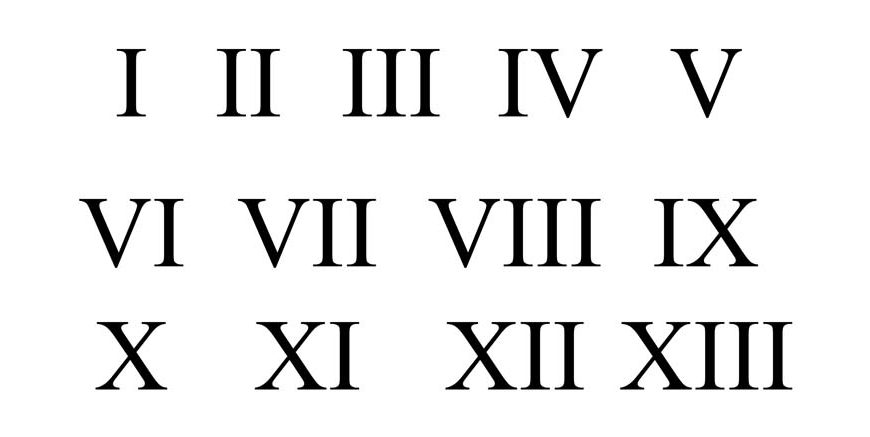
A vintage grandfather clock stands proudly in the corner of a living room, its brass pendulum swinging with a steady tick-tock. Your child tracks the golden hands as they move across the dial, trying to read the time. Suddenly, they halt at the number boxes near the top, completely puzzled by a strange cluster of letters like X, C, and V instead of the usual numbers they learn in math class. This classic confusion happens all the time when young students face the ancient numbering system of the Roman Empire. School teachers regularly introduce these ancient letter patterns in primary school assignments to develop logical thinking. This guide offers a comprehensive breakdown of the core rules, simple step-by-step methods, and practical home games to help your child master this mathematical topic effortlessly.
The Core Building Blocks of the Roman Numbering System
The base letters include:
- I for one
- V for five
- X for ten
- L for fifty
- C for one hundred
- D for five hundred
- M for one thousand
In standard primary school lessons, students learn to treat these letters as physical blocks that they can place side by side to increase or decrease values. Understanding these base building blocks prevents common translation errors when children tackle homework sheets. By practising these base values during daily reading, you prepare your child’s brain to handle complex compound numbers without any anxiety.
Read More – Importance of Math in Everyday Life
The Rule of Subtraction in Roman Math
Rule 1: The first law is the rule of addition, which means you add values when a smaller letter follows a larger one. For example, writing VI means adding 1 to 5, giving you 6.
Rule 2: The second, trickier law is the rule of subtraction, which states that when a smaller letter stands before a larger letter, you must subtract the smaller value from the larger value.
The Romans never wrote four identical letters in a row to make a number, so they could not write ninety by placing nine X blocks together. Instead, they wrote 90 by placing an X right before a C, which tells the reader to subtract 10 from 100.
Step-by-Step Method to Build 96 in Roman Numerals
Step 1: First, take the total value of ninety-six and break it down into the simple sum of ninety plus six.
Step 2: To represent ninety using the subtraction rule you just learned, place the letter X before the letter C, which gives you the value of ninety.
Step 3: Next, look at the remaining value of six, which you built by placing the letter I after the letter V, giving you five plus one.
Step 4: Finally, join these two separate sets of letters together into a single, continuous line.
This gives you the full, authentic sequence of xcvi in Roman numerals, showing your child how separate letter sets blend into one clean number.
Read More – Teaching Kids About Roman Numerals
How EuroKids Strengthens Mathematical Foundations
Long before young students enter a formal primary school classroom to decode ancient numbering systems, their core logical and mathematical pathways develop during their preschool years. EuroKids structures early childhood spaces to ensure that toddlers learn to love numbers through hands-on materials, interactive block puzzles, and playful counting games.
By providing a beautifully designed curriculum that focuses on pattern recognition, shape sorting, and spatial relationships, the learning setup builds high cognitive confidence early on. This early foundation prepares your child’s brain to grasp advanced abstract math concepts, such as Roman notation and number systems, with absolute ease when they move into higher classes.
Conclusion
Figuring out how to translate regular numbers into ancient alphabetic symbols is a wonderful milestone that builds true analytical thinking and visual tracking skills in young learners. From the simple rule of placing seven base letters in order to the complex task of applying subtraction to build compound values, this mathematical journey teaches children that numbers are flexible systems of logic. True intellectual growth clicks into place when you take these math lessons off the textbook page and find them naturally inside old clocks, book chapters, and neighbourhood monuments during family walks. The way you encourage your youngster to untangle these historical puzzles today shapes how confidently they will analyse and solve complex problems in the wider world tomorrow.
For more practical, family-friendly tips on childhood learning milestones and cognitive growth strategies, feel free to read through the EuroKids Blog and discover how to start your child’s educational path on a successful track today with EuroKids Preschool Admission.
Frequently Asked Questions
1. Why did the ancient Romans use letters instead of regular numbers?
The Romans did not know about the modern digits we use today, which came from ancient Indian mathematicians centuries later. The Romans simply adapted the familiar letters of their spoken alphabet to count their goods and trade items, and to record historical dates.
2. Can any Roman letter be repeated four times in a row?
No, the strict rules of Roman math forbid repeating any symbol four times in a row to create a number. If you need to represent a value like forty or ninety, you must use the rule of subtraction by placing a smaller letter before a larger one.
3. How can I help my child remember when to add or subtract letters?
Teach your child a simple direction rule: if the smaller letter stands on the right-hand side of a big letter, you always add them up. If the smaller letter is to the left of a larger letter, it acts like a subtraction sign.
4. What is the ideal class for children to start learning Roman numbers?
Most primary schools in India introduce these numbers around Class 3 or Class 4, once children feel fully comfortable with standard place-value addition and subtraction up to 100.