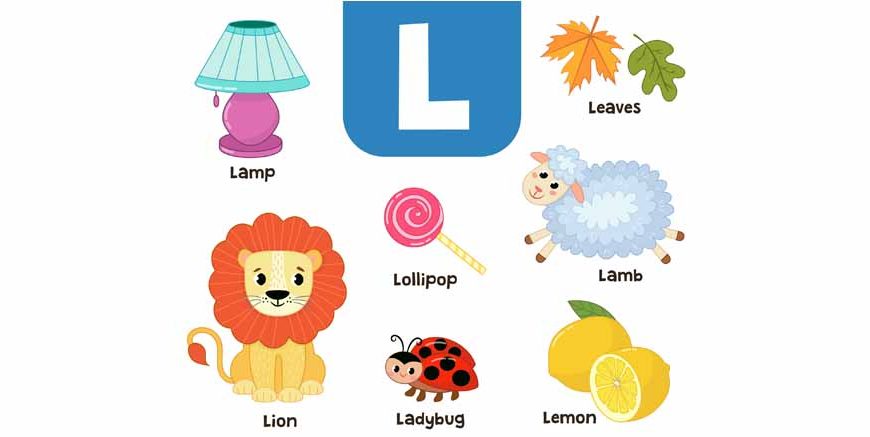
Try pressing the tip of your tongue right behind your top front teeth and gently letting your voice hum. What sound naturally comes out? Llllll! Learning the alphabet is an exciting, physical experience for young children. When they discover how to shape their mouths to make new sounds, they unlock the ability to describe their entire world.
The letter ‘L’ is incredibly special. It gives us some of the most beautiful and important vocabulary we use every single day. From the bright light in the sky to the quiet leaves on the trees, mastering L words is a massive step in a child’s reading journey. If you are helping a young student build their spelling skills, we have put together the ultimate guide. Let us explore different categories of these vocabulary building blocks, complete with a massive dictionary list for your daily spelling practice.
Spotting Everyday Things That Start With L
Children are highly visual learners. Before they can read complex sentences, they learn by pointing at items around the house or out the car window. A great way to introduce L letter words is to go on a fun scavenger hunt.
Ask your child to find things that start with L in your living room or kitchen. They might point to the bright Lamp on the table, the Lock on the front door, or the yellow Lemon resting in the fruit bowl. Connecting the physical object to the spoken sound helps their growing brains remember the letter permanently.
Read More – Words With Silent Letters in English
A Master L Words List: 40 Vocabulary Words for Kids
If you are creating an L for words list for a classroom spelling test or just want to practice at home, breaking the vocabulary down by size makes it much easier to digest.
Here are 40 essential english words with L complete with simple meanings, perfectly sorted for young readers!
Simple Four Letter Words That Start With L
When young readers are just moving past three-letter phonics, four letter words that start with L are the perfect next step. They are short, punchy, and highly common in children’s books.
- Lamp: A handy device that gives us light in a dark room.
- Leaf: The flat, green part of a tree or growing plant.
- Lion: A big, roaring wild cat known as the brave king of the jungle.
- Lake: A large body of fresh water completely surrounded by land.
- Love: A very strong, warm feeling of caring deeply for someone.
- Late: Arriving after the correct or agreed-upon time.
- Look: To use your eyes to see something clearly.
- Luck: Good things happening to you completely by chance.
- Loud: Making a very big and noisy sound.
- Long: Measuring a great distance from one end to the other.
Exploring Five Letter L Words
Once they master the basics, you can challenge them with five letter L words. These words help kids describe actions and feelings much more accurately.
- Lemon: A sour, yellow fruit used to make refreshing summer juice.
- Laugh: The happy sound you make when a joke is very funny.
- Learn: To gain brand new knowledge by studying or playing.
- Light: The brightness that helps us see the world during the day.
- Large: Something that is physically very big in size.
- Lunch: The tasty meal we eat in the middle of the school day.
- Loyal: Always being a true, honest, and supportive friend.
- Lucky: Having good fortune and experiencing happy surprises.
- Ledge: A narrow shelf sticking out from a flat wall or tall cliff.
- Limit: The absolute furthest point or boundary you can go.
Read More – List of 3 Letter Words in English
Action and Feeling Words That Start With the Letter L
To complete our L words for kids masterclass, here are twenty more fantastic words that start with the letter L to expand their daily vocabulary.
- Leap: To jump high across a long distance.
- Listen: To pay close attention with your ears.
- Lick: To pass your tongue over a sweet ice cream cone.
- Lift: To pick something heavy up off the floor.
- Lock: To secure a door safely with a metal key.
- Lead: To politely show others the correct way to go.
- Land: To safely bring an airplane down to the ground.
- Lend: To let a friend borrow your favourite toy for a little while.
- Lose: To misplace something so you cannot find it.
- Live: To have a home and breathe the fresh air.
- Little: Something that is tiny, cute, or very small.
- Lazy: Moving slowly and not wanting to do hard work.
- Last: Coming at the very end of a long line.
- Left: The direction directly opposite to your right hand.
- Lost: Not knowing where you are or how to get back home.
- Lush: Thick, green, and growing very well, like a jungle.
- Loose: Not tight or firmly fixed in place.
- Low: Close to the ground, not high up in the sky.
- Lonely: Feeling sad because you are currently by yourself.
- Lovely: Very beautiful and highly pleasant to look at.
Conclusion
To summarize our spelling guide, introducing a child to this specific letter opens up a wonderful new world of communication. By practising short four-letter sounds and working up to longer descriptive words, young learners build a strong, confident reading foundation.
Reading through this expansive L words list leaves us with a truly thought-provoking realization. Language is the ultimate tool for human connection. The exact same letter that helps a child describe a simple, physical “Leaf” also gives them the vocabulary to express a massive, invisible feeling like “Love.” Teaching a child to spell is never just about memorizing the alphabet; it is about giving them the exact words they need to share their heart and mind with the rest of the world.
To read more fun and educational articles, check out the EuroKids Blog, and visit our website for details on EuroKids Preschool Admission.
FAQs
How do I teach my toddler to pronounce the ‘L’ sound?
Show them how to gently press the tip of their tongue against the bumpy spot right behind their top teeth. Have them practice singing “La-la-la” to get the muscles moving correctly.
What are the easiest L words for a beginner to learn?
Start with highly visual, three or four-letter words like lip, leg, lion, and leaf.
Why does my child replace the ‘L’ sound with a ‘W’ or ‘Y’ sound?
This is a very common speech habit for toddlers (like saying “yight” instead of “light”). Their mouth muscles are still developing. Gentle, patient repetition usually corrects this as they grow.
Are there fun games to practice these words?
Yes! You can play “Simon Says” using only action words from this letter, like “Simon says leap!” or “Simon says laugh!” to make learning physically engaging.