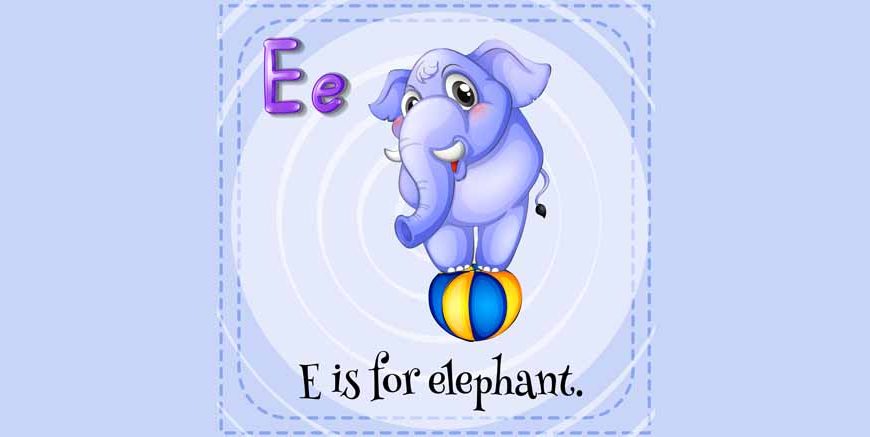
“Every energetic elephant enjoys eating enormous eggplants everywhere.” Confused? That’s how your little ones feel when they are first introduced to words like eat, energy, elephant, and everyone. Learning new vocabulary can feel overwhelming for young children, especially when they encounter unfamiliar letter sounds and word patterns. However, you can make this journey less daunting and much more fun by introducing little practice sessions at home focused on words that start with ‘E.’ In this blog, we share how you can introduce and familiarise your little one with English words with E.
Why Kids Should Learn Words Starting With E Early
Young children absorb language faster than adults. Their brains are naturally wired to recognise sounds, imitate speech, and build vocabulary through repetition and play. Learning E words early helps children:
- Improve pronunciation and phonics awareness
- Recognise spelling patterns
- Understand everyday conversations
- Build confidence in speaking and reading
- Express thoughts and feelings clearly
Moreover, E appears in so many words; mastering it early gives children a strong head start in language development. However, the first step to learning words or things that start with E is to understand how the letter sounds in different words. In the next section, we will understand the different sounds of E.
Read More – Describing Words for Kids
Understanding the Sound of the Letter E
As mentioned before, before teaching vocabulary, children need to understand how the letter sounds. The letter E is special because it can make different sounds.
- Short E Sound (eh): This is usually the first sound children learn. Common examples include egg, bed, and elephant. Encourage children to repeat the sound slowly and feel the vibration in their throat.
- Long E Sound (ee): This sound is heard in words like eat, eel, and easy. It can be spelt in different ways, like ee, ea, ie, ei. Common examples may include tree (where E sounds like ee), eat (where E sounds like ea), field (where E sounds like ie), and receive (where E sounds like ei).
- Magic E (Silent E): Sometimes E appears at the end of a word and changes the sound of another vowel without being pronounced. Some common examples include bake, mile, and rope.
Read More – 4 Letter Words Starting With E for Kids
Fun Activities to Teach Words That Start With E
Young children don’t learn vocabulary by memorising lists. They learn by playing, moving, imagining, and exploring. When learning feels like a game, children stay engaged longer and remember words better. Here are some ways parents can teach English words with E to their little ones:
1. Storytelling
Storybooks are full of new vocabulary, which makes reading the easiest and most natural way to introduce E words.
How to do it:
- Pick a picture book your child enjoys.
- Before reading, tell your child: “Today we are going on an E-word hunt!”
- While reading, pause whenever you find a word that starts with E.
- Emphasise the sound slowly: E-e-elephant, E-e-egg.
- Ask your child to repeat the word and point to the picture.
Make it interactive by asking questions:
- “How do you think the elephant feels?”
- “What colour is the egg?”
- “Can you find another E word on this page?”
2. E Word Scavenger Hunt
Children love moving around, so turning learning into a treasure hunt instantly boosts excitement.
How to set it up:
- Write simple clues or say them aloud.
- Ask your child to find objects around the house that match the clue.
Example clues:
- Find something you eat → Egg, Edamame
- Find something you use to erase → Eraser
- Find something that helps you hear → Earphones
- Find something that makes you exercise → Exercise mat
After each find, ask:
- “What letter does this word start with?”
- “Can you say the E sound?”
3. Emoji Letter Activity
Kids love emojis because they connect emotions and visuals. This activity combines art with vocabulary learning.
How to do it:
- Draw or print a large letter E.
- Give your child stickers, magazines, or printed emojis.
- Ask them to decorate the letter using E-word pictures.
Examples to add:
- Excited
- Elephant
- Egg
- Ear
- Eyes
As they stick each emoji, say the word together.
Ask questions like:
- “When do you feel excited?”
- “What sound does an elephant make?”
4. Crossword and Puzzle Games
Puzzles help children recognise spelling patterns without pressure.
Easy puzzle ideas:
- Match picture cards with words
- Fill in missing letters ( _ gg → egg )
- Connect picture to first letter E
You can also create simple DIY puzzles:
- Cut a picture of an elephant into pieces.
- Ask your child to assemble it and say the word.
5. “I Spy” with E Words
This classic game works perfectly during car rides, walks, or waiting time.
How to play:
Say:
“I spy with my little eye something that starts with E…”
Examples:
- Something green → Edamame / Emerald toy
- Something in the sky → Eagle
- Something in the kitchen → Egg
Let your child take turns giving clues too.
Age-Wise E Word Lists for Kids
Children learn best when words match their age and developmental stage. Start small and gradually move to longer words.
1. E Words for Toddlers (1–2 Years)
At this age, focus on simple and familiar words.
- Eat
- Egg
- Eye
- Ear
- Elbow
Use gestures and point to body parts while saying the words.
2. E Words for Preschoolers (3–4 Years)
Preschoolers can understand simple instructions and short sentences.
- End
- Elf
- Exit
- Edge
- Echo
- Elm
You can play games like I Spy using E words.
Example: “I spy something that starts with E… it helps you hear!”
3. E Words for Kindergarten Kids (5–6 Years)
Children can now learn longer and more descriptive words.
- Empty
- Engine
- Enjoy
- Equal
- Energy
- Even
Encourage them to use words in sentences: “I enjoy drawing.”
4. E Words for Early Elementary Kids (7+ Years)
Introduce more expressive and meaningful vocabulary.
- Explore
- Example
- Excellent
- Express
- Educate
- Evidence
Encourage storytelling using E words to build creativity.
Some Teaching Tips for Parents
- Start with familiar words
- Repeat words during daily routines
- Use pictures and real objects
- Keep lessons short and playful
- Celebrate every new word learned
Read More – Words That Start With A
Why Learning E Words Builds Strong Communication Skills
Vocabulary is the foundation of reading, writing, and speaking. The more words children know, the better they can:
- Understand instructions
- Express emotions
- Share ideas confidently
- Build academic skills
Since E is the most used letter in English, mastering E words gives children a powerful language advantage.
Read More – Ways to Teach Your Child to Spell Word
Conclusion
Teaching words that start with E is an exciting step in your child’s language journey. From simple words like egg and ear to expressive words like explore and encourage, every new word helps children communicate better.
Keep learning in a playful, interactive, and connected way in everyday life. With patience and creativity, your child will soon be using E words confidently in conversations, stories, and school activities.
You can also check out EuroKids Blogs for more insightful and fun articles on your baby’s growth, health, and learning. Don’t forget to check out EuroKids Preschool Admission for the perfect foundation to kickstart your little one’s learning journey.