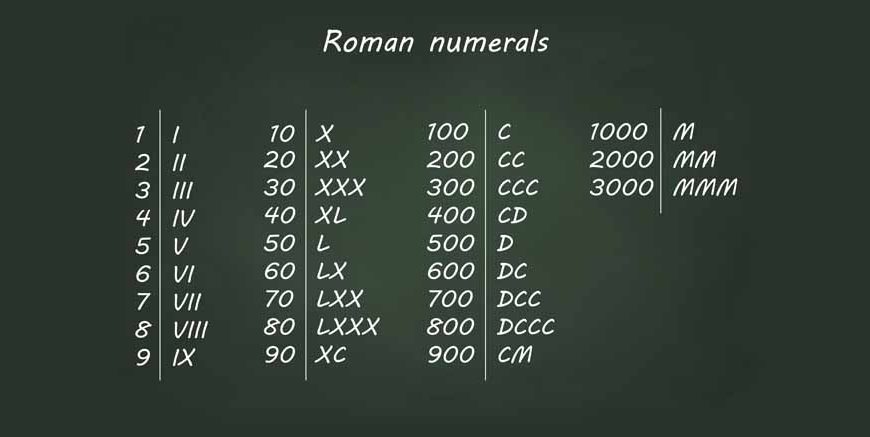
Your child looks up at a clock and reads LX. A few minutes later, they notice LXX in their workbook and ask, “Is that seventy?” You pause. You remember Roman numerals from school, yet explaining them clearly feels harder than it should. This moment matters more than it seems. When your child asks about 70 in roman numerals, they are not just asking for an answer. They are trying to understand how numbers work in different systems.
If you guide them with logic instead of memorisation, you build confidence. If you break the concept into patterns, they grasp it faster. In this guide, you will understand the 70 roman number, learn how to write 70 in roman numerals, and confidently answer the question, what is the 70 in roman numerals without hesitation.
Understanding the Roman Numeral System Before Writing 70
Before you explain how to write 70 in roman numerals, you must understand how Roman numerals function.
Roman numerals use letters from the Latin alphabet to represent numbers. For numbers up to 100, five symbols matter most:
I equals 1
V equals 5
X equals 10
L equals 50
C equals 100
Roman numerals follow two clear principles. When a smaller value appears after a larger value, you add. When a smaller value appears before a larger value, you subtract. These two ideas shape the entire system.
For example, VI equals 6 because you add 5 and 1. IX equals 9 because you subtract 1 from 10. Once your child understands this pattern, numbers like 70 become straightforward.
Unlike 90, which uses subtraction, 70 uses simple addition. That difference makes it an excellent number to teach before moving to more complex forms.
Read More – Teaching Kids About Roman Numerals
70 Roman Number: The Correct Answer Explained Clearly
Let us answer the question directly.
The 70 roman number equals LXX.
This combination follows clear logic.
L represents 50.
X represents 10.
Another X represents 10.
When you add 50, 10 and 10, you get 70.
There is no subtraction rule here. Roman numerals move from larger values to smaller ones when adding. L comes first because 50 holds the highest value. The two X symbols follow because they represent tens.
When your child understands this structure, they no longer guess. They see order.
How to Write 70 in Roman Numerals Step by Step
If you want to confidently explain how to write 70 in roman numerals, follow this clear method.
First, break 70 into parts. Think of it as 50 plus 20.
Second, convert each part into Roman symbols. You already know that 50 equals L and 10 equals X. Since 20 equals two tens, it becomes XX.
Third, combine them in descending order. Place L first, then XX.
You now get LXX.
This process teaches structure. It removes the pressure of memorisation. Your child learns that Roman numerals work through addition of values placed correctly.
Read More – Exploring the World of Numbers
What Is the 70 in Roman Numerals Compared to Nearby Numbers?
Children learn best when they compare numbers. So when they ask, what is the 70 in roman numerals, show them where it sits among surrounding values.
60 equals LX
70 equals LXX
80 equals LXXX
90 equals XC
Notice the pattern. Each step from 60 to 80 adds another X. This repetition makes learning predictable. Once the number reaches 90, the pattern changes and subtraction appears.
By comparing 60, 70 and 80, your child recognises a sequence. Roman numerals stop feeling random and start feeling logical.
You can also show smaller comparisons:
65 equals LXV
67 equals LXVII
70 equals LXX
This builds fluency. Your child sees how units and tens combine naturally.
Common Mistakes Children Make with 70
Even though 70 looks simple, children still make mistakes.
Some write XXL instead of LXX. This happens because they know X equals 10 and assume they can stack it first. Roman numerals, however, follow descending order in additive form. Larger values must come first.
Others write LXXXX because they think repeating X multiple times feels easier. Roman numerals allow repetition only up to three times in a row for I, X and C. Since 70 requires only two X symbols, LXX remains correct.
When you correct mistakes calmly and refer back to the rules, your child builds accuracy without fear.
Read More – World of Number Systems
Why Learning 70 Strengthens Number Sense
At first glance, 70 seems like a simple conversion. Yet the learning goes deeper.
When your child understands LXX, they practise mental addition. They also learn to break numbers into parts. This strengthens place value awareness and pattern recognition.
The UK National Curriculum introduces Roman numerals in primary stages to build number flexibility. Educational research highlights that exposure to multiple number systems improves analytical thinking and cognitive adaptability.
When your child understands Roman numerals, they develop confidence in approaching unfamiliar formats. That confidence shapes their broader mathematical journey.
Simple and Practical Ways to Practise Roman Numerals
You do not need complex tools to reinforce learning.
Start with an analogue clock that uses Roman numerals. Ask your child to read numbers daily. Repetition builds familiarity without pressure.
Create short exercises where your child converts standard numbers into Roman numerals. For example, write 70 and ask them to form LXX. Then reverse the activity.
Encourage number sequencing. Ask them to write Roman numerals from 60 to 80 in order. This builds fluency and reinforces patterns.
Short, focused practice sessions work better than long drills. When learning feels manageable, children stay engaged.
Building Strong Foundations Through Structured Early Education
When you teach Roman numerals clearly, you give your child more than a single answer. You give them structured thinking. That structure matters in early mathematics.
If you want your child to build strong numeracy skills with conceptual clarity, you should choose an environment that prioritises understanding over memorisation.
At EuroKids, you can explore programmes designed to nurture logical reasoning, number confidence and independent thinking from an early age. Visit the EuroKids Preschool Admission page to learn how early structured learning shapes long term academic success. You can also explore the EuroKids Blog section for expert insights and practical parenting guidance.
EuroKids follows the Heureka Curriculum, which builds conceptual clarity and encourages children to explore numbers with confidence.
Frequently Asked Questions
1. What is the 70 in Roman numerals?
70 in roman numerals equals LXX.
2. How to write 70 in Roman numerals correctly?
Break 70 into 50 plus 20. Convert 50 to L and 20 to XX. Combine them to form LXX.
3. Why is the 70 roman number written as LXX?
Because L represents 50 and each X represents 10. Adding 50 plus 10 plus 10 equals 70.
4. At what age should children learn Roman numerals?
Children usually begin learning Roman numerals in primary school between ages 6 and 8.
5. What mistakes should parents watch for when teaching 70?
Children may reverse the order to XXL or repeat symbols incorrectly. Always remind them to place larger values first in additive numbers.