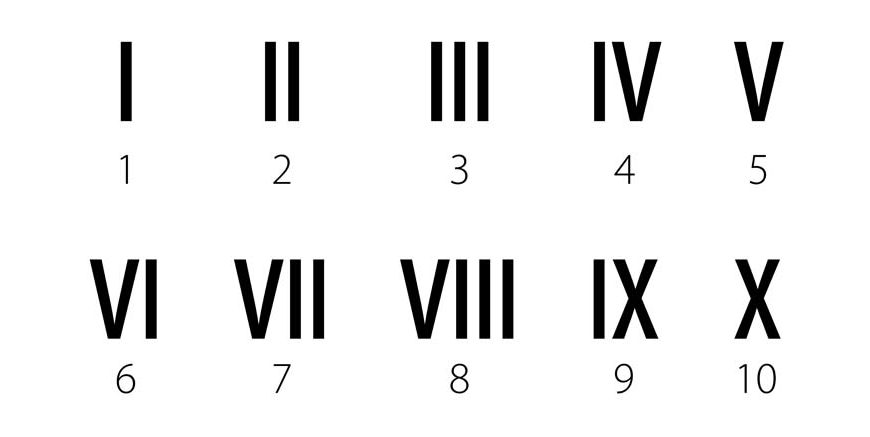
Roman numerals are one of the most interesting forms. They use letters instead of digits to represent numbers. Even though we mostly use the modern number system, Roman numerals can still be seen on clocks, books, movie titles, and monuments. Learning them helps children understand number history and improves their number recognition skills.
It helps children develop a deeper understanding of numbers and their patterns. Many students are curious about the meaning and how it translates into modern numbers. Understanding the XVI Roman number is simple once you know the basic symbols and rules. In this blog, we will explore how XVI is written, what it represents, and how children can easily learn Roman numerals step by step.
What Are Roman Numerals?
Roman numerals are a number system that originated in ancient Rome. Instead of using digits like 1, 2, and 3, this system uses letters of the alphabet.
Basic Roman Numerals:
|
Roman |
Number |
|
I |
1 |
|
V |
5 |
|
X |
10 |
|
L |
50 |
|
C |
100 |
These symbols are combined to form different numbers.
Read More – Teaching Kids About Roman Numerals
What Is XVI Roman Number?
The Roman numeral XVI is made up of three symbols:
- X = 10
- V = 5
- I = 1
Adding them together:
10 + 5 + 1 = 16
So,
XVI in numbers = 16
XVI Meaning Explained
The XVI meaning is simply the number 16 in the Roman numeral system.
It represents a value formed by adding:
- Ten (X)
- Five (V)
- One (I)
So, xvi roman number = sixteen
How Is XVI Formed?
Roman numerals follow simple rules:
Rule 1: Add when a smaller number comes after a larger number
X (10) + V (5) + I (1)
Rule 2: Write numbers from largest to smallest
X → V → I
So, XVI = 10 + 5 + 1 = 16
Why Is XVI Not Written as VXI?
Roman numerals must follow a specific order:
- Larger values come first
- Smaller values follow
If written as VXI, it would break the rules and create confusion.
Correct form: XVI
Read More – Roman Numerals 1 to 20 Chart for Kids
Where Do We See XVI in Real Life?
Roman numerals like XVI are still used today in many places.
Examples:
- Clock faces
- Book chapters
- Movie titles
- Olympic events
- Monuments
Importance of Learning Roman Numerals
1. Improve Number Skills
Understanding different number systems strengthens thinking.
2. Learn History
Roman numerals connect children to ancient civilizations.
3. Enhance Observation
Children recognise numbers in real-life objects.
Fun Ways to Learn XVI and Roman Numerals
1. Flashcards
Use cards with Roman numerals and numbers.
2. Number Games
Match Roman numerals with their values.
3. Drawing Clocks
Draw a clock with Roman numerals.
4. Practice Writing
Write numbers like XVI repeatedly.
Common Mistakes Students Make
- Writing XVI as 15
- Mixing up V and X
- Writing numbers in the wrong order
Difference Between Roman and Modern Numbers
|
Feature |
Roman Numerals |
Modern Numbers |
|
Symbols |
Letters (I, V, X) |
Digits (1, 2, 3) |
|
Example |
XVI |
16 |
|
Usage |
Limited |
Common |
Read More – Exploring Perfect Numbers
Step-by-Step Conversion Method
To convert xvi roman number:
- Identify each symbol
- Convert into numbers
- Add values
- X = 10
- V = 5
- I = 1
Total = 16
Practice Questions
Convert these:
- XV =?
- XVII =?
- XVIII =?
Answers:
- XV = 15
- XVII = 17
- XVIII = 18
Why Roman Numerals Are Still Useful
Even today, Roman numerals are used in:
- watches
- outlines
- numbering events
- decorative designs
Quick Reference Table
|
Roman |
Number |
|
X |
10 |
|
XI |
11 |
|
XII |
12 |
|
XIII |
13 |
|
XIV |
14 |
|
XV |
15 |
|
XVI |
16 |
How EuroKids Helps Children Learn Numbers
At EuroKids, children are introduced to number systems in a fun and interactive way. Concepts like XVI Roman numbers are taught using visual aids, storytelling, and activity-based learning. Instead of memorising, children understand patterns and relationships between numbers. Teachers use games, charts, and real-life examples to explain the meaning of Roman numerals clearly. This approach helps children build confidence and curiosity while learning. By making numbers engaging and easy to understand, EuroKids ensures that children develop a strong foundation in mathematics and logical thinking from an early age.
Conclusion
Understanding the Roman number XVI and its value helps children learn how different number systems work. By knowing that XVI in numbers equals 16, students can easily recognise and use Roman numerals in everyday life. Learning the meaning also improves logical thinking and number recognition skills. With practice and simple techniques, children can confidently read and write Roman numerals. Building this knowledge early helps them understand numbers better and prepares them for more advanced concepts in mathematics.
Parents looking to give their child a strong foundation in early learning can explore EuroKids Preschool Admission to begin this enriching journey.
For more insightful articles that support early learning, awareness, and child development, parents and educators can explore the wide range of resources available on EuroKids Blogs.
For those interested in being part of this impactful learning ecosystem and contributing to quality early education across communities, EuroKids Preschool Franchise opportunities offer a meaningful path forward.
FAQs
1. What is XVI in numbers?
XVI in numbers is 16.
2. What is the meaning of XVI?
The XVI meaning is the number sixteen.
3. How is the XVI Roman number formed?
It is formed by adding X (10), V (5), and I (1).
4. Is XVI equal to 15?
No, XVI equals 16.
5. Where are Roman numerals used?
They are used in clocks, books, and events.