A wet swimming suit hung over a balcony railing dries out in just a few hours. The shallow mud puddles left behind after a thunderstorm vanish as soon as the afternoon sun comes out. The water does not sink through the solid pavement, and nobody comes by to wipe it away with a mop. It simply escapes into the sky.
This daily vanishing act is one of the most vital scientific processes happening on Earth. Today, we break down exactly how liquid water turns into invisible air, explore the specific rules driving this change, and learn why our planet would dry up entirely without it.
Defining What is Evaporation
If a science teacher asks you to define the term evaporation, you can describe it as water’s clever escape routine. So, what is evaporation short answer? It is the process where a liquid turns into a gas.
When we talk about the water on our planet, it means heavy liquid water changing into invisible, lightweight water vapor and floating up into the atmosphere. If a curious younger sibling tugs your sleeve and asks, “what do you mean by evaporation?”, you can simply tell them it is how water naturally dries up and flies away into the clouds.
Read More – What Is Water Cycle?
Looking Deeper: Evaporation Meaning in Science
To truly understand the evaporation meaning in science, we have to look at things under a powerful microscope. Everything in the world is made of tiny building blocks called molecules. In a cup of cold drinking water, these water molecules are packed closely together, shivering and moving very slowly.
When we explore the formal evaporation definition science uses, it revolves entirely around heat. When the bright sun shines on that cup of water, it adds heat to the liquid. Heat is a form of pure energy. The tiny water molecules absorb this energy and start moving faster and faster. Eventually, they bounce around so violently that they break free from the liquid completely, turning into a lightweight gas. This transfer of energy is exactly what is the meaning of evaporation at a microscopic level.
The Rules of the Game: Principle of Evaporation
There are specific natural rules that decide how fast or slow this drying process happens. The basic principle of evaporation relies on three major factors:
Temperature (Heat):
Hotter temperatures mean much faster drying. A shallow puddle on a boiling hot summer day disappears much quicker than the exact same puddle on a chilly, cloudy winter morning.
Surface Area:
Water spread out over a large area dries faster than water trapped in a deep, narrow container. A spilled glass of water on a wide kitchen floor will dry much faster than the same amount of water left sitting inside a tall drinking glass because more water is touching the open air.
Wind Speed:
A breezy day physically blows the invisible water vapor away from the surface of the water, making room for more liquid to escape into the air. This is exactly why wet clothes dry so incredibly fast on a windy clothesline!
Read More – Properties of Water for Kids
Step-by-Step: What is the Process of Evaporation?
Let us map out the exact journey of a water drop. If you need to write an essay explaining what is the process of evaporation for a school project, you can break it down into three simple, chronological steps:
- Step 1: A source of heat (usually the bright sun, or a stove burner) warms up a body of liquid water, like a lake, a puddle, or a wet bath towel.
- Step 2: The water molecules resting on the very top surface of the liquid absorb that extra energy from the heat.
- Step 3: The energized molecules break away from the rest of the liquid pool, change their physical state into a gas (water vapor), and float upward into the air.
Fun Examples in Daily Life
You do not need to visit a fancy laboratory to see this science in action. It happens all around you every single day.
- Sweating to Stay Cool: When you run around the playground, your body releases sweat to cool you down. As the sweat dries off your hot skin, it is actually evaporating. This process pulls the heat directly away from your skin, which is exactly why sweating keeps your body temperature safe!
- Hot Soup and Tea: When your parents pour a bowl of hot soup or a cup of fresh tea, you can see white steam rising from the bowl. That visible steam is the hot liquid quickly turning into a gas and escaping into the cooler kitchen air.
- Mopping the Floor: After washing the dirty kitchen floor with a wet mop, you only have to wait a few minutes before the floor is completely dry and safe to walk on again.
Read More – How do you make science interesting for kids?
The Engine of the Earth
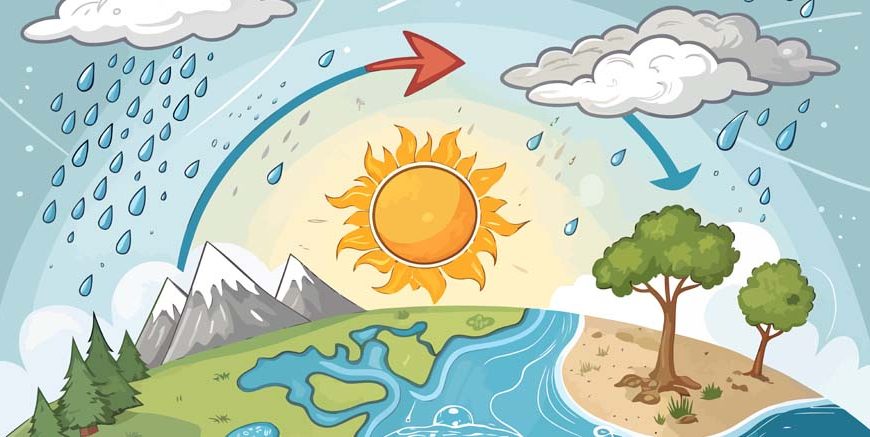
This invisible drying process is the primary engine for the Earth’s giant water cycle. Every single day, the hot sun beams down on the world’s massive oceans, lakes, and rivers. It forces millions of gallons of liquid water to turn into vapor and rise high up into the sky.
Once this vapor gets high enough into the freezing parts of the sky, the cold air turns it back into fluffy clouds. Eventually, those clouds get too heavy and drop fresh rain back down to the ground, giving plants and animals the drinking water they need to survive.
Conclusion
To summarize our scientific breakdown, the transformation of liquid water into a lightweight gas is a powerful, highly active force. By absorbing heat from the sun, tiny water molecules gain the energy to break free and float into the sky. This simple action dries our washed clothes, cools our sweaty bodies, and keeps the Earth’s giant weather system running perfectly smoothly.
Watching a simple puddle dry up on the sidewalk leaves us with a truly thought-provoking realization. The exact same drop of water that vanished from your driveway today will float up into the sky, join a massive storm cloud, and might eventually fall as rain on a completely different continent next week. It reminds us that every single drop of water on our planet is constantly moving, changing shapes, and connecting all of us together in one giant, invisible loop.
FAQs
Does evaporation happen at night when the sun is gone?
Yes! Even without the direct sun, the night air still holds enough ambient heat to slowly turn liquid into gas, though it happens much slower than it does during a hot afternoon.
Can liquids other than water evaporate?
Absolutely. Every liquid can turn into a gas. For example, the strong rubbing alcohol a doctor uses to clean a scraped knee dries up almost instantly because it requires much less heat to change than water does.
Why do we hang clothes out to dry instead of leaving them in a pile?
Hanging clothes spreads the fabric out, which greatly increases the surface area. More surface area means more water molecules are exposed to the warm air and the blowing wind, allowing them to escape much faster.
What happens to the salt when ocean water evaporates?
The salt is too heavy and requires entirely different, extreme temperatures to turn into a gas. The pure water escapes into the air as vapor, leaving all the salt perfectly behind in the ocean.