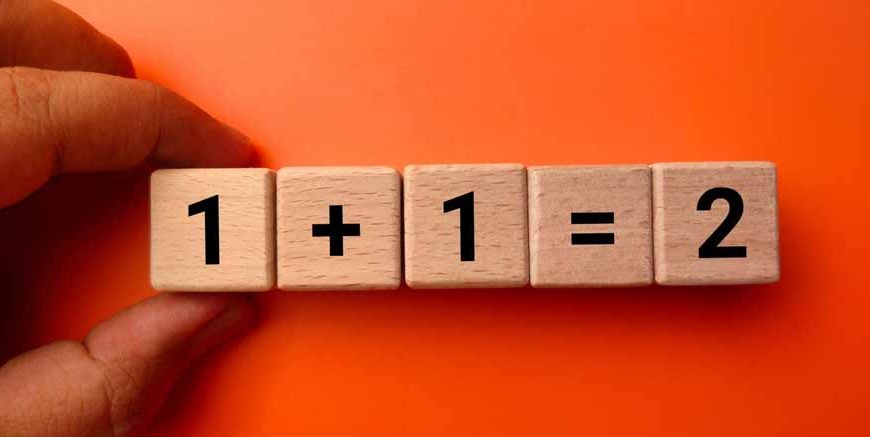
Watch your toddler play on the living room floor for just five minutes. They will likely pick up a red toy car. A moment later, they will pick up a blue toy car. If you ask them to count the cars, they will point and say “one” and then point to the other and say “two”. But if you ask them how many cars they have in total, they might just stare at you.
This is a completely normal pause. Moving from simple counting to actual addition is a massive cognitive leap for a young mind. You are asking them to take two completely separate realities and merge them into a new, single reality. It is a complex idea. However, it is also the very first building block of all future mathematical thinking. If you are a parent trying to introduce this concept without causing frustration, you need a clear strategy. We are going to break down the exact meaning of this process. We will look at the vocabulary, visual strategies, and practical examples you can use to make learning an absolute joy.
Breaking Down the Math Addition Definition
Before you can teach a concept, you have to define it simply. Do not use textbook jargon with a four year old. You need a definition that they can see and feel.
At its core, math addition is the simple process of bringing two or more groups of things together to make one larger group. It is the mathematical way of saying “and”. If you have three biscuits and your friend gives you two more biscuits, putting them all on the same plate is an addition. You are combining quantities to find the total amount. It is the exact opposite of taking things away. Teaching your child that adding always makes the group bigger is the first fundamental rule they must grasp.
Read More – Importance of Math in Everyday Life
Understanding the Vocabulary of Addition Math
Mathematics is a language. Just like learning English or Hindi, your child needs to know the correct vocabulary to understand the sentence. An addition equation is built using very specific terms. If you want your child to master addition math, you should start using these words during your daily playtime.
Let us look at a basic equation like 3 + 2 = 5.
- The Addends: These are the numbers you are bringing together. In our equation, the number 3 and the number 2 are the addends. You can have two addends, or you can have fifty. Any number that is being added is an addend.
- The Plus Sign (+): This is the action symbol. It tells you exactly what job you need to do. When a child sees this cross symbol, they should immediately know it is time to combine groups.
- The Equals Sign (=): This symbol means “is the same as”. It shows that the pile of items on the left side is exactly the same amount as the number on the right side.
- The Sum: This is your final answer. When someone asks you a math question, the result of addition is called the sum or the total. In our example, the number 5 is the sum.
Simple Addition: Starting with the Basics
You should never start teaching math with a pencil and paper. Abstract squiggles on a page mean nothing to a toddler. You must start with physical objects. Educators call these objects “manipulatives”.
Start with simple addition using things your child already loves. Gather a pile of building blocks. Create a small pile of two yellow blocks on the left. Create a small pile of two green blocks on the right. Ask your child to count the yellow blocks. Then ask them to count the green blocks.
Now, tell them to push all the blocks together into one big pile in the middle. Ask them to count the new, big pile. They will touch each block and say “one, two, three, four”. They have just performed their very first math equation. By physically pushing the items together, their brain registers the physical action of combining. They stop guessing and start understanding the underlying logic.
Read More – Fun Math Activities for Kids
Number Lines: A Visual Strategy for Math Addition
Once your child understands how to combine physical objects, you can introduce a new visual tool. The number line is an incredibly powerful strategy for early learners. It is simply a straight horizontal line with numbers placed at equal intervals from zero upwards.
To solve an equation using a number line, your child acts like a jumping frog. Let us look at the equation 4 + 3. First, your child finds the first addend on the line. They put their finger directly on the number 4. The second addend tells them how many jumps they need to make. Because they are adding, they must jump forward to the right, making the numbers get bigger.
They start at 4 and make 3 separate jumps forward. One jump lands on 5. The second jump lands on 6. The final jump lands on 7. Where their finger stops is the sum. This method is brilliant because it completely eliminates the need for counting on fingers and builds a strong mental map of numerical order.
The “Counting On” Technique
As numbers get larger, counting every single item becomes very tiring. If you ask a child to add 8 + 3, you do not want them counting from one all the way to eleven. You want them to use the “counting on” strategy.
Teach your child to identify the biggest number in the equation. In this case, it is 8. Tell them to “lock” that big number inside their head. They do not need to count it again. They just need to count forward three more spaces. They say “eight” out loud, and then use their fingers to track the next three numbers: “nine, ten, eleven”. This speeds up their mental processing significantly and builds immense confidence.
Read More – Counting Fun with Everyday Objects
Real-World Examples to Practice at Home
You do not need to schedule formal tutoring sessions to teach math. Your house is a giant mathematics laboratory. You just need to look for everyday opportunities to ask addition questions.
- Grocery Shopping: When you are buying fruit, ask your child to help. “We have three apples in the bag. If I put two more apples in the bag, how many apples do we have altogether?”
- Setting the Table: “I have placed three plates on the table for us. Grandma and Grandpa are coming for dinner. How many more plates do I need to add so we have five plates in total?”
- Sorting Laundry: “You have matched four pairs of red socks and two pairs of blue socks. Let us count how many pairs of socks you have folded in total.”
When you integrate math into daily chores, it stops being an intimidating school subject. It becomes a natural, useful part of living.
The EuroKids Approach: Making Thinking Visible
At EuroKids, we are incredibly passionate about how children encounter their first mathematical concepts. We know that forcing young students to memorise addition tables creates anxiety and destroys their natural curiosity. We take a different path.
Our educators utilise the HEUREKA Curriculum, a specialised framework inspired by Harvard University’s Project Zero, to make a child’s thinking completely visible through active, hands-on exploration. We want children to understand why 2 + 2 equals 4, not just recite the answer. By using engaging sensory activities, group games, and interactive storytelling, we ensure that learning to add is an adventure rather than a chore.
Take the Next Step with EuroKids Admission
Choosing the right early educational environment is the most important investment you will ever make for your child. If you want a preschool that values deep comprehension, logical thinking, and joyful learning, the EuroKids Preschool Admission process is your starting point. We invite you to visit a centre near you and watch our teachers turn basic math into a thrilling game of discovery.
We also encourage you to read the EuroKids Blog regularly. It is packed with expert advice, engaging home activities, and detailed developmental guides to help you support your child’s growth every step of the way.
Frequently Asked Questions (FAQs)
1. At what age should my child start learning to add?
Most children are ready to grasp basic combining concepts around the age of four or five. However, they must have a very solid understanding of basic counting and number recognition (knowing what the number 3 looks like) before you introduce addition.
2. Why does my child keep counting from one every time they add?
This is a standard developmental phase. They have not yet mastered the “counting on” strategy. You can help them by making them put the larger number “in their pocket” or “in their head” and physically using their fingers to count just the remaining numbers.
3. What does it mean when a teacher says the result of addition is called the sum?
It is simply the mathematical vocabulary word for the total answer. Teaching your child the word “sum” early on prepares them for word problems in primary school where questions will ask, “What is the sum of these items?”
4. Are flashcards a good way to teach simple addition?
Flashcards are great for reviewing facts a child already understands, but they are terrible for teaching new concepts. Always use physical objects like blocks, dried beans, or small toys first. Once they understand the logic, you can use flashcards to build speed.
5. How does EuroKids make math addition fun for preschoolers?
We remove the pressure. In our classrooms, children might learn to add by throwing beanbags into a hoop and keeping score, or by mixing different coloured paints to see a new total colour emerge. We link the mathematical concept directly to physical play, ensuring it is always a highly positive experience.