Most children grow up believing that nature follows a very strict, highly predictable set of rules. Animals actively hunt and move around, while plants sit perfectly still in the dirt, passively soaking up the sunshine and drinking the rain. It seems like a very peaceful, quiet system. However, the natural world is actually completely full of brilliant, aggressive exceptions.
Deep in boggy wetlands, there is a tiny, bright green predator that absolutely refuses to follow the normal botanical rules. Instead of just waiting for the weather to provide, it actively snaps its jaws and hunts for its own dinner. Today, we are going to explore the fascinating mechanics behind one of the most famous botanical hunters on Earth. Let us dive into the clever biology of this snapping green rebel and test our knowledge at the end.
Defining the Green Hunter
If a curious student points to this spiky, jawed creature in a botanical garden and asks exactly what is a venus fly trap, they are actually asking a brilliant biological question. A proper, scientific venus fly trap definition states that it is a small, perennial carnivorous plant native specifically to the subtropical wetlands of the eastern United States.
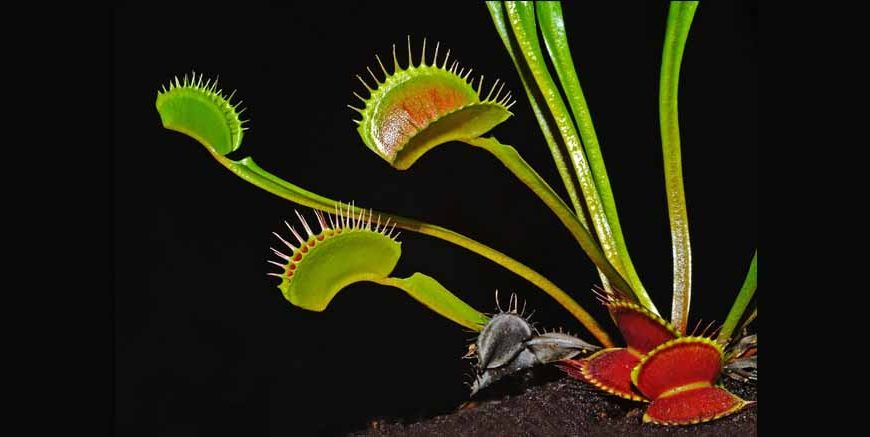
Unlike a normal, delicate daisy or a quiet garden fern, it has evolved highly modified leaves that act exactly like spring-loaded steel traps. These leaves are split into two hinged lobes. The inside of these lobes is usually a bright, glowing red colour, and the edges are lined with stiff, interlocking spikes. To a passing fly, it looks like a beautiful, sweet-smelling flower just waiting to be explored, but it is actually a highly sophisticated mechanical trap.
Read More – Food Chain Facts for Kids
The Biology of the Hunt
To really gather useful, practical venus fly trap information, we need to understand exactly why this plant bothers to hunt at all. These fascinating specimens belong to a highly unique category of venus flytrap insectivorous plants. This simply means they survive by actively catching and eating live insects and spiders.
Why do they do this? The biological logic is beautifully simple. They naturally grow in incredibly poor, highly acidic soil that lacks vital nutrients, especially nitrogen. If a normal houseplant grew in this dirt, it would quickly wither and die.
Because these hunters cannot pull enough food from the muddy dirt through their shallow roots, they have to cleverly extract their own protein from the air to survive. They lure the insects in by secreting a deliciously sweet nectar across the red surface of their inner leaves. Once the hungry bug lands to take a sip, the trap is set.
Fascinating Science and Logic
Memorising a flat textbook definition is fine, but understanding the actual mechanical physics behind the snap is far more exciting for young minds. Here is a list of brilliant venus fly trap plant facts and detailed venus fly trap information facts explained through pure logic and science:
- The Two-Touch Rule: The inside of the jaw is lined with tiny, almost invisible trigger hairs. If a wandering bug touches just one single hair, absolutely nothing happens. The plant patiently waits for the bug to touch two different hairs within twenty seconds. This clever, logical counting system stops the trap from wasting precious energy snapping shut on a random, falling raindrop or a dead twig blown by the wind.
- The Speed of the Snap: The closing movement is incredibly violent and fast, taking less than half a second. It achieves this rapid movement without having a single muscle or bone. Instead, when triggered, it rapidly shifts internal watery fluid from the inside of the leaf to the outside, forcing the leaf to violently buckle, flip its shape, and snap shut.
- A Tight, Airtight Seal: Once the jaws snap shut around a struggling fly, the spiky “teeth” on the edges interlock perfectly, much like lacing your human fingers together. As the panicked bug moves around inside, the plant physically feels the struggle and squeezes even tighter, gradually creating a completely airtight, sealed stomach.
- Chemical Digestion: Because it does not have teeth to actually chew its food, it relies on a chemical breakdown. Once the trap is fully sealed, it slowly floods the tight chamber with special, highly acidic digestive juices. Over the next five to ten days, it completely dissolves the soft insides of the insect, absorbing the rich nitrogen soup before popping back open to drop the empty, hard exoskeleton onto the dirt.
Read More – What Is Photosynthesis?
A Quick Science Quiz
Let us put this active learning into practice. The Heureka curriculum strongly champions this exact kind of hands-on, logical questioning over rote memorisation. See if your child can answer these three quick questions based entirely on the science we just explored:
Does the plant snap shut immediately if a heavy drop of water hits one trigger hair?
(Answer: No, it strictly requires two separate touches within twenty seconds. This brilliant biological timer prevents it from wasting energy on non-food items.)
Why does the plant need to eat bugs instead of just pulling food from the soil?
(Answer: The muddy soil in its natural, boggy habitat is highly acidic and completely lacks the essential nitrogen it needs to grow healthy leaves.)
How does the plant break down the hard bug without having any actual teeth?
(Answer: It creates a tight seal and floods the leaf chamber with powerful, dissolving digestive acids over several days.)
Conclusion
Examining how this tiny, jaw-snapping plant operates completely shatters the boring illusion that all greenery is passive, weak, and quiet. It took a harsh, nutrient-starved, acidic environment and brilliantly engineered a spring-loaded, acid-filled trap just to survive. It is genuinely thought-provoking to realise that a simple plant can physically count touches, measure time, and build an airtight stomach on demand without possessing a single brain cell, nerve, or muscle.
If nature can engineer something that is mechanically complex out of a simple green leaf, what other brilliant, hidden mechanics are waiting for us to discover deep in the undergrowth? Sparking this exact type of active, mechanical curiosity helps children view the outdoor world as a massive, interactive laboratory. To uncover more fantastic ways to fuel your child’s daily discoveries, read the latest articles on the EuroKids Blog and start their next great educational adventure through EuroKids Preschool Admission today.
FAQs
Can these plants hurt a human finger?
Not at all! While the snap is incredibly fast, the plant is very small and weak. If you put your finger inside, it will feel like a gentle squeeze, and the soft spikes cannot pierce thick human skin.
How often does the plant need to eat a bug?
They do not need to eat constantly to survive. A healthy adult plant usually only needs to catch and digest one or two good-sized insects a month to get all the nitrogen it requires to stay healthy.
Do the traps last forever?
No, they have a limited lifespan. A single leaf trap can only snap shut and digest food about three to five times before it naturally turns black, dies off, and is quickly replaced by a brand new leaf growing from the centre.