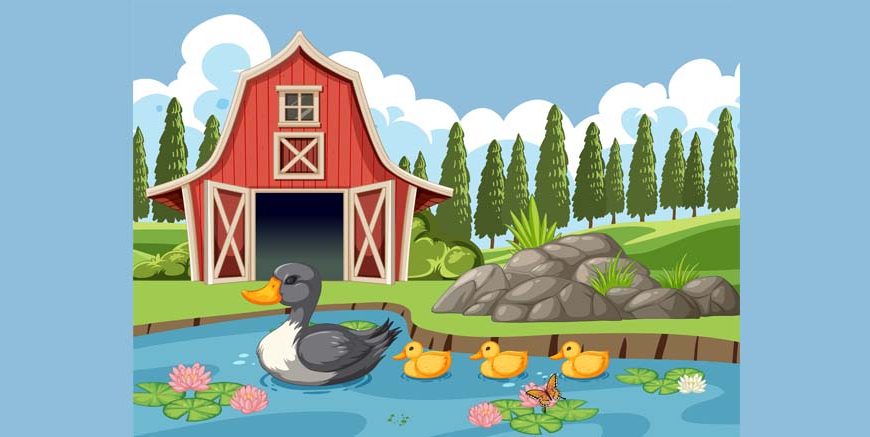
Last Thursday night, Meera suddenly asked me, “Appa, why was the duckling ugly?”
This happened at bedtime, after one of those long school evenings when the dining table was still full of unfinished tasks. Her crayons were open, one sock was somehow near the TV unit, and her water bottle was lying sideways again. I had already told myself three times that I would clean everything “in two minutes.”
She was holding a picture-book version of the Ugly Duckling story and looking genuinely worried.
Not curious exactly. More worried than curious.
And honestly, I first thought I could just answer quickly and move on to lights out.
But the question stayed.
The part of the story that bothered her most
She kept coming back to the same thing while I was reading The Ugly Duckling.
“Why did everybody call him ugly?”
Children notice unfairness very quickly. Sometimes much faster than adults do.
I realised she was not even interested in the swan transformation yet. She was still sitting with the earlier part of the story where the duckling keeps getting pushed away and laughed at.
I tried giving a simple explanation first.
“They did not understand he was different.”
But that answer clearly did not help much because after a few seconds she quietly asked, “But why didn’t anybody wait?”
That question honestly sat with me for a while after she slept, too.
Read More – Moral Stories For Kids
When I realised the story needed slowing down
The next afternoon after school, she asked me to tell the story again while eating dosa at the table. Half the chutney had somehow reached the edge of the plate instead of staying inside it. Normal evening scenes only.
This time I did not rush through the story.
I realised children do not immediately connect to the “moral” in stories. First, they connect to feelings. They notice who felt lonely, who got ignored, who was scared, and who was happy later.
So instead of treating the ugly duckling summary like something to explain properly, I started pausing after small moments in the story.
“How do you think he felt there?”
That became the conversation instead.
At one point, the pressure cooker whistled, and she ran to the kitchen, asking if there were papads. Then she came back and continued the discussion exactly where we had left off.
Breaking the story into smaller emotional moments helped much more than giving one neat explanation.
I stopped trying to correct every answer
This changed the conversation completely.
At one point, she said, “Maybe the duckling also thought he was ugly.”
My first instinct was to explain confidence, self-esteem, and all those larger ideas parents keep reading about now.
Then I stopped myself.
Instead, I just asked, “Why do you think that?”
Her answer was very simple.
“Because everybody kept saying it.”
That line honestly explained the whole story better than my long explanations could have.
Sometimes children understand stories emotionally before they can explain them logically. I noticed that when I interrupted less, she thought more carefully about what she was feeling.
Read More – Bedtime Stories for Kids
We connected the story to small, real-life moments
I did not want the conversation to become one long lecture about kindness.
Children switch off very quickly when that happens.
So we kept the discussion small and familiar.
We spoke about situations she already understood.
When somebody gets left out during a game.
When children laugh at another child’s drawing.
When somebody in class talks differently or takes longer to answer.
The pencil broke while she was drawing during this conversation, and we completely lost focus for two minutes trying to sharpen another one.
When we came back to the story, she suddenly said:
“So the duckling was not bad. Just different.”
That was the first time I felt the ugly duckling story’s moral was slowly making sense to her naturally, rather than sounding memorised.
The ending mattered less than I expected
This surprised me quite a bit.
As adults, we usually focus on the ending where the duckling becomes a beautiful swan and finally feels accepted.
But children sometimes stay with the middle part of the story much longer.
The loneliness.
The confusion.
The waiting.
Even later, when we discussed the ugly duckling moral again, Meera still wanted to talk more about why nobody had been kind to the duckling earlier.
Not about the swan reveal.
That honestly made me rethink the way we discuss stories with children. Adults rush towards conclusions very quickly. Children often spend more time sitting with their feelings before they move to the ending.
We also ended up talking about the ugly duckling author
That weekend, during bedtime, she suddenly asked who wrote the story.
I told her the author of the Ugly Duckling was Hans Christian Andersen.
Naturally, her next question was whether he had also felt lonely when he was young.
I actually paused there because I did not want to invent an answer just to keep the conversation moving. So we searched a little together and read about him briefly.
That small detour somehow made the story feel more real to her.
Not just a story with a moral at the end, but something written by an actual person who may also have understood difficult feelings.
Read More – Animal Rescue Stories
The Real Understanding Came Later During a Random Morning
Not during bedtime.
Not during storytime.
It happened two days later while getting ready for school.
One shoe was missing. Her hairband had disappeared again. The school bag was open on the sofa, and I still had not fully packed the snack box.
Complete morning confusion.
And in the middle of all this she casually said:
“Appa, maybe the duckling just needed to find where he belonged.”
That was it.
No need for me to summarise the ugly duckling story’s moral. She had already understood it in her own way.
Later that night, while picking up crayons from under the chair, I remembered something a teacher had once casually mentioned during a EuroKids Preschool interaction. Young children usually understand big emotions better when they are allowed to reach the meaning slowly through familiar feelings and small conversations. It’s one of the reasons parents exploring Eurokids Preschool Admission often look for learning environments that encourage emotional understanding through stories, discussion, and everyday experiences.
Maybe that is exactly what happened with us and this little ugly duck story that week.