Yesterday evening was one of those normal messy evenings at home. The school bag was open on the sofa, one sock was missing, a half-eaten banana was lying on a steel plate, and there were two crayons on the floor which nobody was accepting responsibility for.
My daughter was supposed to finish one small homework page. Very small only. But the TV was on in the background, some cartoon was going on, and her pencil was moving more on the margin of the notebook than on the actual page.
I was also tired, honestly. Dinner was still not ready, one pressure cooker whistle had just gone, and I had already said “focus, please” at least four times.
Then suddenly she looked up and asked, “Appa, do fish also get scared?”
I don’t know where this question came from. Maybe some fish had appeared on TV. Maybe she had drawn one in the margin. With children, the route from maths homework to marine life is sometimes very short.
I said, “Of course they get scared. Especially if someone is trying to catch them.”
She became fully interested now. Homework forgotten.
“Like fishermen?”
“Yes, like fishermen.”
Then she asked, “But can fish make plans?”
That is how we landed on the three fishes’ story.
The three fishes story that came out during homework time
I had heard the three fishes story long back, maybe from my grandmother or in some old children’s book. I don’t remember exactly. These stories float around in Indian homes, no? Sometimes in English, sometimes in Hindi, sometimes as a three fishes story in Telugu or Tamil or some other language, depending on who is telling it.
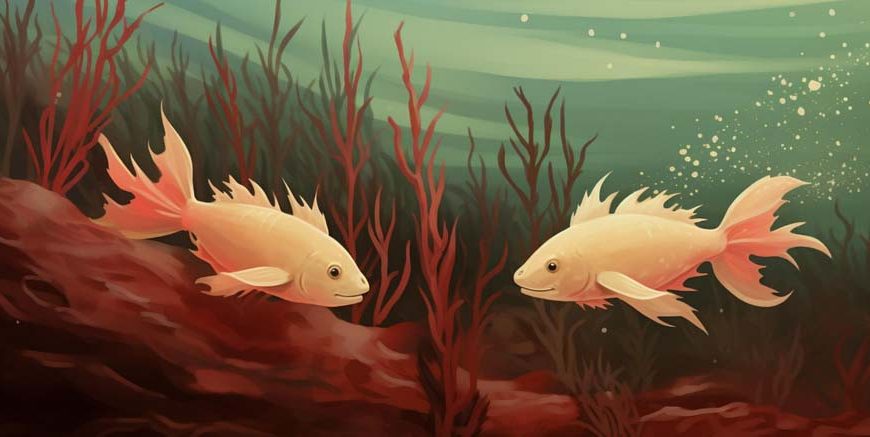
So I told her there was once a pond where three fishes lived happily. The pond was quiet, with water plants, small insects, and enough space for the fish to swim around. The three fishes were friends, but they were very different from each other.
One fish was very wise and always thought ahead. She noticed small changes and liked to be prepared.
The second fish was clever too, but she usually acted only when the problem came close.
The third fish was relaxed. Too relaxed, actually. She believed everything would somehow be okay.
My daughter immediately said, “Like me?”
I did not answer that directly. Some things are better left floating.
One day, two fishermen walked near the pond. They looked at the water and said, “This pond has many fish. Let us come tomorrow morning with our nets.”
The first fish heard this. She became alert. She went to the other two fishes and said, “We should leave this pond tonight. There is a small channel nearby. If we swim through it, we can reach another pond.”
The second fish said, “Maybe. But why leave now? We can think tomorrow.”
The third fish said, “Nothing will happen. This pond has always been safe.”
At this point my daughter interrupted again. “But Appa, how can fish leave the pond? They need water.”
So we paused and discussed the small channel for a bit. She drew it in the notebook margin. Pond number one, small water line, pond number two. Homework had officially become fish geography.
Then I continued.
The first fish did not wait. That same night, she swam through the channel and reached another pond. It was not easy, but she was safe.
Next morning, the fishermen came with their nets. They threw the net into the pond.
The second fish, seeing the danger, quickly thought of a trick. She pretended to be dead and floated on the water. One fisherman saw her and said, “This one is already dead,” and threw her back into the water outside the net. The second fish quickly swam away and escaped.
The third fish panicked. She had not planned. She had not thought of any trick. She kept swimming here and there, but the net caught her.
My daughter became quiet for a moment. Then she said, “That is sad.”
I said, “Yes, a little sad. But that is why people tell this fish story for kids. Not to make them sad, but to help them think.”
Read More – Clever Fish Story with Moral for Kids
The moral, without making it sound like a lecture
Usually, when we tell a short story about fish like this, the moral is very simple: it is better to think ahead and act in time.
But children don’t always receive morals the way we say them. If I had said, “See, you should always plan ahead,” she would have immediately gone back to the TV or asked for water.
So I asked her, “Which fish did you like?”
She said, “The second one. She was smart.”
I laughed because I had expected her to say the first one.
Then she said, “But the first one was safest.”
That was enough, actually. Sometimes children understand without giving us a perfect answer.
I told her, “The first fish planned early. The second fish managed somehow. The third fish waited too long.”
She nodded.
Then I gently pointed to her homework page, where only three sums were done out of ten. “So, which fish are we being right now?”
She gave me a look. That look children give when they know you have cleverly trapped them using their own story.
“Second fish,” she said.
“Then let us become first fish for ten minutes.”
She rolled her eyes, but she did pick up the pencil.
Why children enjoy the three fishes story
I think the three fishes works nicely for young children because it is easy to imagine. A pond, three fish, fishermen, a net. Nothing too complicated. Even a small child can follow the fear, the hurry, the decision, and the result.
Also, the three fishes are not too perfect. One is careful, one is clever at the last minute, and one is careless. Children can see themselves in all three, depending on the day.
On school mornings, we have all three fishes in our house.
One version of my daughter packs her bag the previous night and keeps her shoes ready. That is the first fish.
One version remembers the water bottle only when we are near the lift. That is the second fish.
And one version says, “I don’t know where my ID card is,” when the school van is already downstairs. That, clearly, is the third fish.
I am not judging because I also have my third fish moments. Like keeping the milk on the stove and then checking one WhatsApp message. Or remembering the electricity bill only after the reminder has become slightly threatening.
So when I told her the three fishes story, I also told her that grown-ups are not always first fish. Sometimes we also learn late.
She liked that part very much.
Read More – Short Moral Stories For Kids
A Small Story That Stays After the Moment Passes
After the homework was done, she asked me if the third fish could escape in another version.
I said maybe some grandparents tell it differently. In some homes, the third fish may learn a lesson and escape. In some versions, it may not. Stories change a little from house to house.
She said, “In my version, the third fish becomes thin and slips out of the net.”
Then she drew one very tiny fish near the corner of the page and gave it a big smile. I did not correct the story. Children also need to make their own endings sometimes.
By then, the banana had turned brown, the TV was still making noise, and the crayons were still on the floor. Homework was somehow finished, though the margin had more fish than numbers.
Later, while putting her books back in the bag, she suddenly said, “Tomorrow I will keep my shoes ready like first fish.”
I said, “Good idea.”
Did she remember it the next morning? Half-half. One shoe was ready. The other was under the bed.
But that is also okay. These little stories do not change children in one evening. They just sit somewhere in their mind. Maybe next time, before delaying something, they remember the first fish a little.
And maybe that is why simple stories like the three fishes still work so well at home and in early learning spaces like EuroKids Preschool, where children learn through small stories, small questions, and these funny little everyday connections. Parents exploring Eurokids Preschool Admission often appreciate this storytelling-based approach because it helps children understand ideas and values in a way that feels natural and memorable.