Some colours quietly sit in the background. Red does not. It stands out. It catches the eye, sparks curiosity, and often becomes one of the first colours a child learns to recognise. From a ripe apple to a bright balloon, red is everywhere. Teaching children about red colour things can be both simple and joyful if we connect it to their everyday world. This guide will help you introduce the idea of red in a natural, playful way while building your child’s observation skills and vocabulary.
About Red Colour
Before we begin pointing out objects, it helps to understand what makes red special. Red is a warm, bright colour. It is often linked with energy, love, excitement, and even danger. Think about how a red traffic light means “stop” or how a red rose is given to show love. For children, red is one of the easiest colours to notice because it is bold and vibrant. That is why it is often taught early in nursery learning. When you talk about red with your child, keep it simple. You can say, “Red is a bright colour, like an apple or a strawberry.” This helps them connect the idea with something they already know.
Read More – Teaching Colours To Kindergarten Kids
Red Things Around Us
Children learn best when they see things in real life. Instead of using only books or pictures, show them real red things around your home and outside.
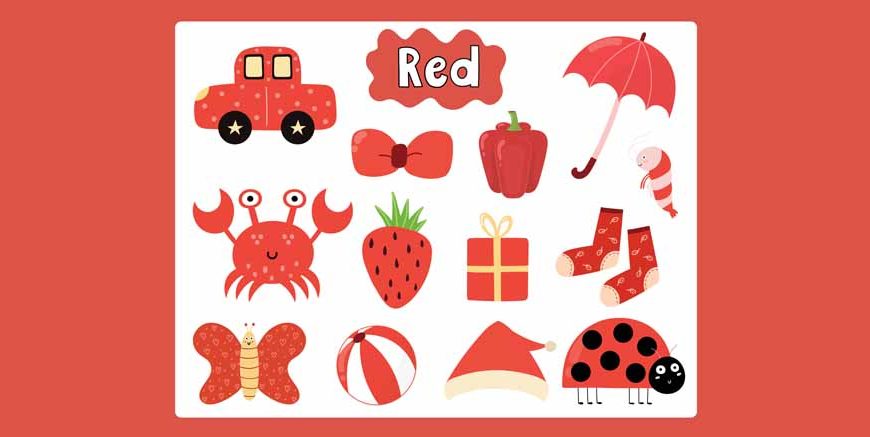
Here are some common red things your child can easily recognise:
- Apples
- Tomatoes
- Strawberries
- Red flowers
- Red toys
- Balloons
- Crayons
You can turn this into a small activity. Ask your child to walk around the room and find red things. Even if they make mistakes at first, it is part of the learning process.
Red Colour Things at Home
Your home is the best classroom. You do not need special tools to teach colours. Just look around.
In most homes, you will find many red colour objects such as:
- A red cushion
- A red bucket or mug
- Red clothes
- Red packaging on food items
- A red school bag
You can involve your child in daily routines. While getting dressed, you can say, “Let’s wear your red T-shirt today.” While eating, you can point to a tomato and say, “This is red.” These small moments add up and help your child remember the colour naturally.
Red Colour Objects for Nursery Learning
At the nursery stage, learning should feel like play. Children are not expected to memorise long lists. Instead, they learn through repetition and fun.
Some simple red colour objects for nursery children include:
- Red ball
- Red apple
- Red car toy
- Red crayon
- Red book cover
You can place a few objects in front of your child and ask, “Can you show me the red one?” This builds both recognition and confidence. Flashcards, sorting games, and matching activities also work well at this stage.
Read More – Which Color Absorbs the Most Heat?
Everyday Examples of Red Colour Objects
To make learning meaningful, connect red colour objects to real-life situations.
In the Kitchen
- Tomatoes
- Chilli peppers
- Watermelon
In the Garden
- Roses
- Hibiscus flowers
On the Road
- Traffic lights
- Stop signs
- Red cars or buses
In the Sky
- A red sunset
When children see the same colour in different places, they begin to understand it better.
Making Learning Fun with Red Things
Children do not learn well through instructions alone. They need movement, play, and imagination.
Here are a few simple activities:
1. Red Hunt Game
Ask your child to find five red things in the room. Celebrate each discovery.
2. Colour Sorting
Mix objects of different colours and ask your child to separate the red ones.
3. Drawing Time
Give your child a red crayon and ask them to draw anything they like. It could be a sun, a fruit, or even a house.
4. Dress Up Day
Pick a day where your child wears something red. You can join in too.
5. Storytelling
Create a short story using red things. For example, “Once there was a little red ball that rolled into a garden of red flowers.”
These activities help children learn without feeling like they are studying.
Why Learning Red Colour Matters
At first, teaching colours may seem like a small step. But it plays a big role in a child’s development.
Recognising colours helps with:
- Visual learning
- Language development
- Memory building
- Observation skills
When a child learns to identify red colour objects, they also learn to notice details in their surroundings.
Qualities Children Associate with Red
As children grow, they begin to connect colours with feelings and ideas.
Red is often linked with:
- Energy
- Excitement
- Love
- Warmth
For example, a child might feel happy when they see a bright red balloon or excited when they spot a red toy in a shop.
These emotional connections make learning more meaningful.
Common Mistakes to Avoid
While teaching red colour things, keep a few things in mind:
- Do not overload your child with too many objects at once
- Avoid correcting too harshly if they make mistakes
- Keep the tone light and encouraging
- Repeat gently instead of forcing them to memorise
Children learn at their own pace. Some may pick it up quickly, while others may take a little longer.
Building Vocabulary with Red Colour
As your child becomes comfortable, you can slowly expand their vocabulary.
Instead of just saying “red,” you can introduce:
- Light red
- Dark red
- Bright red
You can also describe objects in more detail. For example, “This is a red apple. It is round and sweet.” This helps children form complete sentences and improves their speaking skills.
Read More – Everyday Vocabulary for Children
Conclusion
Teaching your child about red colour things is not just about naming a colour. It is about helping them notice the world more carefully. When a child learns to spot a red flower in a garden or a red ball in a room full of toys, they are building attention, curiosity, and confidence.
Colours are often the first step into a larger journey of learning. And sometimes, the smallest lessons leave the strongest impressions. When you pause to point out something as simple as a red apple, you are not just teaching a colour. You are teaching your child to observe, to connect, and to wonder. Explore more helpful insights on the EuroKids Blog and learn about EuroKids Preschool Admission.
FAQs
1. At what age should a child learn colours?
Most children start recognising colours between 2 to 3 years of age.
2. Why is red often taught first?
Red is bright and easy to notice, making it simpler for young children to identify.
3. How can I teach red colour objects at home?
Use everyday items like fruits, toys, and clothes to point out red colour things.
4. What if my child confuses colours?
This is normal. Keep repeating gently and use simple examples.
5. Are games helpful in learning colours?
Yes, games make learning fun and help children remember better.