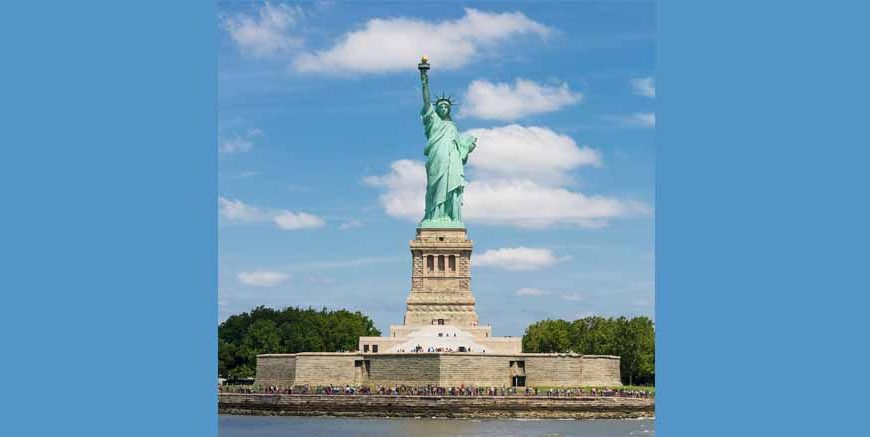
The Statue of Liberty is one of the most famous monuments in the world and a powerful symbol of freedom and democracy. Students in India often learn about this iconic statue in history, civics, and general knowledge lessons. Questions such as what is the Statue of Liberty, where is the Statue of Liberty located, and why was the Statue of Liberty built are common in exams and quizzes.
In this article, we will explore about Statue of Liberty in detail, including its definition, history, location, meaning, symbolism, materials, and interesting facts, all explained in a simple, student-friendly way with an Indian context.
What is the basic concept of a statue?
Before learning about Lady Liberty, let us first define a statue.
A statue is a three-dimensional sculpture made of stone, metal, or other materials, created to represent a person, idea, or event. Statues are often built to honour historical figures or important values.
The Statue of Liberty represents the idea of freedom.
- What is the Statue of Liberty?
- Who is the Statue of Liberty?
- What is the Statue of Liberty? What does the statue signify?
The Statue of Liberty is a large female statue known as Lady Liberty, symbolising freedom, liberty, and democracy. It was gifted to the United States of America by France.
It is also known as:
- Lady Liberty statue
- Statue of Liberty name: Liberty Enlightening the World
Read More – What are the Seven Wonders of the World?
Statue of Liberty Meaning and Significance
The Statue of Liberty meaning is freedom from oppression and the right to live with equality and justice.
The Statue of Liberty significance lies in its message:
- Freedom
- Democracy
- Hope
- New beginnings
For millions of immigrants, the Statue of Liberty was the first sight of America, symbolising opportunity and new life.
Where Is the Statue of Liberty Located?
This is one of the most frequently asked questions.
Exact Location Details
- What city is the Statue of Liberty in? New York City
- What US state is the Statue of Liberty in? New York
- The Statue of Liberty is in which river? Hudson River
So, the Statue of Liberty is situated on Liberty Island, New York Harbour.
Read More – Best Places to Travel with Kids Worldwide
Statue of Liberty History (The Story of the Statue of Liberty)
The Statue of Liberty is an important topic in world history.
Students often ask:
- Why was the Statue of Liberty built?
- Who gave us the Statue of Liberty?
The statue was gifted by France to the United States in 1886 to celebrate:
- Friendship between the two nations
- 100 years of American independence
The Statue of Liberty is historically significant not only as a monument but as a lasting representation of political ideals and human aspirations. Presented by France to the United States in 1886, the statue marked the centennial of American independence and symbolised the strong diplomatic and ideological ties between the two nations, both of which valued republicanism and democratic governance.
Designed by French sculptor Frédéric Auguste Bartholdi, with its internal framework engineered by Gustave Eiffel, the statue reflected the technological and artistic achievements of the industrial age.
Positioned strategically at the entrance of New York Harbour, it welcomed millions of immigrants between the late 19th and early 20th centuries, many of whom viewed it as a sign of freedom from oppression, poverty, and political persecution.
Over the decades, the Statue of Liberty has evolved from a symbol of national independence into a global emblem of liberty, equality, and human rights, often referenced by movements advocating freedom and justice worldwide.
Statue of Liberty Wikipedia Facts (Student-Friendly)
According to commonly known facts (as explained in the Statue of Liberty Wikipedia page):
- Designed by Frédéric Auguste Bartholdi
- Metal framework by Gustave Eiffel
- Dedicated on October 28, 1886
Statue of Liberty: Materials
Many students ask:
- The Statue of Liberty is made of what?
The Statue of Liberty is made up of:
- Copper sheets (outer layer)
- Iron and steel framework (inside)
Over time, copper reacted with air, turning green and giving the statue its iconic colour.
Features of Liberty (Important Parts of the Statue)
Key features of Liberty include:
- Torch – Symbol of enlightenment
- Tablet – Laws and justice (date of US independence written)
- Broken chains – Freedom from slavery
- Crown with seven rays – Seven continents and seas
Statue of Liberty Symbolism
The Statue of Liberty symbolism includes:
- Freedom of thought
- Equality
- Hope for immigrants
- Democratic values
This makes it a global symbol, not just an American one.
A common question in exams is:
- Is the Statue of Liberty male or female?
The Statue of Liberty is female, representing the Roman goddess Libertas.
How Old Is the Statue of Liberty?
- How old is the Statue of Liberty? Over 138 years old (as of 2024)
- How old is Lady Liberty? Same age, since Lady Liberty is the statue itself
Read More – Exploring the World with Your Toddler
How Many Statues of Liberty Are There?
- How many Statues of Liberty are there? Over 100 replicas worldwide
Statue of Liberty in India
There is no original Statue of Liberty in India, but small replicas exist in:
- Museums
- Educational parks
- Decorative installations
So, the Statue of Liberty in India refers only to replicas.
Did you know?
France has a very close replica of the Statue of Liberty.
Here’s the breakdown:
- Location: Île aux Cygnes, Paris (on the River Seine)
- Height: About 11.5 metres (38 feet)
- Date: Installed in 1889, three years after the New York statue
- Purpose: A symbol of friendship between France and the United States
How is it different from the New York Statue of Liberty?
- It is much smaller than the original Statue of Liberty in New York (about 93 metres tall, including the pedestal).
- The design is the same, Lady Liberty holding the torch and tablet, but it is not identical in size or internal structure.
- The Paris statue faces west, toward the United States, as a symbolic gesture.
Is the Statue of Liberty a Wonder of the World?
It is not one of the Seven Wonders of the World, but it is a UNESCO World Heritage Site.
How EuroKids Builds Strong Geography Foundations
When geography is introduced through storytelling, visual exploration, maps, globes, and hands-on discovery, young learners begin to understand the world around them in a meaningful way. Instead of memorising place names or directions, children learn by observing, questioning, and connecting ideas. This is why structured early education programs emphasise experiential and inquiry-based learning over rote memorisation.
At EuroKids, foundational geography concepts are nurtured through the HEUREKA – Visible Thinking Curriculum. This approach encourages children to explore their surroundings, understand directions, identify landforms, recognise community helpers, and develop awareness about their environment through interactive activities. Using visual maps, thematic projects, storytelling, group discussions, and observation-based tasks, children are guided to think, ask questions, and make connections about the world they live in.
Concepts such as “my home,” “my neighbourhood,” seasons, weather, transport, and basic map skills are introduced through relatable, real-life experiences. The Visible Thinking framework supports curiosity, reflection, and expression and helps children articulate what they see, think, and wonder.
With a child-centric and play-based methodology refined over 20+ years and implemented across 1600+ preschools, EuroKids focuses on building curiosity and awareness first, allowing knowledge, confidence, and critical thinking skills to grow naturally over time.
About the Statue of Liberty – Quick Facts Table
|
Question |
Answer |
|
The Statue of Liberty is in |
New York, USA |
|
River |
Hudson River |
|
Given by |
France |
|
Year |
1886 |
|
Material |
Copper |
|
Gender |
Female |
|
Symbol |
Freedom |
The Statue of Liberty remains one of the most important monuments in world history and a key topic in Indian education.
To explore more learning ideas, simple explanations, and early childhood resources, parents
can visit the EuroKids Blog. Those who wish to understand the preschool journey better or
explore enrolment options can find complete information on the EuroKids Preschool Admission
Page, where learning is designed to be joyful, engaging, and child-friendly.