You often hear students say that biology feels like a subject full of terms that must be memorised and forgotten after exams. That problem usually begins when concepts do not feel connected to real understanding. One such concept is mitochondria. Many learners remember it as the “powerhouse of the cell” without truly knowing why. When you understand how mitochondria work, biology stops feeling abstract and starts making sense. This blog helps you move beyond surface learning and truly understand the role, design, and importance of mitochondria in living cells.
In the ever-evolving world of science, you often hear the term “powerhouse of the cell.” But have you ever stopped to consider how this microscopic organelle actually dictates your daily energy levels and long-term health? Understanding the mitochondria is fundamental. The problem most learners face is that textbook definitions often feel cold and disconnected from reality. This guide solves that by breaking down the complex mitochondria structure and function into digestible, logical segments that make sense of the microscopic world.
Mitochondria Definition: The Source of Life
To begin your journey, you must understand the mitochondria definition. It is not a fancy biology term. At its core, a mitochondrion is a double-membrane-bound organelle found in the cytoplasm of almost all eukaryotic cells. You can think of them as the chemical refineries of your body. They take in nutrients from the food you eat and combine them with oxygen to produce energy. This energy is stored in a small but powerful molecule called Adenosine Triphosphate, or ATP.
When you ask what is mitochondria, you are essentially asking about the engine that drives every heartbeat, muscle contraction, and thought. Without these organelles, complex life as we know it would simply cease to exist. They are unique because they contain their own DNA, suggesting a fascinating evolutionary history where they once existed as independent bacteria before becoming part of our cells.
Read More – Sunflower Facts for Kids
Describe the Structure of Mitochondria in Detail
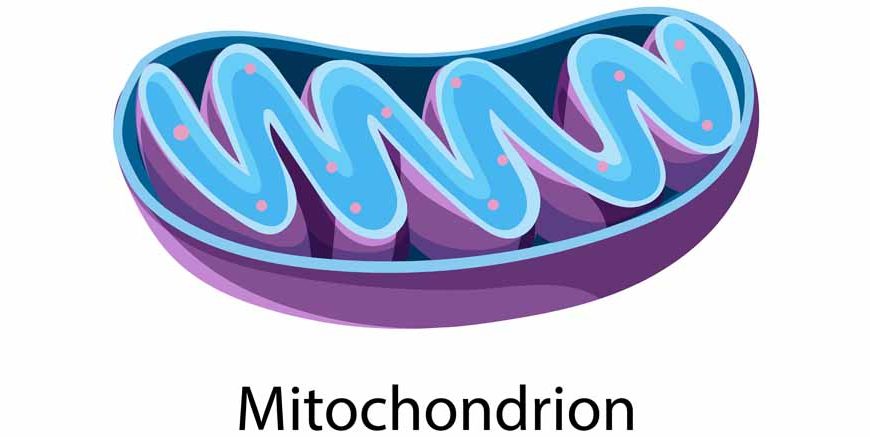
When you describe the structure of mitochondria, you must look at it as a multi-layered security system. Unlike many other parts of the cell, it features two distinct membranes that create separate compartments for different chemical reactions.
The Outer Membrane
The outer membrane acts as the skin of the organelle. It is smooth and contains special protein channels called porins. These porins allow small molecules like ions and nutrients to pass through freely. You can imagine this as a semi-permeable filter that keeps the internal environment stable while allowing raw materials to enter.
The Intermembrane Space
Just inside the outer skin lies the intermembrane space. This thin layer is crucial for the process of oxidative phosphorylation. It acts as a reservoir for protons, creating a gradient that eventually drives the production of energy.
The Inner Membrane and Cristae
This is where the real work happens. If you were to describe structure and function of mitochondria in one sentence, you would focus here. The inner membrane is highly folded into finger-like projections called cristae. These folds are not random; they serve to increase the surface area significantly. A larger surface area means more space for the chemical reactions that generate ATP.
The Mitochondrial Matrix
The innermost part is the matrix. It is a dense, gel-like fluid containing a cocktail of enzymes, ribosomes, and the unique mitochondrial DNA. This is the site where the Krebs cycle takes place, breaking down products from food to release high-energy electrons.
Read More – Fascinating Facts About Earth for Kids
Mitochondria Function: More Than Just Power
While energy production is the primary mitochondria function, their role in your body is far more diverse. You should view them as the cell’s command centre for several vital processes.
Cellular Respiration and ATP Production
The most famous role is cellular respiration. Through a series of complex steps, the mitochondria convert glucose and oxygen into ATP. This molecule acts as the “currency” of the cell. Whenever your body needs to perform a task, it “spends” ATP.
Programmed Cell Death (Apoptosis)
Mitochondria also act as the judge and jury for the cell. When a cell becomes old or damaged, the mitochondria release signals that trigger apoptosis, or programmed cell death. This prevents faulty cells from multiplying and potentially causing diseases like cancer.
Heat Production and Calcium Storage
In certain tissues, like brown fat, these organelles generate heat to keep you warm. Additionally, they store calcium ions, which are essential for muscle movement and nerve signalling. They act as a buffer, ensuring that calcium levels in the rest of the cell remain perfectly balanced.
Read More – Discover Grasslands: Fun Facts for Kids
Short Note on Mitochondria for Quick Revision
If you need a short note on mitochondria for a quick review, remember these three pillars. First, they are double-membranous structures with a folded inner layer called cristae. Second, their main job is to produce ATP through cellular respiration. Third, they are inherited maternally and possess their own genetic material. They are found in higher numbers in energy-hungry cells, such as those in your heart and muscles.
Read More – List of Edible Seeds Facts for Kids
Why Biology Matters at EuroKids
At EuroKids, we believe that understanding the world starts with a sense of wonder about how things work. You will find that our approach to early education is designed to nurture this very curiosity. We follow the Heureka Curriculum, which is a visible thinking framework that encourages children to observe, question, and understand complex concepts through simple, hands-on experiences. By fostering this scientific temperament early on, we prepare children to become the innovators and researchers of tomorrow.
Conclusion: Powering Your Potential
As you describe the structure and function of mitochondria, you realise that even the smallest parts of our bodies are designed with incredible precision. This knowledge is not just for exams; it is about understanding the very essence of your vitality.
To explore more fascinating topics in science and child development, you should regularly visit the EuroKids Blog section. Our articles are crafted to help you navigate the complexities of modern education and parenting. If you are looking for a school that brings this level of depth and care to your child’s learning, the EuroKids Admission window is currently open. Visit your nearest centre to see how we are shaping the thinkers of the future.
EuroKids Franchise Opportunity: A Business with Purpose
For business professionals and entrepreneurs, the education sector offers a resilient and rewarding path. The Preschool Franchise Opportunity with EuroKids allows you to partner with a brand that has over 21 years of experience in nurturing young minds.
Frequently Asked Questions (FAQs)
Why is the inner membrane of mitochondria folded?
The folds, known as cristae, increase the surface area, allowing for a greater number of chemical reactions and higher ATP production.
Does EuroKids teach advanced science to toddlers?
Through the Heureka Curriculum, we introduce scientific concepts through play and observation, making complex ideas accessible and fun.
Are mitochondria found in all cells?
They are found in almost all eukaryotic cells, but mature red blood cells in humans do not contain them to leave more room for oxygen transport.
How much space is needed for a EuroKids franchise?
You typically need a minimum of 2000 square feet of area in a residential locality to start a centre.
What makes mitochondrial DNA unique?
It is separate from the DNA in the nucleus and is almost entirely inherited from the mother, making it a powerful tool for tracing ancestry.