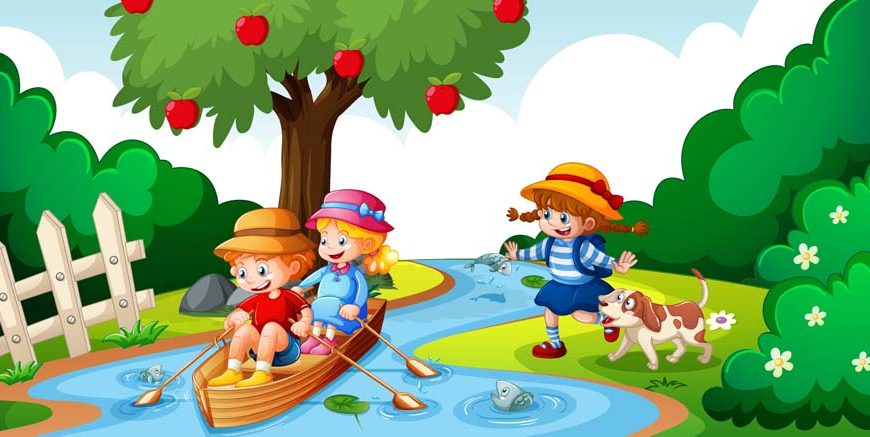
Sit across from your four-year-old on a quiet evening with a book open, and you will notice how easily the hard letters tumble out. They snap their lips shut to pop the letter P, tap their teeth for T, and hiss like a kettle for S. But when their finger slides across to the middle vowel, they stall. Consonants give little mouths a clear physical bite against the teeth, tongue, or lips. Vowels, by contrast, float on open breath, requiring tricky tongue positions and subtle mouth shapes that small children struggle to feel. That is where a classic singing game comes in. Chanting i eat eat eat apples and bananas while sliding through silly vowel shifts turns tongue-twisting phonics into pure family comedy, helping young learners master English vowels naturally.
Lyrics Of ‘I Like To Eat Apples And Bananas’ In English
I like to eat, eat, eat apples and bananas
I like to eat, eat, eat apples and bananas
I like to ate, ate, ate ay-ples and ba-nay-nays
I like to ate, ate, ate ay-ples and ba-nay-nays
I like to eat, eat, eat ee-ples and bee-nee-nees
I like to eat, eat, eat ee-ples and bee-nee-nees
I like to ite, ite, ite i-ples and by-ny-nys
I like to ite, ite, ite i-ples and by-ny-nys
I like to ote, ote, ote oh-ples and bo-no-nos
I like to ote, ote, ote oh-ples and bo-no-nos
I like to oot, oot, oot oo-ples and boo-noo-noos
I like to oot, oot, oot oo-ples and boo-noo-noos
I like to eat, eat, eat apples and bananas
I like to eat, eat, eat apples and bananas.
Read More – Nursery Rhymes For Kids with Lyrics
Essential Language Skills Taught by the Rhyme
1. Building Phonemic Awareness
Children discover that words are not solid, unchangeable blocks. They learn that a word is a chain of tiny sounds that can be pulled apart, altered, and rebuilt. Recognising that changing one tiny breath turns bananas into bo-no-nos gives your child the exact mental tool needed to sound out new words like cat, cot, and cut.
2. Everyday Sight Words and Kitchen Vocabulary
The simple lyrics reinforce crucial high-frequency sight words, including I, like, to, eat, and and. Spotting these small helper words without hesitating builds reading fluency. The lines also ground children in everyday foods, linking healthy fruit choices to morning conversations.
3. Simple Games to Play at Home
- Real Fruit Baskets: Keep a real apple and banana on the kitchen slab. Let your toddler feel the smooth, waxy peel of the apple and help pull down the soft banana skin, singing the rhyme as an afternoon snack takes shape.
- Silly Fruit Swaps: Swap in fruits from the local market to keep the game fresh. Try singing about mangoes and papayas, or chikus and guavas, turning them into may-goes and pay-pay-nays.
- Mirror Faces: Stand beside your child in front of the bathroom mirror while singing. Watch together as your mouths stretch into wide grins for the E sound and purse into tiny buttons for the U sound.
Read More – Fun Preschool Activities at Home for Learning
How EuroKids Builds Confident Young Speakers
Confident speech takes root when dedicated early educators create warm, welcoming rooms where rhythm, music, and spoken stories fill every morning.
EuroKids centres bring this gentle, play-based philosophy to life every day. Classrooms skip boring drills, relying instead on interactive music corners, tactile sandpaper letters, and colourful animal puppets. Experienced teachers guide children through energetic rhythm games, tap out syllables on wooden instruments, and lead cheerful show-and-tell circles where every child speaks up without hesitation. By treating sound awareness as a joyous daily discovery rather than a rigid test, EuroKids ensures every young learner develops clear diction, rich vocabulary, and steady social confidence.
Read More – Enhance Your Child’s Verbal Skills
Conclusion
A silly song about biting into fruit proves that teaching early literacy does not have to be a tense, serious struggle. When we put aside rigid worksheets and let children laugh through funny sounds, we show them that spoken language is an exciting playground to explore. A child who learns to listen closely to the distinct sounds inside ordinary words grows into a thoughtful, expressive reader who opens books with genuine delight.
To explore more practical parenting guides and creative early childhood activities, take a look at the EuroKids Blog, and visit your neighbourhood centre to discuss simple EuroKids Preschool Admission options for your little learner today.
Frequently Asked Questions
Why is this nursery rhyme so helpful for teaching vowel sounds?
The rhyme keeps the melody and sentence identical while swapping only the vowel sounds, helping children clearly see and feel the different mouth shapes required for each sound.
What age group learns best from this fruit rhyme?
Toddlers and preschoolers aged two to six gain the most, as this window is when early articulation and foundational phonics skills develop rapidly.
Can parents use different fruits in the lyrics?
Yes, replacing apples and bananas with fruits like melons, cherries, or grapes makes the game fresh and introduces new consonant blends.
How does singing nursery rhymes help a toddler’s speech?
Singing slows down speech tempos, highlights ending syllables, and exercises the facial muscles needed for clear pronunciation and daily communication.