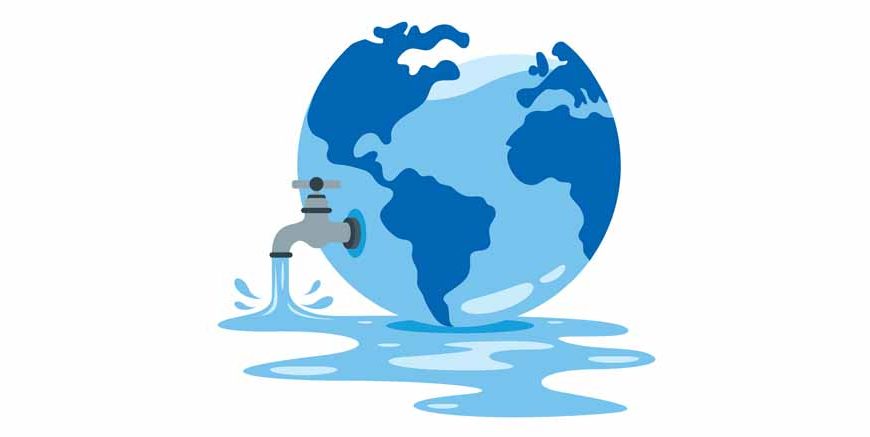
If you look at a photograph of our planet taken from outer space, you will notice something beautiful. It does not look like a brown rock. It looks like a giant, shining blue marble. The blue color covers almost everything! This happens because our home is completely covered in liquid. But exactly how much water is there on earth, and can we drink all of it?
Today, we are going to explore the amazing world of oceans, rivers, and ice. We will learn how moisture is shared across the globe, understand the exact numbers, and discover why every single drop is precious.
The Blue Planet: Land vs. Liquid
Let us start with the biggest question. When we talk about the percentage of land and water on earth, the numbers are quite surprising. Imagine dividing the entire surface of our planet into 100 equal pieces. Out of those 100 pieces, 71 pieces are covered in deep liquid, and only 29 pieces are solid dry land. This means you have a lot more space to swim than you do to walk!
Because the oceans are so massive and deep, the estimated amount of water present on the earth is roughly 326 million cubic miles (or about 1.38 billion cubic kilometers). That is a number so huge, it is almost impossible for our human brains to picture it clearly. It fills the deep ocean trenches and covers the highest sea mounts.
Read More – What Is a Water Cycle?
The Big Split: Salt vs. Fresh
Now, you might think that since we have so much liquid covering the globe, we will never run out of things to drink. But there is a huge catch. We need to look closely at the actual percentage of water on earth.
Let us use a simple, fun example to explain the distribution of water on earth. Imagine you have exactly 100 buckets representing all the liquid in the world.
- 97 Buckets are Saltwater: Out of your 100 buckets, 97 are filled with extremely salty ocean water. We cannot drink this, and we cannot use it to water our garden plants because the heavy salt will instantly kill them.
- Only 3 Buckets are Freshwater: That leaves only 3 tiny buckets of fresh, sweet water for every single human, animal, and plant on the entire planet to share.
Where Are the Three Buckets Hiding?
So, where exactly is this tiny amount of freshwater hiding? You might think it is all flowing in the rivers and sitting in the lakes near our homes. Surprisingly, that is not true at all. Let us break down those 3 leftover buckets of freshwater to see where they actually live.
Frozen Solid in the Ice
A massive chunk of our freshwater is completely trapped. It is frozen solid in giant ice caps and thick glaciers sitting at the North and South Poles. In fact, over two-thirds of all the freshwater in the world is frozen hard as a rock. We cannot easily reach this ice to melt it and drink it.
Deep Underground in the Dark
Another big piece is hiding deep under your shoes. We call this groundwater. When it rains, the soil acts like a giant sponge and pulls the moisture deep underground into the rocks and dirt. People have to dig very deep wells to pump this groundwater back up to the surface so farmers can grow crops and families can have drinking water.
The Surface: Rivers and Lakes
After we take away the frozen ice and the deep underground water, we are left with a very tiny amount. Only a tiny fraction of one percent of all the water on the globe is actually sitting on the surface in the rivers, streams, and lakes that we see every single day.
Read More – Importance of Clean Water
The Invisible Water: Moisture in the Air
Even though rivers and lakes hold a tiny amount, there is also water floating completely invisible in the sky right above our heads. This is called water vapor. When the hot sun heats the salty oceans, a tiny bit of liquid turns into a gas, leaves the salt behind, and floats up to form fluffy white clouds. While the total amount of water in the atmosphere is extremely small compared to the oceans, it is incredibly important because it eventually falls back down to us as fresh rain and snow.
Learning to Protect Our Precious Resource
When young students learn these surprising facts, they instantly understand why their parents tell them to turn off the tap while brushing their teeth. Even though we live on a big blue planet, the actual amount of liquid we can safely drink is incredibly small.
At EuroKids, we believe that understanding simple facts about nature helps children become responsible citizens. When a child learns exactly how rare a fresh drop of rain truly is, they naturally want to protect it, keep the rivers clean, and use their resources wisely.
Conclusion
To wrap up our journey, understanding how liquid is spread across our globe is a fascinating science lesson. Even though the solid land is small compared to the vast oceans, the amount of sweet, drinkable liquid is even smaller. From the deep, salty oceans to the frozen glaciers and the tiny flowing rivers, every single drop plays a massive role in keeping our planet alive and healthy.
As you fill up your glass from the kitchen tap today, it leaves us with a truly thought-provoking realization. The fresh, clean drink inside your cup is actually one of the rarest treasures on the entire planet. We often think gold and diamonds are the most valuable things we can dig up, but without that tiny percentage of fresh, flowing liquid, absolutely no life could ever exist here. We do not just drink it; we are entirely made of it.
To read more fun and educational articles, check out the EuroKids Blog, and visit our website for details on EuroKids Preschool Admission.
FAQs
Can we remove the salt from ocean water so we can drink it?
Yes, we can! The process is called desalination. However, it requires massive machines and a huge amount of electrical energy, making it very expensive to do on a large scale.
Does the Earth ever lose its water into space?
No, our planet’s gravity holds onto it tightly. The Earth has had the exact same amount of moisture for billions of years; it just constantly moves around through the water cycle.
Why is groundwater so important?
Because surface lakes and rivers hold such a tiny amount of freshwater, many cities and farms rely completely on pumping groundwater up from the dirt to survive during hot, dry summers.
Is rain considered freshwater?
Yes. When ocean water evaporates into the sky to make clouds, the heavy salt is left behind. This means the rain that falls from the clouds is completely fresh and salt-free.