Children are naturally curious about the world around them. One of the easiest ways to introduce them to nature is to teach them about the four seasons. Seasons affect the weather, the environment, and even the activities we do every day.
When children learn about the seasons, they begin to understand how nature changes throughout the year. From blooming flowers in spring to cool winter days, each season has unique features that make it special.
In many countries, people refer to winter, spring, summer, and fall as the main seasons of the year. However, in India, the climate is slightly different because we also experience the monsoon season, which brings heavy rains.
In this guide, parents and teachers will learn how to explain what are the four seasons to children in a simple and fun way.
What Are the Four Seasons?
The four seasons are distinct periods of the year with different weather patterns and environmental changes.
The four main seasons are:
- Spring
- Summer
- Autumn (Fall)
- Winter
These seasons occur because the Earth orbits the Sun and is tilted on its axis. This movement causes different parts of the Earth to receive varying amounts of sunlight throughout the year.
For children learning about seasons, it helps to explain them through examples of weather, clothing, and outdoor activities. Read More – Teaching Kids About Weather and Seasons
Winter, Spring, Summer or Fall: Understanding the Seasonal Cycle
Many children learn the order of the seasons through the phrase winter, spring, summer or fall. This phrase helps them remember the yearly cycle.
Spring
Spring usually follows winter. Flowers begin to bloom, trees grow new leaves, and the weather becomes pleasant.
Summer
Summer is the hottest season in many parts of the world. Days are longer and sunny.
Autumn (Fall)
Autumn brings cooler temperatures. Leaves change colour and fall from trees.
Winter
Winter is the coldest season of the year. Some regions experience snowfall.
Understanding winter, spring, summer, or fall helps children visualise how the year moves in a cycle.
Four Seasons in India
While many countries have the typical four seasons, India’s climate is unique. In India, people often experience five seasons, including the important monsoon season.
The Main Seasons in India
- Spring
- Summer
- Monsoon
- Autumn
- Winter
However, when teaching the four seasons, the monsoon is usually explained as part of seasonal weather patterns specific to India.
The 4 seasons in India can vary by region. For example:
- Northern India experiences cold winters.
- Southern India has milder winters.
- Coastal regions receive heavy monsoon rains.
Spring Season for Kids
Spring is one of the most beautiful seasons.
Weather in Spring
The weather becomes warmer after winter, but it is still pleasant.
Changes in Nature
During spring:
- Flowers start blooming
- Trees grow new leaves
- Birds return and build nests
Spring Activities for Kids
Children can enjoy activities like:
- Playing outdoors
- Visiting gardens
- Watching butterflies and birds
In India, festivals like Holi are celebrated during the spring season.
Spring is often called the season of new beginnings.
Read More – Top Healthy Foods for Kids During the Rainy Season
Summer Season for Kids
Summer is usually the hottest season of the year.
Weather in Summer
Temperatures rise and days become longer. In India, summers can be very hot, especially in northern states.
Summer Activities
Children often enjoy:
- Eating ice cream
- Going swimming
- Playing indoor games during hot afternoons
Summer Fruits in India
Summer also brings many delicious seasonal fruits, such as:
- Mango
- Watermelon
- Lychee
These fruits help people stay cool during hot weather.
Monsoon Season in India
The monsoon season is very important in India and deserves special attention when teaching seasons for kids.
What Is Monsoon?
Monsoon is the rainy season when strong winds bring heavy rainfall.
Importance of Monsoon
The monsoon is essential for agriculture because farmers depend on rain to grow crops.
What Children Experience During Monsoon
During this season, children may see:
- Rain showers
- Dark clouds
- Rainbows
- Puddles and streams
Children often enjoy playing in the rain and using umbrellas or raincoats.
Monsoon typically occurs between June and September in many parts of India.
Read More – Keeping Kids Safe & Joyful in Monsoon
Autumn (Fall) Season for Kids
Autumn is the season between summer and winter.
Weather in Autumn
The weather becomes cooler and more comfortable.
Changes in Nature
In many countries, leaves turn yellow, orange, or red before falling from trees.
Festivals in Autumn
In India, major festivals include:
- Diwali
- Durga Puja
They are often celebrated during autumn.
Autumn is known as the harvest season because farmers gather crops during this time.
Winter Season for Kids
Winter is the coldest season of the year.
Weather in Winter
In northern India, winter temperatures can drop significantly, while southern regions remain mild.
Winter Experiences
Children may notice:
- Cold winds
- Foggy mornings
- Shorter days
In some parts of the world, winter brings snowfall.
Winter Activities
Popular winter activities include:
- Drinking hot chocolate or soup
- Wearing warm clothes
- Celebrating festivals like Christmas and New Year
In India, winter is also the time for festivals such as Makar Sankranti and Lohri.
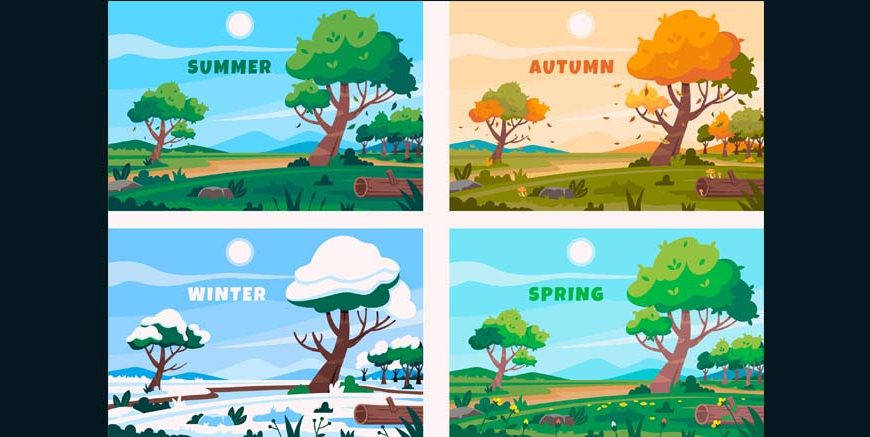
Four Seasons Pictures With Names
Using 4 seasons pictures with names is a great way to teach children about seasonal changes.
Teachers often use illustrations showing:
- Blooming flowers for spring
- Bright sunshine for summer
- Falling leaves for autumn
- Snow or cold weather for winter
Visual learning helps children understand the seasons more easily and remember them better.
Parents can also create simple charts or drawings to explain the seasons at home.
Kindergarten Seasons Chart for Preschool
A kindergarten seasons chart for preschool is a helpful educational tool.
What a Seasonal Chart Includes
A typical chart may show:
- Pictures of each season
- Names of the seasons
- Weather conditions
- Clothing worn during each season
For example:
|
Season |
Weather |
Clothes |
|
Spring |
Pleasant |
Light clothes |
|
Summer |
Hot |
Cotton clothes |
|
Monsoon |
Rainy |
Raincoat |
|
Autumn |
Cool |
Comfortable clothes |
|
Winter |
Cold |
Sweaters |
Such charts help children visually understand the cycle of seasons.
Fun Ways to Teach Four Seasons for Kids
Teaching four seasons for kids can be fun and interactive.
Storytelling
Parents can tell stories about seasonal changes, animals, and weather.
Nature Walks
Taking children outdoors helps them observe seasonal changes directly.
Seasonal Crafts
Children can create drawings or crafts related to each season.
Weather Journals
Kids can record daily weather and observe patterns throughout the year.
These activities make learning about seasons engaging and memorable.
How EuroKids Builds Strong EVS Foundations
When Environmental Studies (EVS) is introduced through observation, storytelling, nature walks, and hands-on exploration, young learners begin to understand their surroundings in a meaningful and lasting way. Instead of memorising facts about plants, animals, or seasons, children learn by experiencing and questioning the world around them. This is why structured early education programs focus on experiential and inquiry-based learning rather than rote memorisation.
At EuroKids, foundational EVS concepts are nurtured through the HEUREKA – Visible Thinking Curriculum. This approach encourages children to explore themes such as “My Family,” “My Community,” “Plants and Animals,” “Seasons and Weather,” and “Good Habits” through interactive discussions, thematic projects, role play, outdoor exploration, and guided observation.
The Visible Thinking framework helps children observe carefully, think deeply, and express their ideas confidently. Through activities like nature-based learning, environmental awareness projects, sensory exploration, and group conversations, children develop curiosity about how things grow, how communities function, and how they can care for the environment.
With a child-centric and play-based methodology refined over 20+ years and implemented across 1600+ preschools, EuroKids focuses on building awareness, responsibility, and curiosity first, allowing knowledge, empathy, and critical thinking skills to develop naturally over time.
Why Children Should Learn About Seasons
Understanding what are the four seasons helps children develop awareness of nature and the environment.
Builds Scientific Understanding
Children learn how the Earth moves around the Sun and how the weather changes.
Encourages Outdoor Exploration
Kids become more interested in observing nature.
Helps Daily Life
Understanding seasons helps children choose appropriate clothing and activities.
Improves Environmental Awareness
Children learn how seasons affect plants, animals, and agriculture.
For example, farmers depend on seasonal cycles to grow crops.
Global Perspective on Seasons
Different parts of the world experience seasons differently.
Northern Hemisphere
Countries like India, the United States, and many European nations experience winter, spring, summer or fall in the same yearly cycle.
Southern Hemisphere
In countries like Australia and South Africa, seasons occur at opposite times.
For example:
- When India experiences summer, Australia experiences winter.
This global perspective helps children understand how seasons vary across the world.
Conclusion
Teaching children about the four seasons helps them understand the natural world and the changing environment around them. By learning about winter, spring, summer or fall, children discover how weather, plants, animals, and human activities change throughout the year.
In India, the monsoon season adds an important dimension to seasonal learning, showing how rainfall supports agriculture and daily life.
Using tools like 4 seasons pictures with names, seasonal charts, and outdoor activities can make learning fun and engaging. When children understand what are the 4 seasons, they gain a deeper appreciation for nature and the world around them.
To explore more learning ideas, simple explanations, and early childhood resources, parents can visit the EuroKids Blog. Those who wish to better understand the preschool journey or explore enrolment options can find comprehensive information on the EuroKids Preschool Admissions page, where learning is joyful, engaging, and child-friendly.