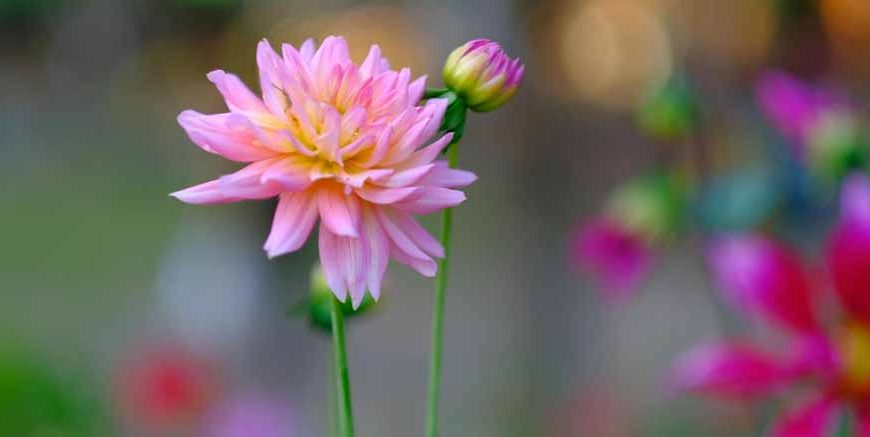
When children walk in a garden or look at a plant in their home, they often notice the bright colours and pleasant shapes of flowers. A flower is usually the first part of a plant that attracts attention. However, behind its beauty, a flower has an important role in nature. It helps plants reproduce, form seeds, and continue their life cycle. Understanding what is flower and how it functions gives children a strong foundation in plant science. Learning about flowering plants also builds curiosity and respect for the environment. This is why studying flowers is an essential part of early science education. Through simple explanations and observation, children begin to understand how blooming plants grow, change, and support life on Earth.
In this blog, children will explore the flower definition, understand the structure of flower, learn the parts of a flower, and discover what what is angiosperm means. They will also learn about angiosperms examples, the parts of a flowering plant, and the types of angiosperms flowering plants in a clear and meaningful way.
What is a Flowering Plant
Flowering plants are plants that produce flowers and seeds. These seeds are formed inside fruits. In science, flowering plants are called angiosperms. So when we talk about what is angiosperm, it means a plant that produces flowers and bears seeds enclosed within a fruit.
The angiosperms meaning in Hindi is “आवृतबीजी पौधे”, which means plants whose seeds are covered. This helps bilingual learners understand the concept better and connect scientific terms in both languages.
Most plants around us are flowering plants. Trees like mango, neem, and apple are flowering plants. Plants like rose, sunflower, and lotus are also flowering plants. All these plants grow flowers before forming fruits and seeds.
Read More – Parts of a Flower and Their Role in Nature for Kids
What is a Flower
A flower is the reproductive part of a flowering plant. This means it helps the plant make seeds. A simple flower definition is that a flower is the part of the plant that produces seeds after pollination and fertilisation.
So when children ask what is flower, the answer is that it is the part of the plant that helps in reproduction. Without flowers, most plants would not be able to make new plants.
A flower is not just for decoration. It is an important structure that supports the continuation of plant life.
Structure of a Flower
The structure of flower refers to how a flower is organised and what parts it has. Every flower is made up of several parts that work together. These parts are arranged in a specific way to help the flower carry out its function of reproduction.
Understanding the structure of flower helps children see how nature designs even the smallest details carefully. Each part has a role, and none of them is useless.
Read More – Explore Popular Flower Names for Kids
Parts of a Flower Explained
The parts of a flower include four main sections: sepals, petals, stamens, and pistils. These are also known as the flower parts name that children learn in basic science.
The sepals are the small green leaf-like parts at the base of the flower. They protect the flower when it is in the bud stage. Before a flower blooms, sepals keep it safe from damage.
The petals are the colourful parts of a flower. They attract insects and birds. Their bright colours and sweet smell help in pollination. Petals play an important role in drawing pollinators like bees and butterflies.
The stamen is the male part of the flower. It produces pollen. Pollen is needed for fertilisation. Without pollen, seeds cannot be formed.
The pistil is the female part of the flower. It receives pollen. Inside the pistil, fertilisation takes place, and seeds begin to form. The pistil later develops into a fruit that contains seeds.
These are the different parts of flower that work together to complete the life cycle of a plant.
Parts of a Flower Diagram
A parts of a flower diagram is a visual way to understand the flower structure. Diagrams help children see where each part is located and how they are arranged.
In a typical parts of a flower diagram, you can see:
- Sepals at the bottom
- Petals surrounding the centre
- Stamens around the pistil
- Pistil in the middle
Teachers often use diagrams to help children remember the parts of a flower easily. Visual learning improves understanding and recall.
Read More – Easy DIY Paper Flower Crafts for Kids
Parts of a Flowering Plant
Flowers are only one part of a plant. The parts of a flowering plant include:
- Roots
- Stem
- Leaves
- Flower
- Fruit
Roots absorb water and minerals.
The stem supports the plant.
Leaves make food through photosynthesis.
The flower helps in reproduction.
The fruit protects the seeds.
Together, these form a complete plant system that supports life and growth.
What are Angiosperms
To understand what is angiosperm, we must remember that angiosperms are flowering plants that produce seeds enclosed in fruits. This is what makes them different from other plants like ferns and mosses.
Angiosperms are the largest group of plants on Earth. They grow in almost all environments, from gardens and forests to farms and parks.
Read More – Indoor Plants for the Rainy Season
Types of Angiosperms Flowering Plants
There are two main types of angiosperms flowering plants:
- Monocots
- Dicots
Monocots have one seed leaf. Examples include wheat, rice, and maize.
Dicots have two seed leaves. Examples include rose, sunflower, and mango.
This classification helps scientists understand plant structure and growth patterns.
Angiosperms Examples
Some common angiosperms examples that children see daily are:
- Rose
- Sunflower
- Lotus
- Mango tree
- Apple tree
- Wheat plant
- Tomato plant
All these are blooming plants because they produce flowers before forming fruits and seeds.
Why Flowers are Important
Flowers are important because they:
- Help in reproduction
- Attract pollinators
- Produce seeds and fruits
- Support food chains
- Maintain balance in nature
Without flowers, most plants would not be able to grow new plants. This is why learning about a flower is essential in understanding life on Earth.
Learning About Flowers Through the HEUREKA Curriculum
At EuroKids, children learn science through the HEUREKA Curriculum. This curriculum focuses on learning by doing and understanding concepts instead of memorising facts.
When children study the structure of flower and parts of a flower, they:
- Observe real flowers
- Draw parts of a flower diagram
- Identify different parts of flower
- Learn through activities and models
This makes learning enjoyable and meaningful. The HEUREKA Curriculum helps children develop curiosity, confidence, and clarity.
Read More – Fun and Engaging Plant Life Cycle Activities for Kids
How Parents Can Support Learning at Home
Parents can:
- Show real flowers to children
- Help them draw the parts of a flower diagram
- Talk about what is flower during nature walks
- Encourage gardening
- Read educational articles from the EuroKids Blog
This strengthens classroom learning.
Frequently Asked Questions
1. What is a flower in simple words?
What is flower means the part of a plant that helps in making seeds. A simple flower definition is that it is the reproductive part of a flowering plant.
2. What are the main parts of a flower?
The parts of a flower are sepals, petals, stamens, and pistils. These are the basic flower parts name.
3. What is an angiosperm?
What is angiosperm means a flowering plant that produces seeds inside fruits.
4. Give some angiosperms examples.
Some angiosperms examples are rose, sunflower, mango, wheat, and lotus.
5. What are the parts of a flowering plant?
The parts of a flowering plant are roots, stem, leaves, flowers, and fruits.
Conclusion: Learning Science with EuroKids
Learning about flowering plants helps children understand how nature works. By studying the structure of flowers, identifying the parts of a flower, and exploring examples of angiosperms, children build strong scientific foundations. They also learn how blooming plants support life on Earth.
The EuroKids Blog provides well-researched and child-friendly educational content that helps parents and teachers guide children effectively. It turns complex topics into simple ideas that young learners can easily understand.
EuroKids is one of India’s most trusted early childhood education brands. The EuroKids Franchise offers a strong opportunity for educators and entrepreneurs to be part of a well-established preschool network. With academic support, training, and the HEUREKA Curriculum, EuroKids ensures quality learning experiences across all centres.
Through structured learning, hands-on activities, and concept clarity, EuroKids continues to nurture young minds and build a love for learning.