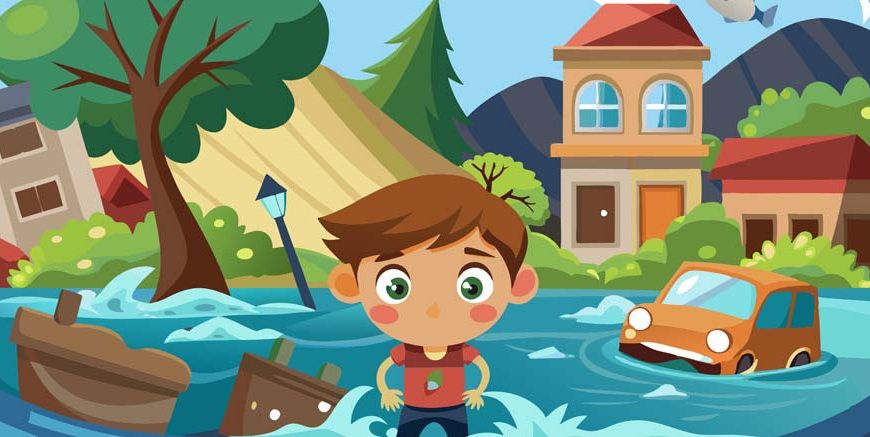
Water is very powerful. Usually, rivers stay safely inside their muddy banks, and rain soaks quietly into the ground. But sometimes, this normal balance breaks. Too much water gathers in one place, and the ground simply cannot drink it fast enough. This sudden overflow of water onto dry ground changes everything in its path.
Today, we will learn the exact terms for this natural event. We will focus on the main causes, look at how humans affect the environment, and provide a clear guide to help you study for your next geography exam.
Defining Flood:
When you study natural disasters, you need to know exactly what is flood. A simple flood meaning is the covering of normally dry ground with a huge amount of water. If your teacher asks you to write a short note on flood, you can write that it happens when water spills over the edges of a river, lake, or ocean, or when heavy rain falls far too fast for the soil to absorb it.
But what makes it dangerous? To explain what is flood disaster, we must look at the damage it does. A disaster occurs when this fast-moving water destroys homes, washes away farm crops, and forces families to leave their towns for safety. When gathering proper flood information, you will find that these events happen in almost every country around the globe. They bring thick mud into houses and make the drinking water completely unsafe.
If you are writing an essay about floods in English, it is important to remember that they are the most common natural weather event on our planet. Understanding the science behind them helps us prepare and stay safe.
Read More – Facts About Cyclone
Understanding the Causes
To do well on your exam, you must clearly understand floods definition and causes. We already know the definition, so let us focus heavily on why they happen. Scientists divide the causes into two main groups: natural reasons and human mistakes. Let us explore both sides in detail.
1. Natural Causes
Sometimes, nature simply brings too much water at once. The main causes of floods in the river is heavy and continuous rainfall. When it rains for many days without stopping, the river fills up completely to the top. The extra water has nowhere else to go, so it spills over the banks and rushes into nearby towns and farms.
Another natural cause is melting snow. High up in the mountains, thick winter snow melts very fast when the spring weather gets hot. This melted snow turns into rushing water, filling the streams and rivers way past their normal limits. Additionally, strong storms over the ocean can push giant waves onto the dry beach, instantly covering coastal towns with salty water.
2. Man-Made Causes
Humans also make major mistakes that cause water to overflow. The human factors which cause floods are very important to study for your exam. As cities grow bigger, we cover the soft dirt with hard cement and thick tar roads. Soft dirt drinks rainwater easily. Hard cement completely blocks the water. Because the water cannot soak into the ground, it rushes down the streets and fills up neighborhoods very quickly.
Furthermore, the major man made causes of floods are cutting down trees and building poor dams. Trees act like giant, natural sponges. Their deep roots hold the soil tightly and drink massive amounts of rainwater. When people cut down entire forests to build houses, there are no roots left to hold the water back. The water just flows right over the flat ground.
Also, humans build giant concrete walls called dams to hold river water. If a dam breaks because it is too old or poorly built, a massive, dangerous wall of water crashes down into the valley below without any warning.
Read More – Exploring the Terrifying Power of Tsunamis
Comparison Table for Quick Study
Here is a simple study table to help you easily remember the differences between natural and human causes for your upcoming test.
|
Natural Causes |
Human Causes |
|
Heavy, non-stop rain filling up rivers. |
Covering soft dirt with hard, waterproof concrete roads. |
|
Fast melting snow from high mountains in the spring. |
Cutting down huge numbers of trees (deforestation). |
|
Strong ocean storms pushing tall waves onto the beach. |
Breaking or failing of poorly built concrete water dams. |
Read More – Environmental Essay for Students
Conclusion
To summarize our study guide, an overflow of water onto dry ground is a highly powerful natural event. It occurs because of natural reasons, like heavy rainfall filling up rivers, and human actions, like cutting down trees and covering the earth with solid concrete. Understanding these clear causes helps us build smarter, safer cities in the future.
As we finish learning about this topic, it leaves us with a very important thought. Water is the exact thing that keeps every plant, animal, and human alive. We need it to survive every single day. But when we disrespect nature by cutting down too many forests or blocking natural rivers, this life-giving water quickly turns into a destructive force. It reminds us that we must live in careful balance with nature, respecting its incredible power while actively protecting our own communities.
FAQs
Can planting trees really stop water from overflowing?
Yes, planting trees helps a lot! Tree roots make the soil loose so it can drink much more water, and the roots physically hold the dirt in place to stop it from washing away during a storm.
What should I do if water starts filling my street?
You should immediately move to higher ground, like the second floor of a house or a tall hill, and always listen closely to the safety instructions from adults and emergency workers.
Do these events only happen near big oceans?
No. While ocean storms push water onto the beach, most of these events actually happen completely inland near rivers, lakes, or even in flat cities that simply get too much sudden rain.
How does hard concrete cause problems during a heavy storm?
Concrete is solid and waterproof. Instead of letting the rainwater soak deep into the earth like normal dirt does, the concrete forces the water to stay on top, quickly creating deep puddles and rushing streams on city streets.