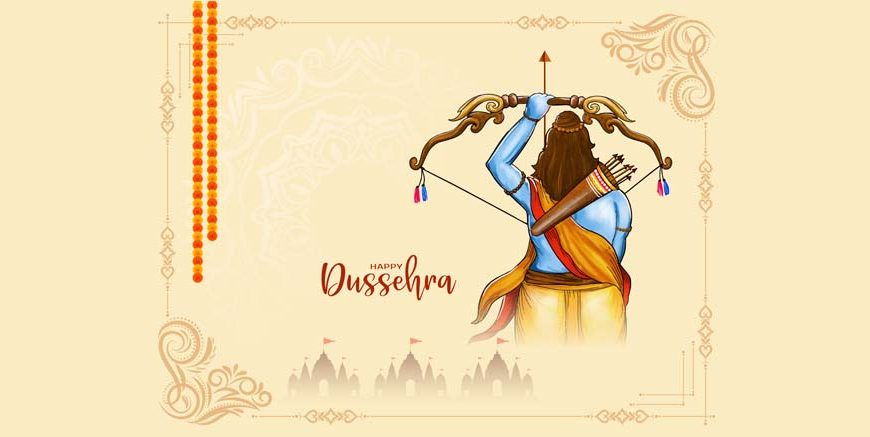
Walk through any Indian residential colony as October rolls in, and you will see the signs right away. The sticky monsoon dampness gives way to cool evenings, roadside flower stalls start piling up fresh orange marigolds, and local grounds echo with the sound of bamboo poles getting hammered into the earth.
Sitting down to work through an essay on Dussehra in English with your child is not about helping them tick a box on a homework worksheet. It is a genuine, down-to-earth chance to unpack big, tricky life lessons without sounding like a stern schoolmaster. When you explain what actually happens on this day, you help your child understand that decency, fair play, and standing up for what is right are choices they need to make every single morning in their own classroom.
150 Words Essay on Dussehra
Dussehra, also celebrated as Vijayadashami, is one of the most loved festivals in India, marking the ultimate victory of good over evil. The festival takes place on the tenth day of the Hindu month of Ashwin, following nine nights of fasting and prayer during Navratri. The occasion celebrates Lord Rama defeating the arrogant ten-headed king Ravana, while also honouring Goddess Durga’s historic victory over the buffalo demon Mahishasura.
Communities celebrate by putting up Ram Leela plays, exploring crowded neighbourhood melas, and watching giant effigies of Ravana burn into the night sky. Families visit one another with boxes of hot jalebi and laddoos, while people in Maharashtra exchange apta leaves as a symbol of gold to share good fortune. Above all, Dussehra teaches young learners to speak the truth, listen to their parents, let go of anger, and treat their classmates with fairness and kindness.
Read More – Story and Significance of Dussehra for Kids
500-Word Essay on Dussehra
Dussehra is easily one of the most vibrant, emotionally resonant festivals celebrated across the Indian subcontinent. Arriving at the end of the Sharad Navratri season on the tenth day of Ashwin, the day carries tremendous cultural, social, and moral weight. The core theme remains universal and timeless: no matter how intimidating or deep-rooted malice looks, righteousness and patience always bring it down in the end. Two legendary events anchor the festival across Indian communities: Rama’s battlefield victory over Ravana in Lanka, and Goddess Durga’s fierce defeat of the demon Mahishasura after a ten-day conflict.
What makes Dussehra special is the sheer variety of regional customs that bring it alive. In northern towns and cities, amateur theatre groups run open-air Ram Leela plays across ten consecutive evenings. On the final afternoon, thousands of families pack into dusty community maidens to watch giant, colourful effigies of Ravana, his brother Kumbhakarna, and his son Meghnad burn down in a shower of sparks and crackling sounds. In West Bengal, Assam, and Odisha, the tone feels rich with emotion. Devotees accompany tall clay idols of the ten-armed Goddess to rivers and lakes for visarjan, singing traditional farewell songs, while married women share red vermilion during Sindoor Khela to pray for the long life of their families.
Down south in Karnataka, the historical city of Mysuru celebrates on a royal scale. The sprawling Mysore Palace glows under thousands of incandescent bulbs, and the famous Jumboo Savari takes over the main streets, carrying an idol of Goddess Chamundeshwari inside an ornate golden howdah atop a decorated elephant. Up in Himachal Pradesh, the Kullu Dussehra starts on the tenth day itself and runs for a full week, with hill villagers carrying over two hundred local deities on carved wooden palanquins down to the Dhalpur ground to pay homage to Lord Raghunath. Across Maharashtra, neighbours walk over to each other’s homes to trade green leaves picked from the apta tree, calling them gold and wishing each other good health.
Read More – Dussehra Activities for Preschoolers
Conclusion
For young students, the festival offers practical lessons they can apply right inside the classroom. Ravana’s ten heads represent negative human impulses like greed, hot temper, jealousy, laziness, lying, and sheer stubbornness. Watching those towering paper heads turn into ash reminds children to spot and drop their own bad habits. Today, schools also use the festival to discuss environmental responsibility, urging families to avoid toxic firecrackers, choose biodegradable effigies, and pick up litter around local grounds. In the end, Dussehra proves that genuine character is built through honesty, empathy, and everyday humility.
For more such blogs on your child’s preschool admission, learning, and development, visit EuroKids Blogs. And don’t forget to visit EuroKids for the first step in your child’s learning journey.
Frequently Asked Questions
Why does the calendar date of Dussehra change every single year?
Dussehra follows the traditional Hindu lunar calendar, landing on the tenth lunar day of Ashwin. Because lunar months are roughly eleven days shorter than the standard Gregorian solar year, the festival moves around between late September and late October on the English calendar.
Are Dussehra and Vijayadashami the exact same festival?
Yes, both names celebrate the exact same victory of truth over deceit. Northern and western states usually call it Dussehra to honour Rama’s victory over Ravana, while families in eastern and southern states call it Vijayadashami to honour Goddess Durga defeating Mahishasura.
What is the actual reason people burn effigies of Ravana?
Setting fire to the giant figures shows that arrogance, bad temper, and selfish actions eventually destroy an individual. The spectacle reminds people that high intelligence and power bring ruin when used to hurt others.
Why do parents introduce children to school books on this day?
Tradition views Vijayadashami as the most promising day of the year to start any educational pursuit. In southern India, parents celebrate Vidyarambham on this day, holding their toddler’s hand to help them trace their very first alphabet letters in a plate of clean rice grains.