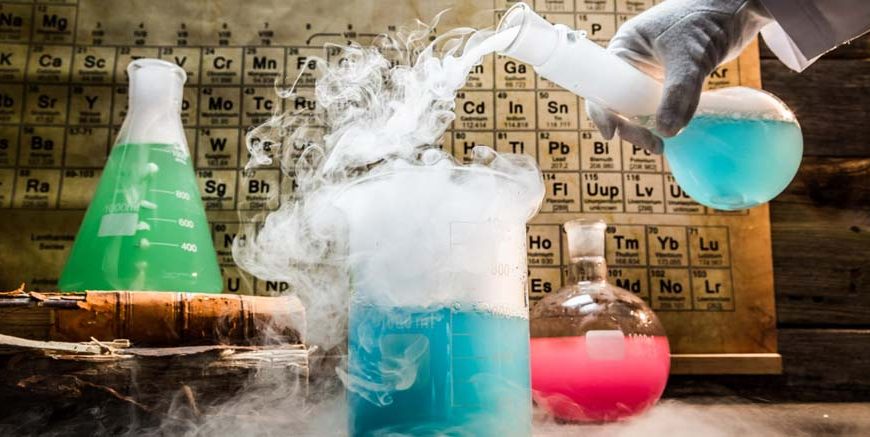
Pouring cold milk over a bowl of crispy cornflakes, stirring a spoonful of sugar into a morning cup of tea, or accidentally dropping sand into a bucket of seawater at the beach, these simple, everyday actions all have one fascinating thing in common. They are all brilliant, hands-on science experiments.
Often, when we hear the word ‘chemistry’, we immediately picture scientists in white coats pouring bubbling, neon green liquids into glass tubes. Truth be told, the most fundamental scientific concepts are happening right on your kitchen counter or in your back garden. Today, we are exploring how different things combine to create something entirely new, yet magically stay exactly the same.
What is a Mixture in Chemistry?
To truly understand what is a mixture in chemistry, you have to look closely at how tiny particles behave when they meet one another. If you bake a chocolate cake in the oven, the flour, eggs, butter, and sugar completely change into a spongy, delicious treat. Once it is baked, you cannot pull the raw egg or the dry flour back out. That is known as a chemical reaction.
However, the concept we are looking at today is completely different. It is basically like a room full of people mingling at a lively party. They are standing next to each other, chatting, and perhaps even bumping shoulders in the crowd, but they do not permanently join together. They are simply sharing the exact same space. The ingredients sit side-by-side without changing their fundamental nature.
Read More – How do you make science interesting for kids?
The Definition
Let us nail down a proper, scientific mixture definition. In science, this term describes a material made up of two or more different substances which are physically combined, rather than chemically bonded. Because they are only physically mixed, you can almost always separate them again if you know the right trick.
Think of a bowl of mixed fruit. Even though the green grapes, sliced apples, and red strawberries are sitting in the same bowl, a strawberry remains a strawberry, and a grape remains a grape. You can easily pick them apart with your fingers. Scientists use similar, but slightly more advanced, tricks to separate things in a lab. For instance, if you accidentally mix magnetic iron filings with dry playground sand, it looks like a dull grey mess. But if you wave a strong magnet over the pile, the iron pieces will instantly jump onto the magnet, leaving the plain sand behind!
The Main Types of Mixture
Scientists absolutely love to organise and categorise things to make them easier to study. When we look at the different types of mixture, we usually divide them into two primary groups based on how they look and how they behave when combined.
- Homogeneous Mixtures (The Masters of Disguise): The prefix ‘homo’ means ‘the same’. In this specific type, the different substances blend together so perfectly and smoothly that the final result looks like one single, uniform thing. You absolutely cannot see the individual ingredients anymore. If you stir a spoonful of salt into a glass of warm tap water, the salt crystals seem to vanish into thin air. But if you take a sip, the salty flavour is definitely still there! The salt and water have formed a uniform blend. We often call these liquid versions ‘solutions’. Another brilliant example is the sweet orange squash children drink in the summer; the concentrated syrup completely dissolves into the water, turning the whole jug a lovely, bright orange.
- Heterogeneous Mixtures (The Rule Breakers): The prefix ‘hetero’ means ‘different’. Here, the ingredients do not blend smoothly at all. You can easily spot the different parts with your naked eye, and the distribution is not uniform. A classic example is a handful of soil from the flowerbed. If you look closely, you will see tiny pebbles, bits of dried leaves, dark dirt, and perhaps a crawling bug. Every handful will look slightly different. Another lovely, tasty example is a pepperoni pizza; every single slice has a slightly different amount of melted cheese, tomato sauce, and meat.
Read More – What Is Solute and Solvent?
Exploring Mixture Definition and Examples
To make sure this concept is crystal clear for young learners, let us look at a broader mixture definition and examples that children encounter every single day without even realising it.
- The Air We Breathe: This is a fascinating, invisible homogeneous blend. The air around us is packed full of different floating gases like oxygen, nitrogen, and a tiny bit of carbon dioxide, all perfectly and invisibly blended together.
- Coins and Brass: They are not just for liquids and solids! The shiny coins in your piggy bank are often made of something called an alloy. An alloy is a solid homogeneous blend of different metals melted together to make them much stronger than they would be on their own.
- A Messy Pencil Case: Yes, simply tossing your coloured pens, wooden rulers, and a rubber into a zip-up case creates a heterogeneous collection! They share one space, but you can easily reach in and pull out the exact red pen you need.
- Muddy Puddles: A firm favourite for any energetic child wearing wellington boots! When rainwater mixes with loose dirt, it creates a messy, heterogeneous concoction. If you scoop some up in a clear plastic cup and let it sit still on a sunny windowsill for a few days, the heavy dirt will eventually sink to the bottom, separating itself entirely from the clear water above.
Summary
Wrapping our heads around how the physical world is put together is a truly beautiful and essential part of growing up. From the sweet fruit squash we drink on a hot afternoon to the crunchy granola we eat for breakfast, science is constantly happening all around us. Understanding that things can be grouped together without losing their unique, individual identities is a profound lesson, not just in chemistry, but in how we view the physical world.
It teaches children to look much closer at their environment, to become curious observers, and to ask brilliant questions about what things are made of and how they can be taken apart. The universe is essentially one giant, wonderful mixing bowl waiting to be eagerly explored by young minds. To discover more engaging learning resources and help your child build a phenomenal foundation for their future, explore the EuroKids Blog and secure their educational journey through EuroKids Preschool Admission today.
FAQs
Can a mixture ever be separated?
Yes, because the ingredients are only physically combined and not chemically bonded, they can be separated using methods like sorting, filtering, magnets, or evaporation.
Is plain tap water a mixture?
Yes, normal tap water is a homogeneous mixture because it contains dissolved minerals and safe chemicals (like fluoride) blended invisibly into the pure water.
What is the easiest way to identify a heterogeneous mixture?
The easiest way is to simply use your eyes; if you can clearly see the different parts, colours, or textures floating around or sitting together, it is heterogeneous.